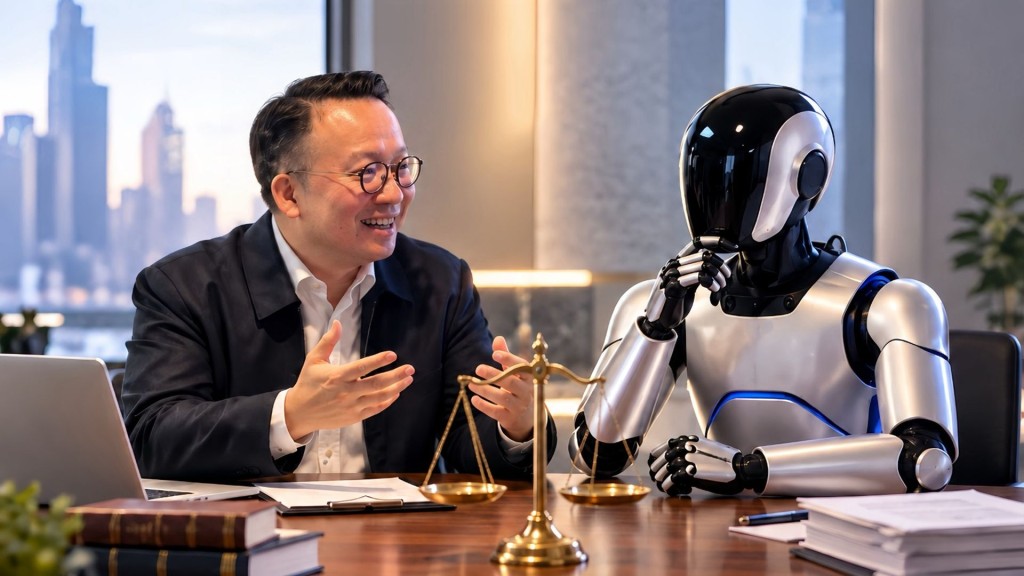
In 2019, a three-month-long legal dispute in the UK involving £2,000 (HK$21,200) was handed over to “Smartsettle ONE,” an AI-driven system. By using algorithms to help both parties adjust their bidding expectations, the AI system facilitated a settlement in less than an hour, marking the world’s first-ever court case resolved by a robot mediator.
This milestone led many to wonder: “Will human mediators eventually be replaced by AI?”
As a practicing lawyer with a background in computer science, I have always been a strong advocate for the application of LegalTech. However, the success of that landmark case was built on highly specific and limited conditions: it dealt solely with a simple debt involving a “single monetary figure.”
Real-world disputes – such as those involving commercial partnerships, intellectual property, or sports-related conflicts – are far more complex. They are deeply intertwined with human relationships, reputation, and dignity. While AI is excellent at “calculation,” only humans truly understand “communication.” Often, disputes are not just about money; they are about “getting closure” and resolving emotional grievances. A sincere apology or a compromise that preserves the dignity of both parties carries a value that far exceeds cold, hard numbers.
Relying entirely on AI for mediation presents three major concerns:
- Lack of flexibility for non-monetary terms: AI struggles to comprehend or structure creative solutions, such as formal apologies or future business collaborations.
- Algorithmic “black-box bias”: AI relies on historical data, which may inadvertently favor large corporations with deeper pockets, thereby undermining procedural justice.
- Privacy and data security risks: if highly sensitive and confidential business information is stored or leaked by an AI system, it could deal a devastating blow to commercial trust.
Therefore, technology should serve as an “amplifier” for mediators, not a “replacement.”
At AALCO Hong Kong Regional Arbitration Centre (AALCO-HKRAC), we actively leverage the benefits of technology and AI. Through our Online Dispute Resolution (ODR) platform, we efficiently handle tedious paperwork, document organization, and scheduling, which significantly slashes preparation time.
Yet, the core of our approach lies in deeply integrating the “expertise of professional mediators.” While technology enhances efficiency, the critical moments of negotiation are steered by “human mediators” who possess legal expertise, empathy, and strong communication skills. They are able to sense emotional nuances and guide both parties toward resolving their core grievances in a secure, confidential environment.
We actively promote the “Mediation-First, Arbitration-Next” mechanism to provide a legally binding yet empathetic “one-stop” solution. Technology can clarify data, but only the professionalism and warmth of humans can truly bring us together to shake hands and make peace.
Nick Chan is Director of Asian-African Legal Consultative Organization Hong Kong Regional Arbitration Centre