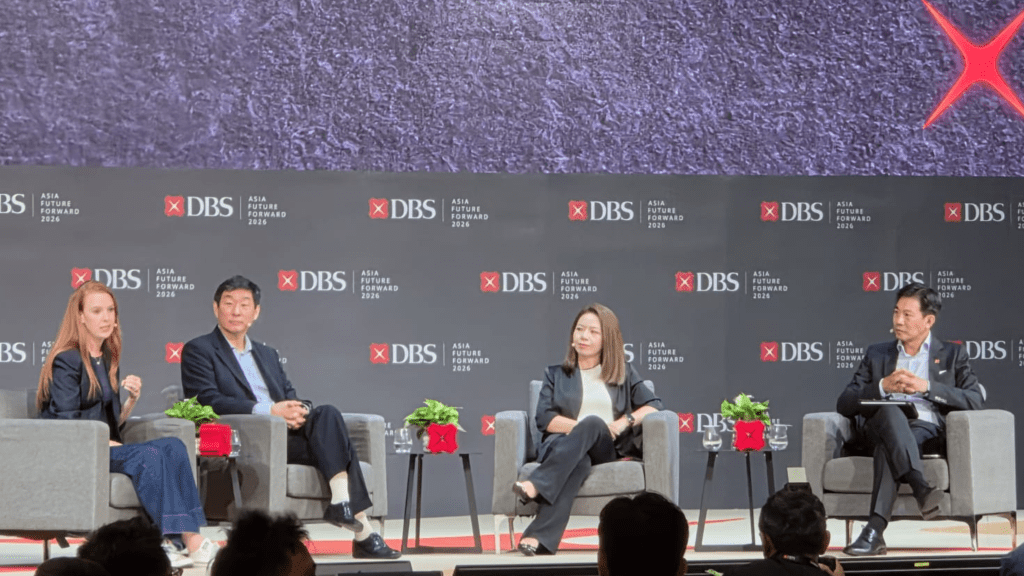
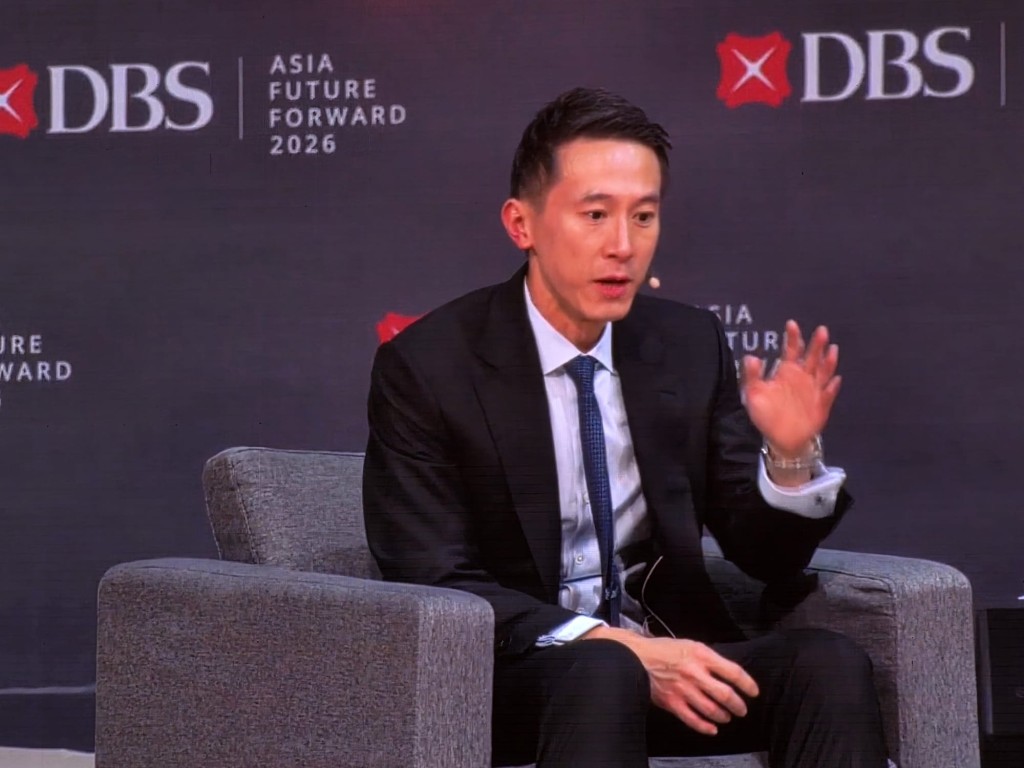
A panel of AI industry leaders at a DBS-hosted event argued that open-weight models, especially those from Asia, are rapidly closing the performance gap with proprietary Western systems.
The session, moderated by DBS chief operation officer Derrick Goh, featured Adaption co-founder and chief executive Sara Hooker, MiniMax president Linda Sheng, and TNE.ai chief executive Richard Tong. The core message was that enterprises must act now to avoid being locked into expensive, inflexible vendor relationships.
Hooker said the last decade was about building the biggest, best models in isolation. That has changed as running AI at scale has become unpredictable in cost and as forthcoming IPOs raise concerns about relying on proprietary APIs. She added that Western labs are moving into sectors like legal, finance, healthcare and tax, so businesses must customize models with their own data before those windows close.
Asian models and local context
Sheng pointed to the rising global adoption of Asian open models, noting that Chinese video and generative media models now top leaderboards. Western models often fail to reflect local contexts in markets like Singapore, where enterprises need AI that understands English alongside regional culture.
Singapore’s Sovereign AI Opportunity
Tong made the case for Singapore as a uniquely neutral hub for sovereign AI. He predicted open-source models would soon reach 2 to 5 percent of top proprietary performance and said his firm already runs 2,500 AI agents in banking on open models. He also warned that AI transformation is not an IT problem but a business one, and that leaders should treat models like trainable interns rather than static software.
The last mile: customization and reliability
Hooker argued that the real competitive advantage lies in the “last mile” of customization. Proprietary labs will never share their fine-tuning techniques because it would hurt their margins, leaving the context layer open to enterprises. She revealed that 80 percent of her company’s effort goes into reliability and reducing hallucinations, because even a 1 percent error rate is catastrophic for banks. She also stressed confidential computing and sovereignty as critical questions for any enterprise.
The panel concluded that the era of betting on a single proprietary AI partner is ending, and the future belongs to those who can adapt fastest and human factor remains central.