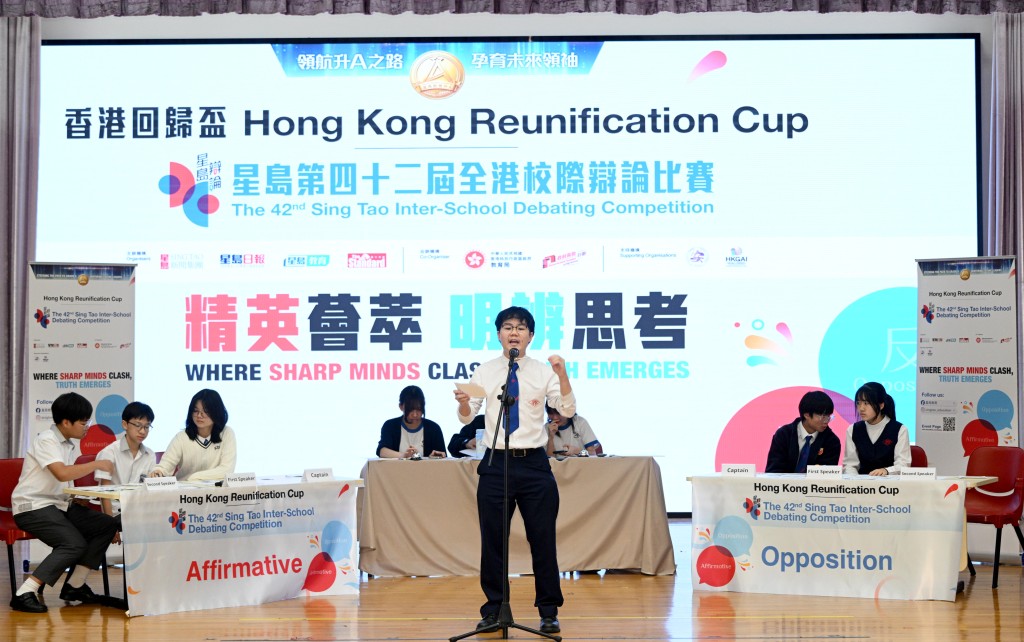
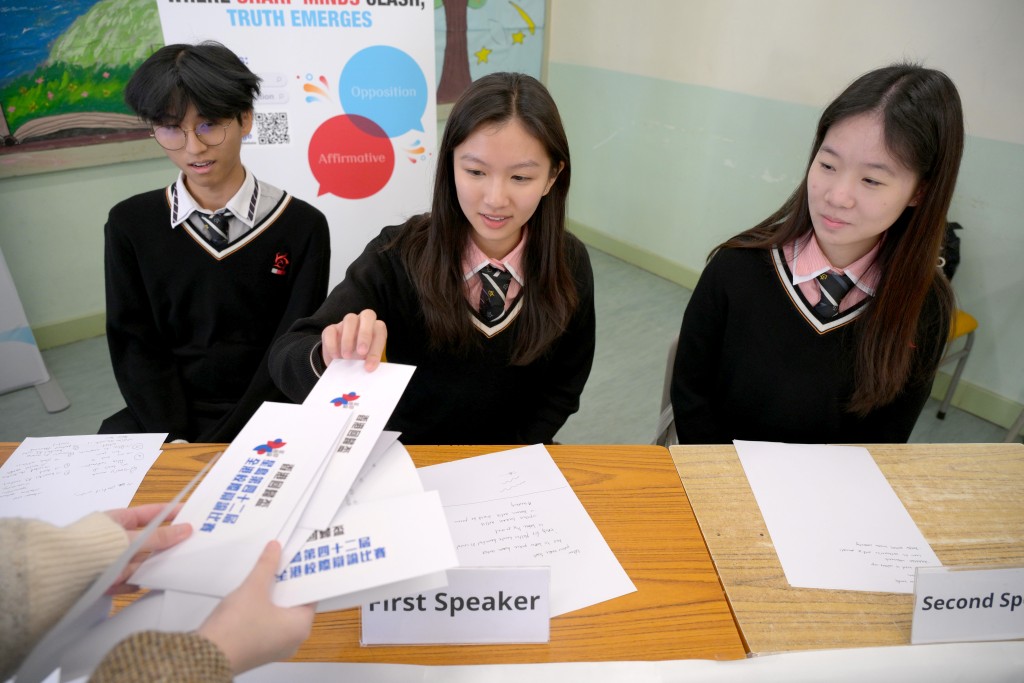
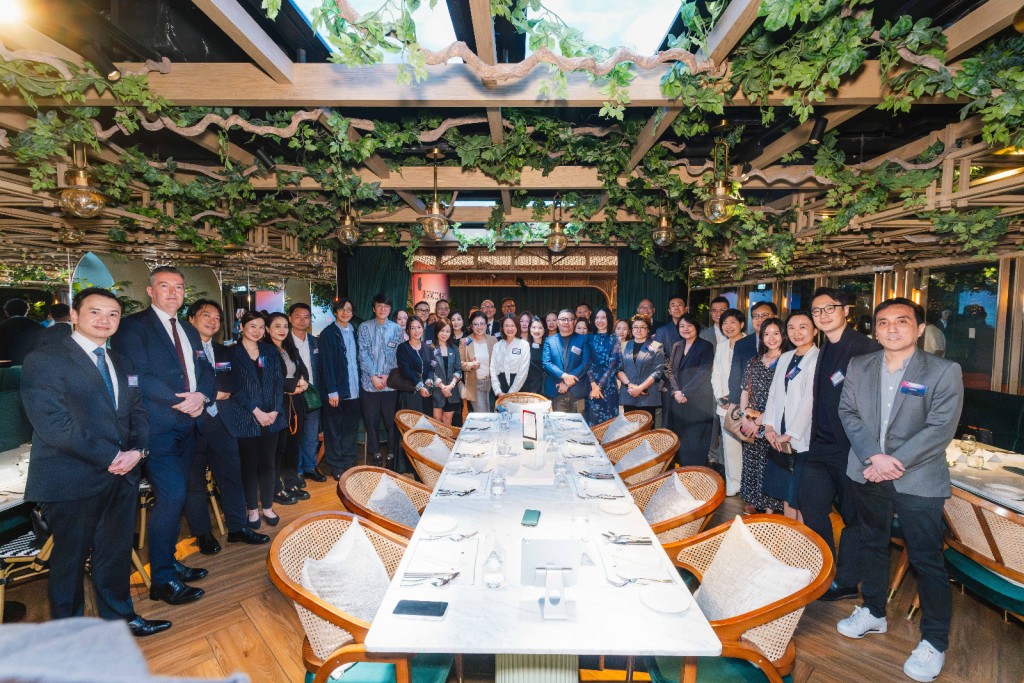
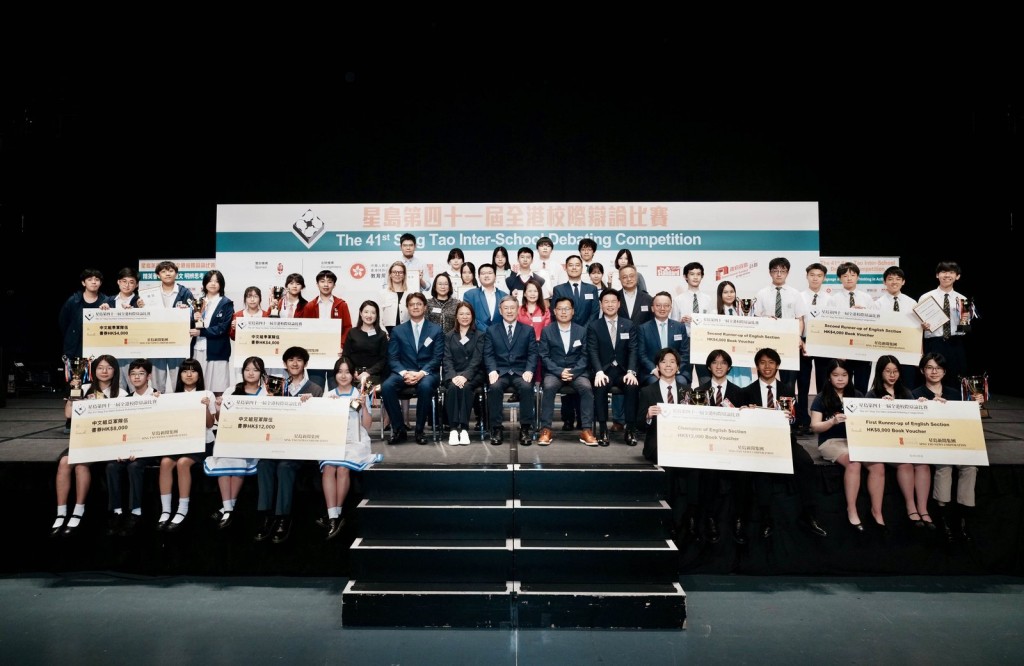
With fewer minutes and tougher motions, the 42nd Sing Tao Inter-School Debating Competition returned with 152 teams across the Chinese and English sections.
Co-organized by Sing Tao News Corporation and the Education Bureau, the annual flagship debating event kicked off its preliminary round on Saturday with 112 teams. Under a new, fast-paced format, main speakers were required to deliver a two-minute case, followed by two rounds of free debate and a one-minute closing statement.
The tightened structure sparked high-tempo exchanges among students, with opposition teams prevailing in both the Chinese and English sections.
Pressing technology and social issues put debaters to the test in the preliminary round, with motions spanning smartphone bans for children under 13, regulation of virtual social platforms, mandatory labeling of AI-generated content, the four-day workweek, "slasher" careers, and upward mobility through higher education.
Teams joined the national security quiz after the debate.
Among the highlights was the clash over upward mobility through higher education, where the affirmative argued that degrees serve as entry tickets to meet the city's demand for innovation and finance talent. In response, the opposition team countered that an oversupply of graduates leaves young people stuck in "graduate unemployment" and unable to achieve upward mobility.
Chinese-section judge Siu Hoi-yeung, a former Hong Kong Examinations and Assessment Authority subject officer and a lecturer at the Chinese University of Hong Kong, said teams under the new format should concentrate fire on their strongest argument. He advised the three debaters to divide roles clearly and avoid introducing new arguments during free debate or mixing in English words.
Another judge surnamed Kam, a representative from the Law Society of Hong Kong, praised students' independent thinking and use of everyday analogies, such as comparing a four-day workweek to a four-day school week. For motions involving legislation, he advised students to go beyond policy pros and cons and examine legislative principles and enforcement details to earn higher scores.
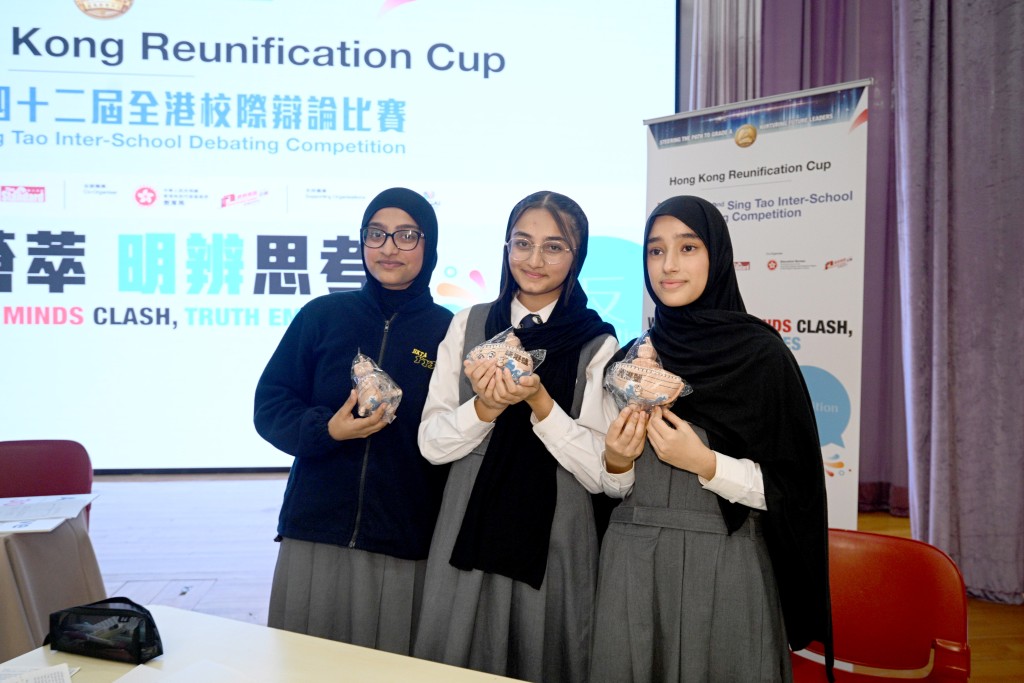
Debaters are presented with the national security related souvenirs.
Building on the opening-round momentum, the second round will take place on December 12 and January 9, with the latter session moving to a large shopping mall for the first time to bring debate culture into the community.
As an added highlight, a 10- to 20-minute celebrity exhibition match will be staged, bringing together artists, public figures, and legal professionals to debate hot-button issues
To mark the 30th anniversary of Hong Kong’s return to China, the competition has also added a national security quiz in which one team member answers a multiple-choice question after each debate covering the Constitution, the Basic Law, related legislation and the holistic view of national security.