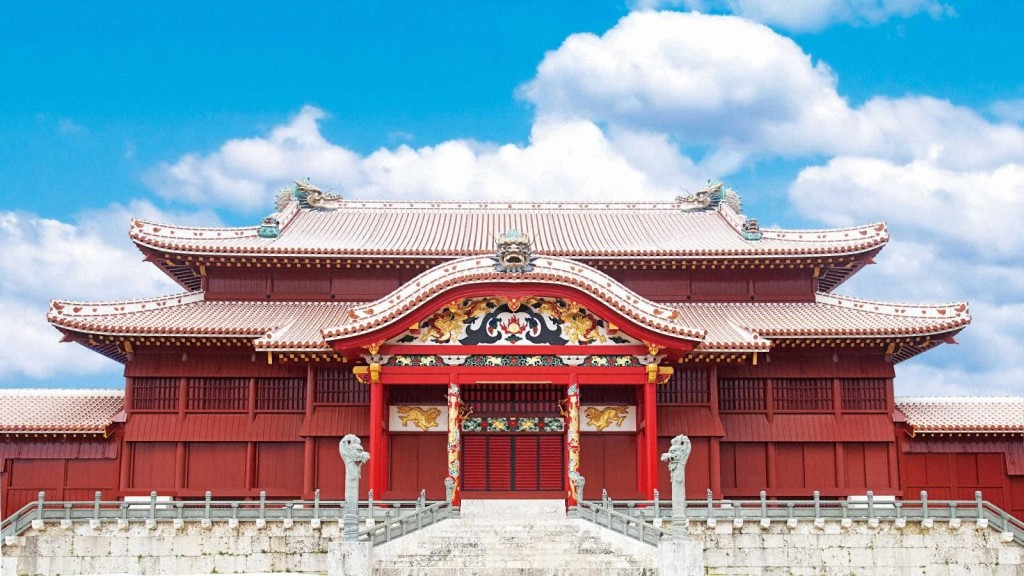
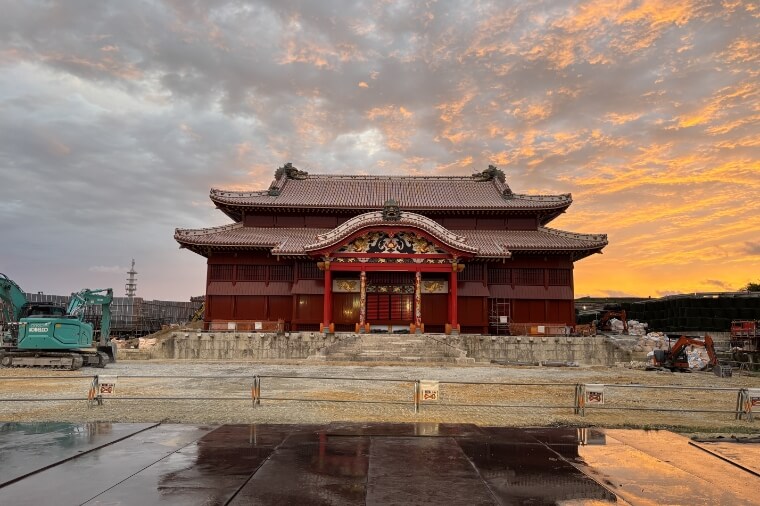
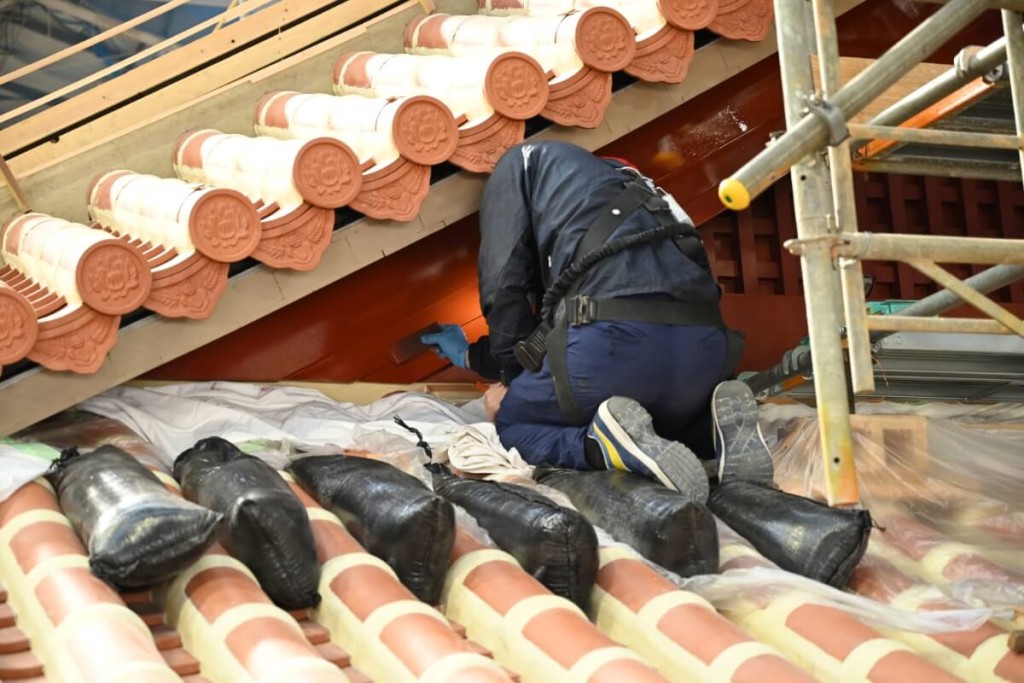
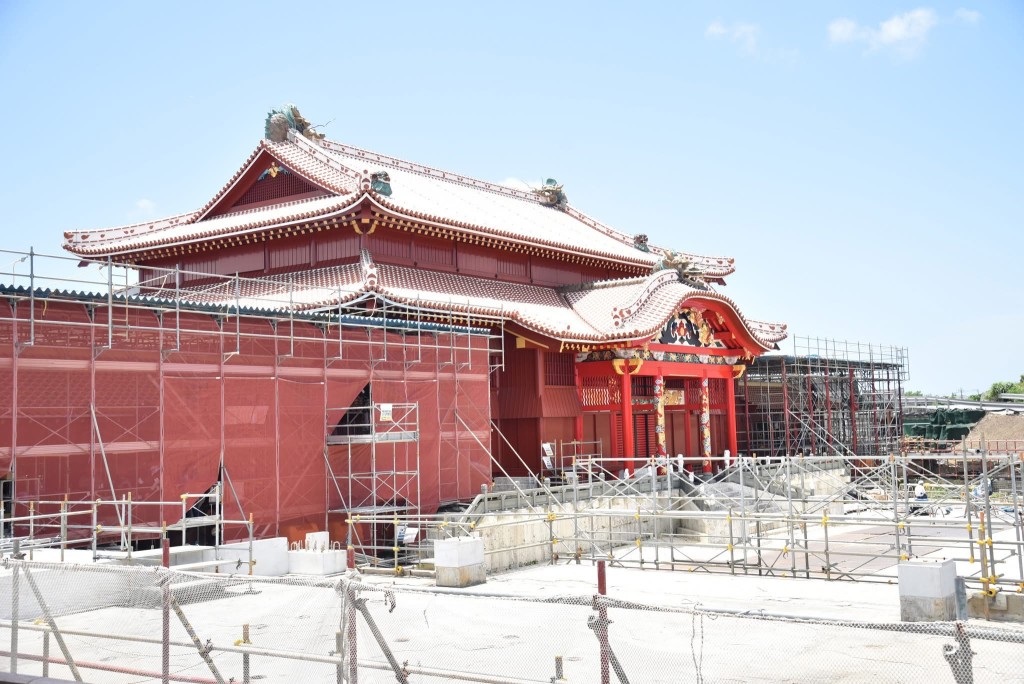
Shuri Castle in Japan's Okinawa Prefecture was unveiled again today following years of restoration after a devastating 2019 fire, showcasing one-metric-ton dragon roof ridge ornaments alongside intricate embroidery and golden dragon pillars recreating the Ryukyu Kingdom era.
2019 blaze cause remains undetermined
Built in the late 14th century as the royal palace of the Ryukyu Kingdom, the castle stood at the heart of a kingdom whose monarchs received investiture from Chinese emperors prior to its annexation by Japan. According to the Shuri Castle Park Management Center, the earliest known investiture envoy was sent in 1372 by Ming Dynasty founder Zhu Yuanzhang, while the last took place in 1866 during the Qing Dynasty, headed by Hanlin Academy official Zhao Xin as chief envoy.
Jiji Press reported that Shuri Castle suffered three fires between the 15th and 18th centuries and has been razed five times in total, including the 2019 blaze.
Designated a national treasure in 1933, the complex was destroyed by US forces during World War II. After the main hall was rebuilt in 1992 and surrounding structures were subsequently restored, the site—along with other castle ruins in Okinawa—was registered as a World Heritage site in 2000, becoming one of the prefecture's top tourist attractions.
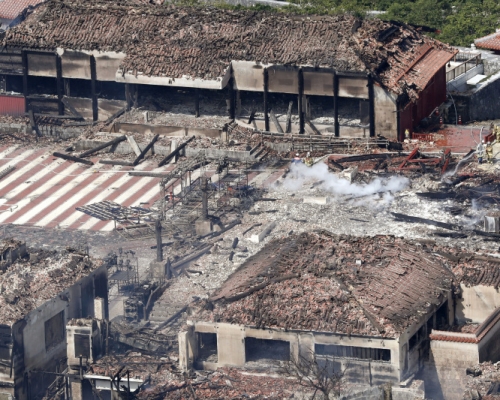
Located in Naha, the landmark was engulfed by a nighttime inferno on October 31, 2019, reducing its wooden main, north and south halls to ashes and destroying numerous artifacts from the Ryukyu Kingdom era. While the exact cause of the blaze has still not been determined, an Okinawa prefectural third-party panel concluded it was likely triggered by an electrical equipment malfunction.
Greater historical accuracy
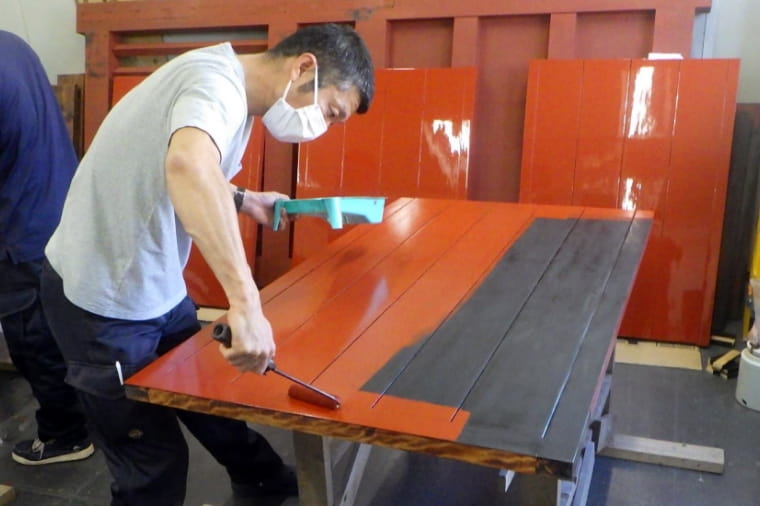
According to the Okinawa Times, Japan's central and local governments joined forces on the rebuilding effort: the central government oversaw the main hall's core structure, while the Okinawa prefectural government used reconstruction funds to produce decorative carvings, red roof tiles and other building materials. Work formally kicked off in 2022, with main structural work wrapping up at the end of September this year.
As with the 1992 restoration, the project aimed to recreate the castle's 18th-century appearance. However, restoration teams achieved even greater historical accuracy by incorporating newly discovered archival records alongside research based on high-resolution analysis of old photographs.
Fire safety measures have also been bolstered, with sprinklers installed inside the main hall alongside new smoke curtains and fire doors designed to stop flames from spreading.