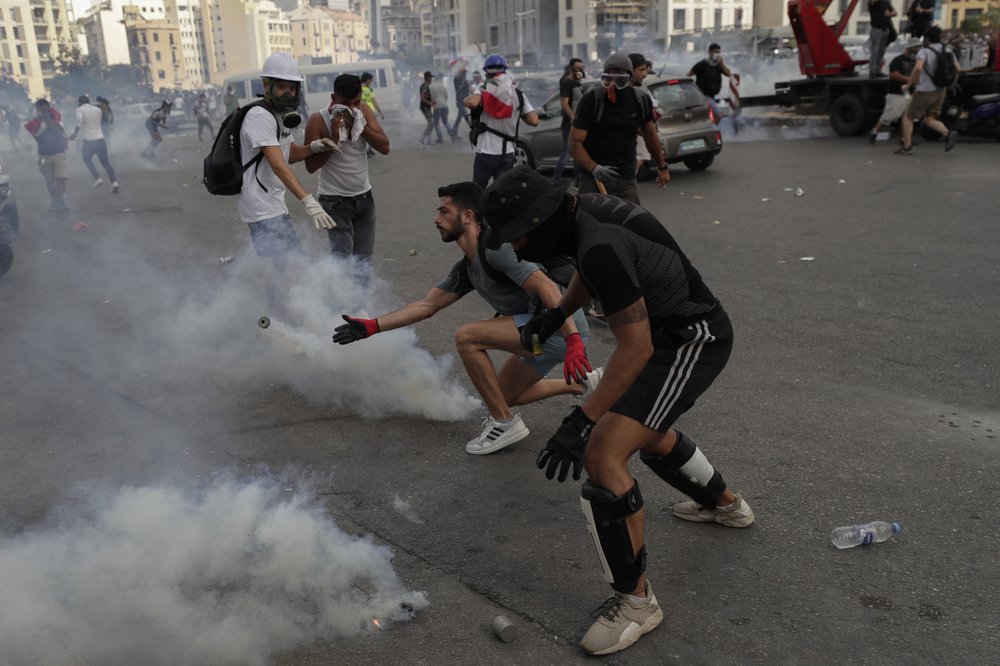
Public fury over this week’s massive explosion in Beirut took a new turn Saturday night as protesters stormed government institutions and clashed for hours with security forces, who responded with heavy volleys of tear gas and rubber bullets.
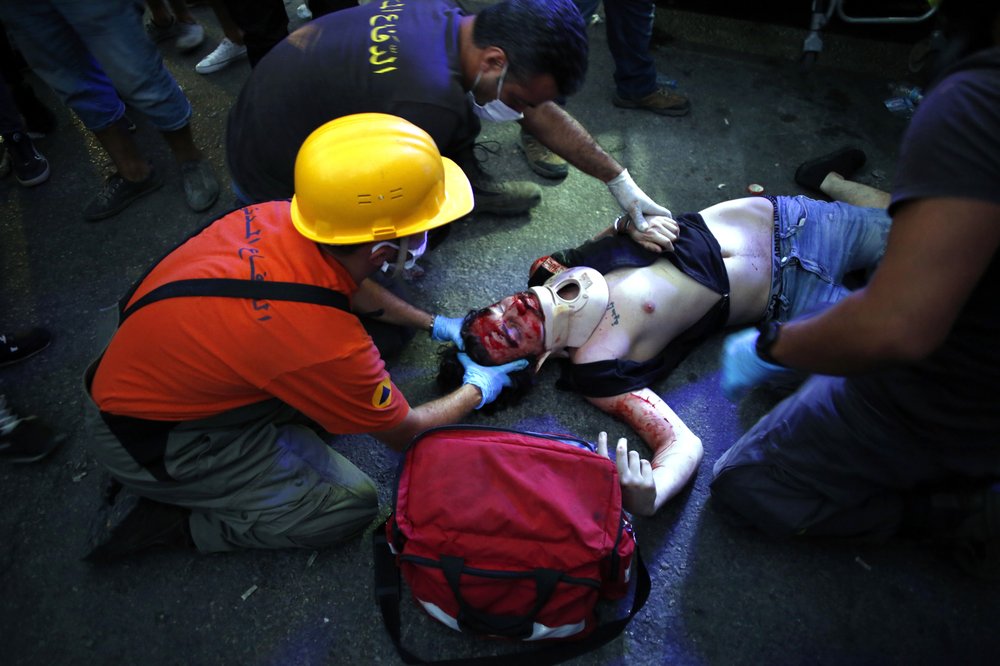
One police officer was killed and dozens of people hurt in the confrontations, which played out in streets that were wrecked from Tuesday’s blast at the port that devastated much of the city and killed nearly 160 people. Dozens were still missing and nearly 6,000 people injured.
The disaster has taken popular anger to a new level in a country already reeling from an unprecedented economic and financial crisis and near bankruptcy.
Activists who called for the protest set up symbolic nooses at Beirut’s Martyrs’ Square to hang politicians whose corruption and negligence they blame for the explosion.
The blast was fueled by thousands of tons of ammonium nitrate that had been improperly stored at the port for more than six years. Apparently set off by a fire, the explosion was by far the biggest in Lebanon’s troubled history and caused an estimated US$10 billion to US$15 billion in damage, according to Beirut’s governor. It also damaged 6,200 buildings and left hundreds of thousands of people homeless.
“Resignation or hang,” read a banner held by protesters, who also planned to hold a symbolic funeral for the dead. Some nooses were also set up along the bridges outside the port.
Khodr Ghadir, 23, said the noose was for everyone who has been in power for the last 30 years. “What happened was a spark for people to return to the streets.”
A placard listed the names of the dead, printed over a photo of the blast’s enormous pink mushroom cloud. “We are here for you,” it read.
Dozens of protesters stormed the buildings of government ministries and the headquarters of the banking association, turning their rage to state and financial institutions.-AP
People clash with police during a protest against the political elites and government after this week's deadly explosion at Beirut port which devastated large parts of the capital and killed more than 150 people, in Beirut, Lebanon, Saturday.
A injuried protestor lies on the floor during clashes with police as part of a protest against the political elites and the government after this week's deadly explosion at Beirut port which devastated large parts of the capital in Beirut, Lebanon.