With applications closing at the end of the year, the University of Hong Kong is bidding for land in the Hung Shui Kiu University Town in the Northern Metropolis, aiming to build an “AI-driven modern campus” there that will complement the main campus’ strengths in traditional disciplines, said president and vice-chancellor Zhang Xiang.
After moving some faculties in “non-traditional disciplines of the AI era” to the Northern Metropolis, HKU will “cross-fertilize” them with the traditional disciplines at its Pok Fu Lam’s main campus, giving rise to a series of “AI+” programs – such as “AI+ medicine, AI+ robotics, and even some of our humanities,” Zhang said.
He estimated the first phase of HKU’s Northern Metropolis development to cost roughly HK$1 billion, adding that the school plans to tap the government’s HK$10 billion interest-bearing loan scheme for campus expansion in the university towns.
HKU has also sought funding through the debt market. Earlier this year, it established a US$1 billion medium-term note program and subsequently issued HK$1.5 billion in fixed-rate bonds through its Euro medium-term note program.
Depending on how much land it is awarded, the university will consider further bond issues to raise capital, said Zhang, who expressed confidence in its financial position.
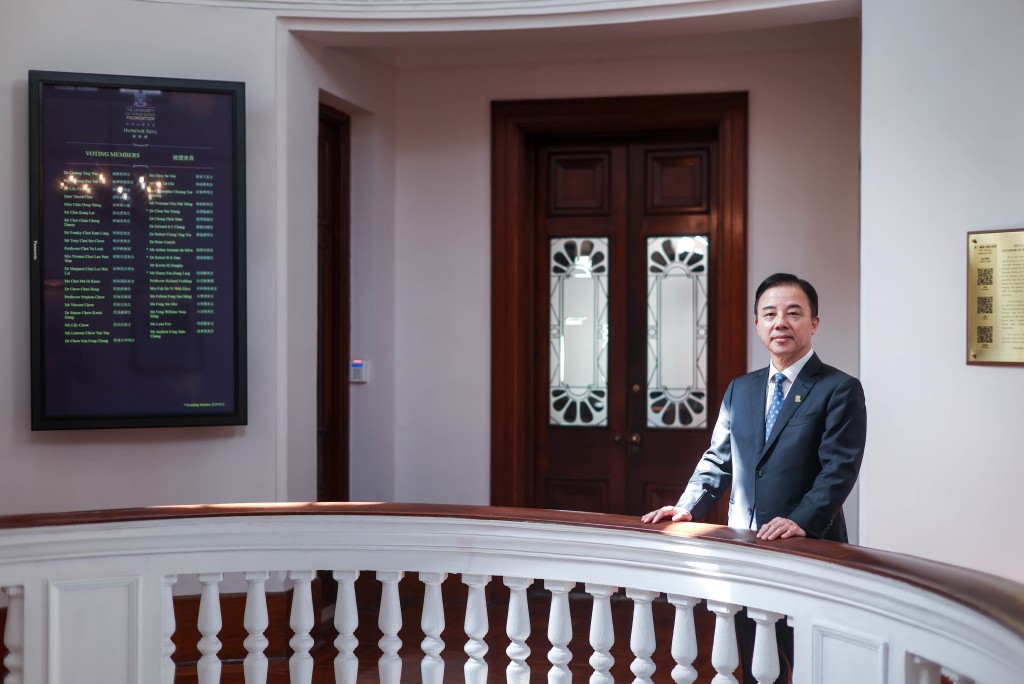
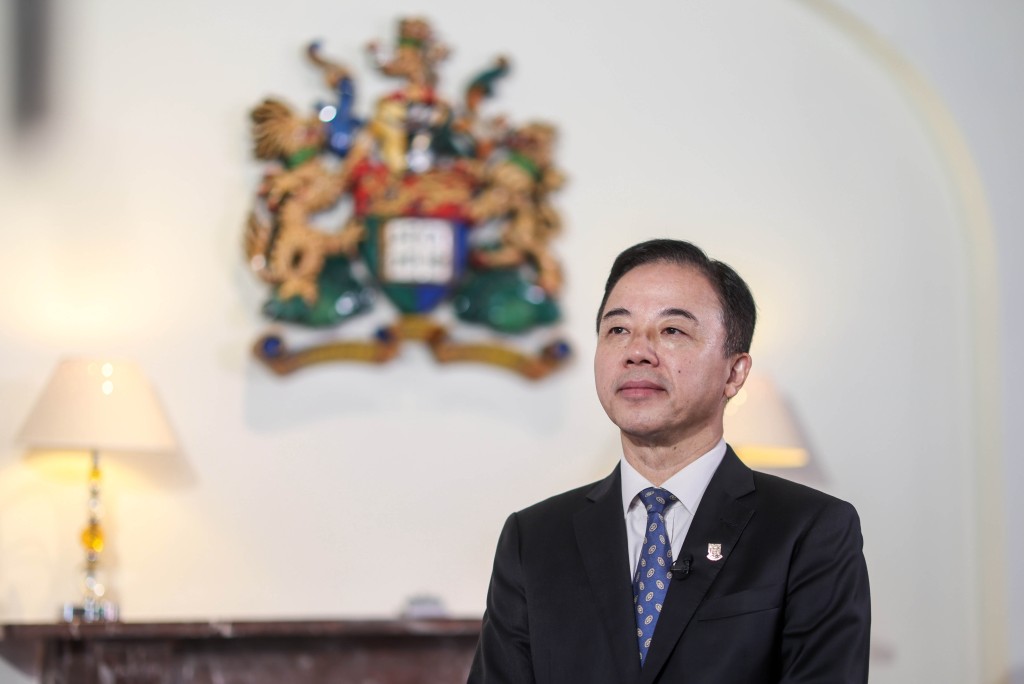
Zhang Xiang
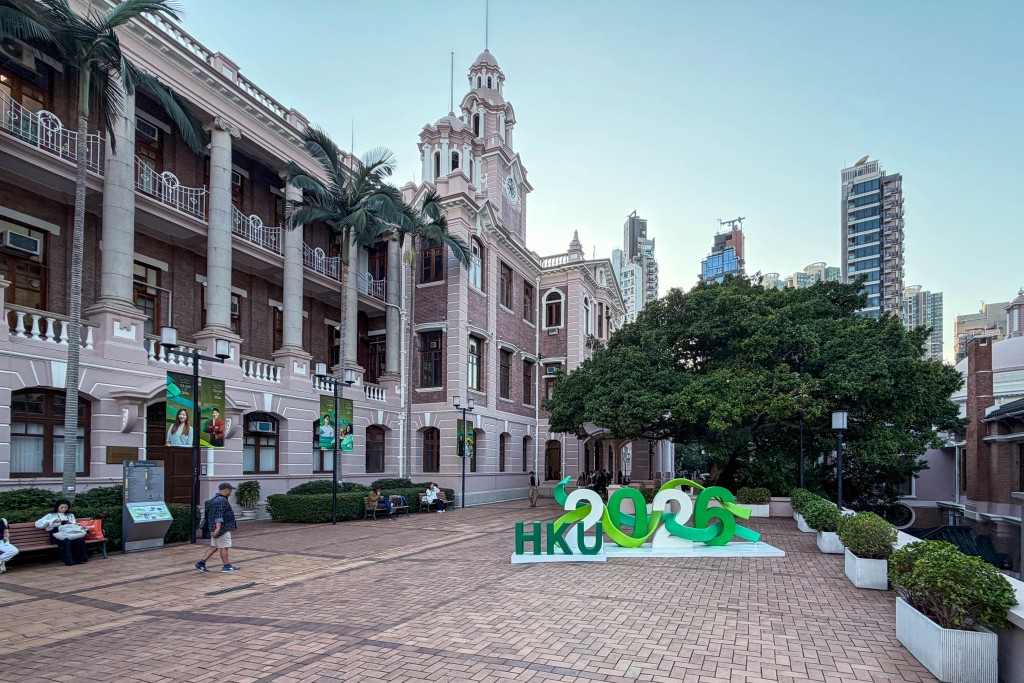
Main Building at the University of Hong Kong
The need for space stems from HKU’s relatively small campus, which Zhang said is only one-third the size of the Chinese University’s and one-sixth that of Tsinghua University.
HKU has spent the past eight years expanding its Pok Fu Lam campus, where 20 buildings are under construction. Zhang said up to 65 percent would be completed by the end of this year, with the remainder finished within two to three years.
On the blueprint for HKU’s Northern Metropolis campus, Zhang said it will be “highly internationalized,” with partnerships involving leading institutions from Europe, North America and Asia.
Earlier this month, HKU signed a partnership agreement with Peking University, ranked second in Asia – only after HKU by QS, to establish a joint center in the Northern Metropolis.
Building upon existing dual-degree programs, including in law, the new pact could expand the “2+2” framework – where students spend two years in HKU and two in PKU – to other disciplines, potentially including STEM and innovation, and establish integrated undergraduate-to-postgraduate pathways for students, said Zhang.
“I think PKU is interested to … have a more international exposure [through] Hong Kong, a global city – not to mention that the Northern Metropolis will be a global landscape – and access more international industries as well.”
Zhang added that he expects the industrial base at the Northern Metropolis to take shape in five to 10 years, with collaboration with Shenzhen’s mature industries helping drive Hong Kong’s technological development.
Expanding beyond Hong Kong's borders
Beyond Hong Kong, HKU recently broadened its presence in mainland China and overseas. Its Zhangjiang base in Shanghai, led by the university’s School of Computing and Data Science, opened teaching, research and residential facilities earlier this year under a “one school, two teaching sites” model.
Zhang said the base is surrounded by about 3,000 high-tech companies, with many specializing in AI and chips. Industry leaders and chief engineers are invited into classrooms to share the latest technological developments.
The proximity also allows students to get internships at those companies more easily, Zhang said, while Shanghai’s greater computing power benefits faculty research.
Last summer, HKU established its first European campus in Barcelona, Spain for joint programs involving the HKU Business School. Zhang said the university will continue expanding educational and research collaborations in Europe, including in France and the United Kingdom.
Seeking a broader student mix
Alongside its broadening overseas partnerships, HKU is working to further internationalize its student population, Zhang said.
“If Hong Kong is going to be a global education hub, we should have the ability to attract more top students from all over the world,” Zhang said, noting the desirability of raising HKU’s ratio of non-local to local students from 1:2 to 1:1. This aligns with the government’s current 50 percent cap for non-local student enrolment.
Within HKU’s pool of non-local students, mainland students accounted for roughly 65 percent of undergraduates and 95.1 percent of its taught postgraduates in the last academic year.
“In the core undergraduate education, we still have quite a good balance,” Zhang said, but acknowledged that “we have to keep recruiting overseas students to keep a good balance and that's the goal.”
To do so, he said HKU has sought to foster an “intellectually stimulating environment” where “deep scholarship with long-lasting impact” is pursued. This includes hiring top global scholars – among them two Nobel laureates and a Fields medalist – and maintaining an international professoriate body, with over 70 percent drawn from overseas.
HKU also hopes to raise more funding from the government, the wider community and alumni to provide more scholarships for international students, Zhang said. The university has also sent recruitment teams across Asia, Europe, the Americas and Africa and plans to step up those efforts.
Bold moves: a 10-year journey at HKU's helm
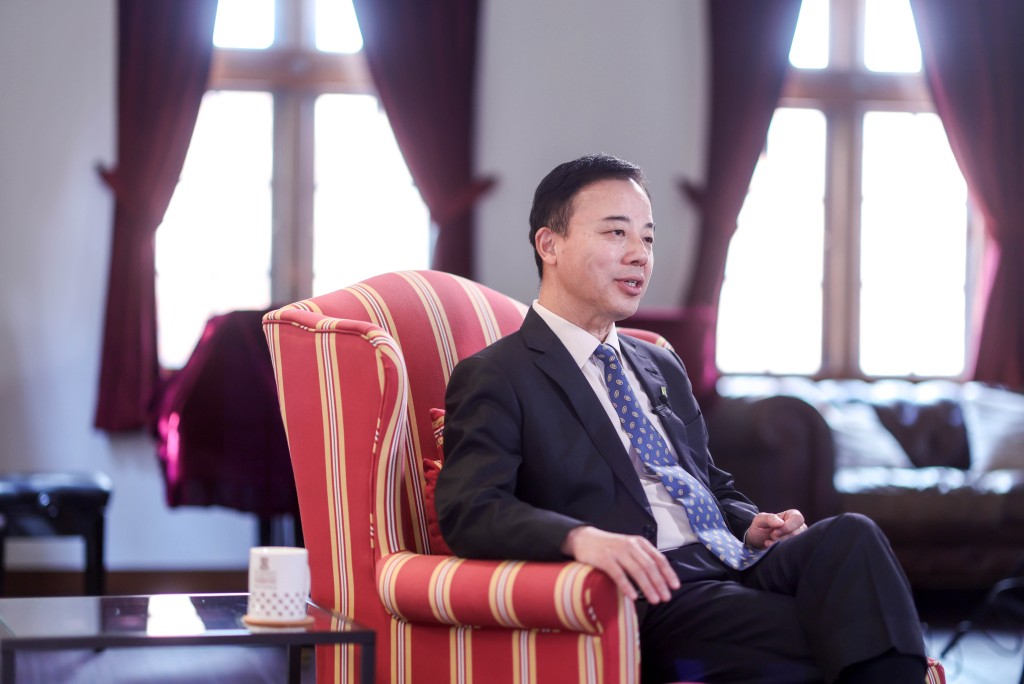
Zhang Xiang
Zhang Xiang announced earlier this year that he will step down as HKU president and return to research in July 2028, bringing to a close a decade-long tenure marked by both achievements and challenges.
Under his leadership, HKU has climbed the international rankings, placing first in Asia and 11th globally in both the 2026 and 2027 QS rankings. Yet his eight years at the helm have not been without setbacks.
“Any good leader – whether a dean, department head or university president – must be bold,” Zhang said. “Reform will inevitably upset some people, but we must act in the broader interests of the university and its development.”
HKU’s history of more than a century provides a strong foundation, he said, but also leaves it with longstanding practices in need of modernization. Systems that worked well in the past may no longer meet today’s needs, and the university must adapt.
Zhang highlighted three major areas of reform during his tenure. The first involved strengthening research and teaching, including through changes to the evaluation and promotion systems of its academic staff.
The second was an overhaul of HKU’s pay structure, introduced several years ago to replace rigid salary scales with a more flexible, performance-based system that allows stronger performers to receive faster pay rises
“You can imagine the noise … but not everybody stands to be a winner in a reform,” Zhang said, adding that the overhaul has helped attract talent and retain excellent administrative staff.
The third involved improving the university’s health insurance scheme to give employees access to better medical care – a benefit he considered important in attracting top talent.
Zhang said he had always intended to hand over the reins to a more capable successor after two terms. Fresh leadership, he believes, will take HKU to greater heights, particularly amid the rapid changes brought by artificial intelligence.