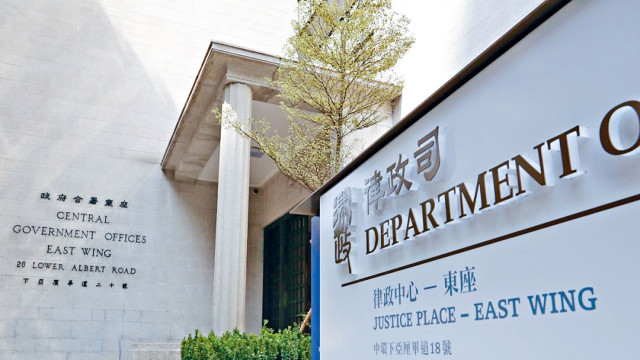
Hong Kong’s Department of Justice applied on Tuesday for a sentence review for four individuals convicted in the Convoy corporate fraud case, arguing that the trial judge failed to properly account for their breach of trust during sentencing.
Prosecutors alleged that two former Convoy Global executives and a manager colluded with the general manager of Gransing Securities to arrange for Gransing to place bonds between 2014 and 2015, while concealing that the bonds were actually being placed by Convoy-affiliated entities.
Former Convoy executive director Mak Kwong-yiu was sentenced to seven months in prison and disqualified from serving as a company director for three years. Former chief financial officer Christie Chan Lai-yee, 49, was sentenced to five months in prison, suspended for 18 months, and disqualified from serving as a director for two years.
Former manager of Convoy Wong Shuk-on, 42, received a four-month prison sentence, suspended for 18 months. Lee Yick-ming, 55, Gransing’s former general manager, was sentenced to five months in prison.
Senior Public Prosecutor Human Lam Hiu-man stated that the three Convoy employees held senior leadership positions and that Lee actively aided them, asserting that the trial judge overlooked the defendants' severe breaches of trust and fiduciary duty.
Lam emphasized that the case involved a publicly listed company and was grave in nature, carrying substantial public ramifications.
She argued that the defendants' personal circumstances should not have served as mitigating factors, pointing out that the trial judge had granted a 30 percent sentence reduction—a discount typically reserved for guilty pleas.
The convictions stemmed from a deliberate conspiracy to conceal related-party transactions rather than mere technical non-compliance, Lam argued. Citing legal precedent, she maintained that suspended sentences were inappropriate and that the defendants should serve immediate custodial sentences measured in years.
While the defense argued that the case’s nine-year duration justified sentence reductions, Lam contended that the penalties imposed failed to reflect the gravity of the offenses.
Defense counsel conceded that the case involved a serious breach of trust, but maintained that the specific context must be weighed in sentencing.
The defense argued that Convoy Global’s bond issuance ultimately benefited the company, was not driven by related-party self-dealing, and would have received board approval even if formal consent had been sought.