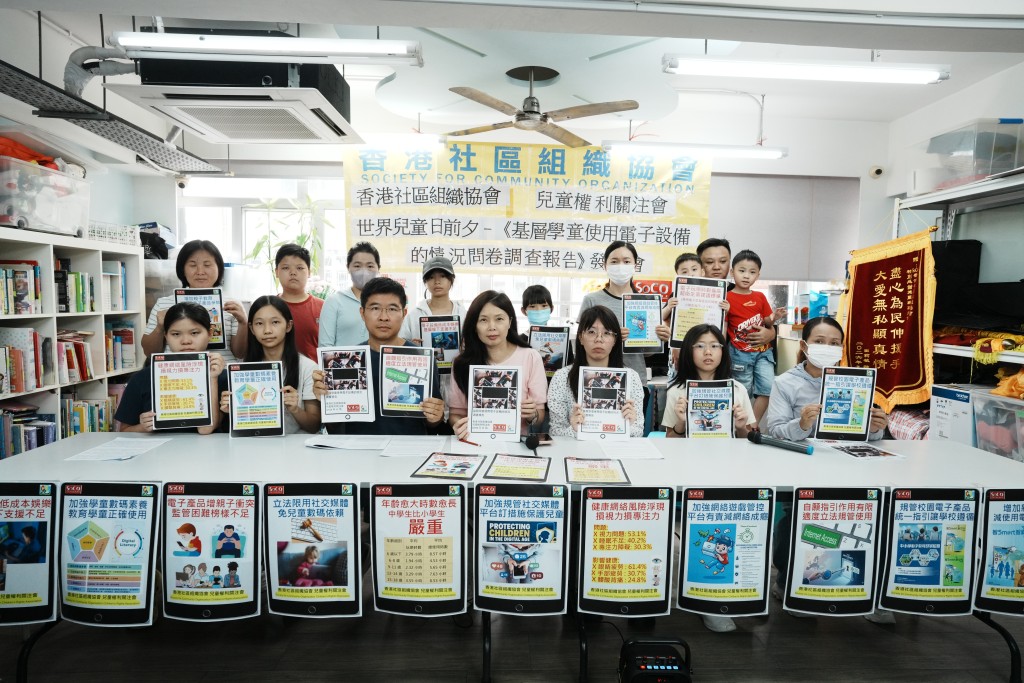
More than half of grassroots children spend over two hours a day on electronic devices for entertainment, with 65 percent having fought with their parents over screen time, a survey found.
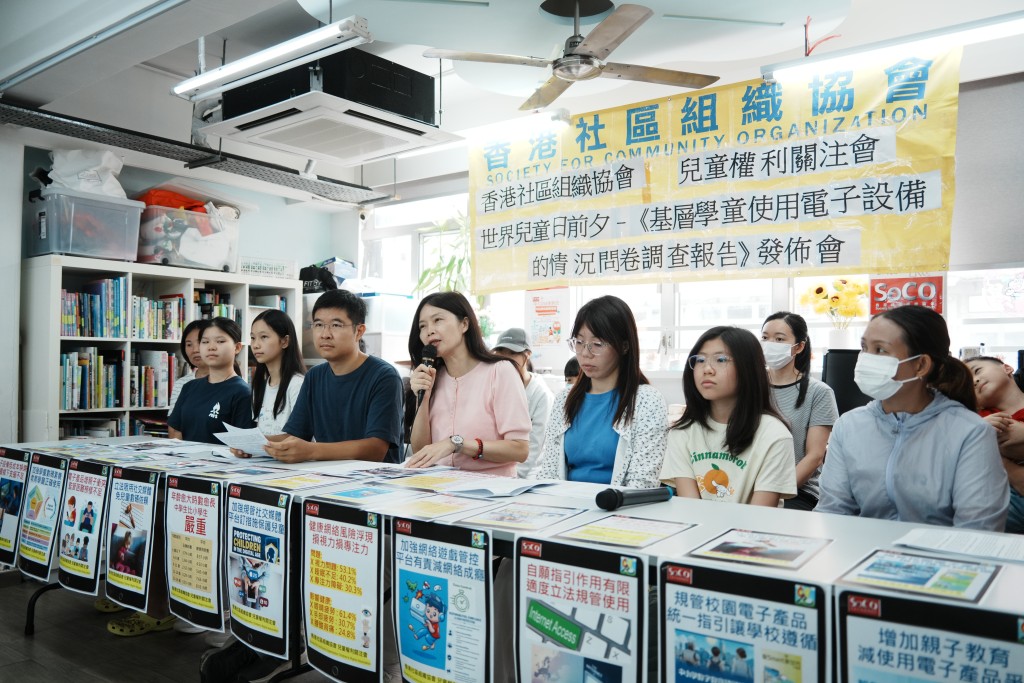
Conducted by the Society for Community Organization (SoCO) between February and July, the survey collected 254 questionnaires from primary and secondary school students from grassroots families.
It was found that 73.2 percent of respondents described themselves as frequent users of e-gadgets, with nearly 80 percent naming smartphones as their most-used device.
Online homework topped the list of uses at more than 73 percent, followed by watching videos at 71.7 percent and video games at 57.9 percent.
Worryingly, average screen time among children was 6.19 hours a day, with a median of four hours. Entertainment took the largest share at 2.61 hours a day, with over half of respondents exceeding the Department of Health's recommended limit of under two hours.
The survey also found that screen time rose sharply with age, from 4.53 hours a day among children aged 6 to 8 to 8.53 hours among those aged 15 to 18.
With electronic devices becoming more accessible, assistant director at SoCO Wong Chi-yuen said they served both as a homework tool and as the cheapest entertainment for students from low-income families.
Arguments over device use affected 65 percent of the children surveyed, with 63 percent of those fights sparked by criticism of how long they played. Some 33.5 percent of children also admitted that the disputes had increased tension with their parents.
Violence after phone was taken
Lee, a mother of a 14-year-old with attention deficit disorder, said her son had done well in primary school but became hooked on games and videos after she bought him a tablet and phone for secondary schoolwork.
As her son grew older, Lee said she no longer dared to discipline him, recalling being shoved when she interrupted his gaming for dinner and a suicide threat when she took his phone.
A hospital stay after a police call brought a slight improvement, she said, but the old habits returned once he was home.
Calls for screen-time limits
While acknowledging devices' role as both a learning tool and a source of entertainment, SoCO organizer Lau Yin-shan called for the government to study mainland and overseas practices for limiting children's screen time.
She explained that some social platforms adopt business models that push content to users through big data, keeping children and teens hooked for fear of missing out.
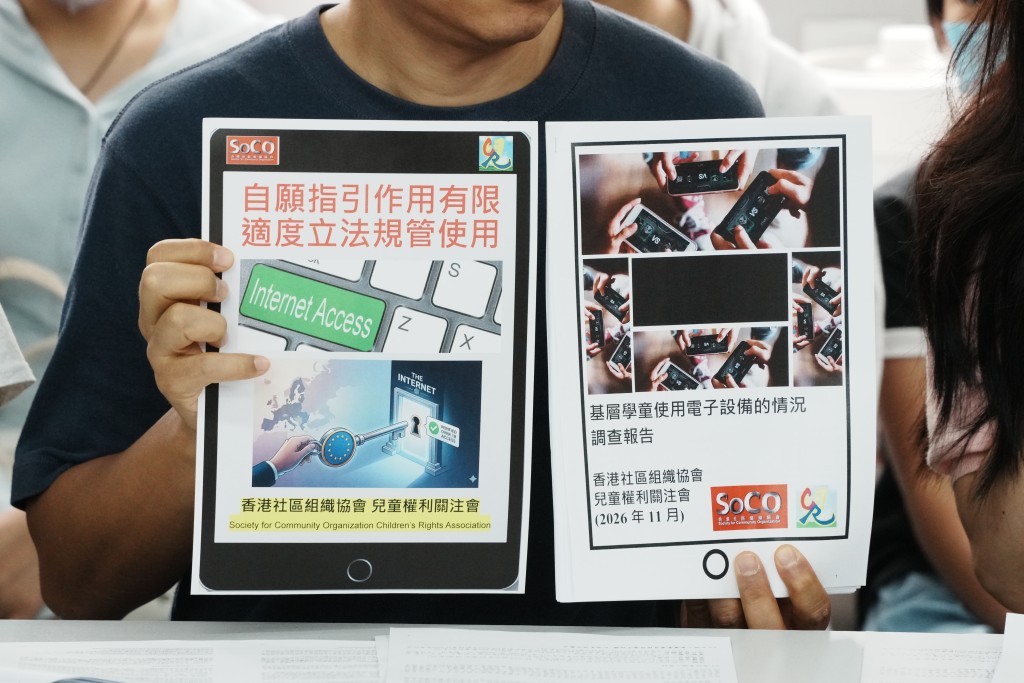
Stressing the need for balance among learning, socializing and entertainment, she suggested that the government introduce age-based time limits and restrictions on algorithm-driven recommendations for minors.
For many low-income families, extracurricular activities are out of reach, leaving many children with little to do after school but play on phones and tablets, SoCO deputy director Sze Lai-shan added.
She called on the government to allocate more resources and staffing for school-based activities aimed at grassroots families, and to expand parent education to reduce family conflict.