






Read More












Veteran stock analyst Louie Shum Chun-ying dies at 65, obituary shows
25-10-2026 15:13 HKT


Resale prices of 2TB iPhone Duo hit $33,000 amid scarce supply
25-10-2026 19:58 HKT


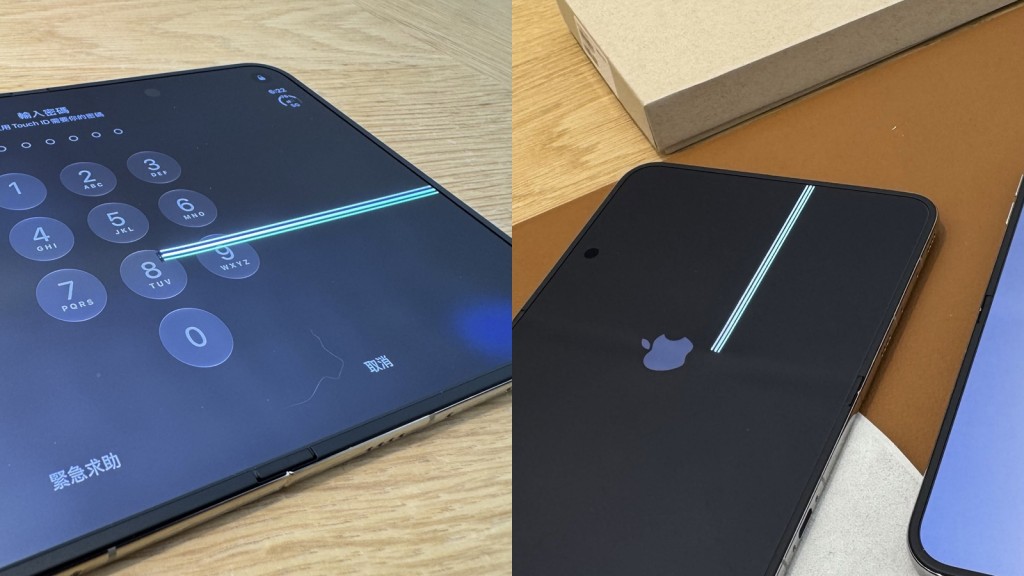
Apple's first foldable smartphone, the iPhone Duo, has encountered early technical issues following its launch on Friday, with initial buyers across multiple markets reporting screen failures along the inner display crease.
Despite strong initial demand and sellouts, early adopters have documented problems including cracked inner flexible OLED panels, permanent black display lines, and abnormally bright vertical white streaks along the central hinge area.
Online discussions have raised concerns over possible structural design defects in the mechanical hinge mechanism, prompting consumer caution.
In Hong Kong, an early purchaser took to social media platform Threads to recount his experience after receiving the device on launch day.
The owner said the phone operated normally for about half a day before he encountered abnormal resistance while attempting to unfold the chassis.
After verifying that no debris was lodged in the fold, he attempted to reopen the phone and heard a loud popping noise, which left the inner display damaged.
Store representatives at an official Apple retail location examined the unit and confirmed that there were no signs of accidental damage or external abuse.
Observing a visible internal protrusion pushing against the inner screen, staff provided an immediate replacement with a brand-new handset.
The customer noted that while the replacement phone had functioned without issue over subsequent days, the incident suggested inconsistent quality control in early production runs.
He advised prospective shoppers to observe the situation before purchasing and recommended securing extended warranty coverage.
Social media users analyzing device teardowns noted that the failure likely stems from the mechanical tolerances of the hinge assembly, where internal resistance could exert uneven pressure directly onto the fragile flexible OLED panel.
Others pointed out that the critical flex cable channel spanning both halves of the chassis could puncture the display layer from beneath if misaligned during factory assembly.
Francis Fong Po-kiu, honorary president of the Hong Kong Information Technology Federation, said the screen failures highlight the intricate structural engineering challenges Apple faces in its inaugural foldable hardware.
He explained that because the new design has not undergone prolonged real-world market testing, manufacturing tolerances and mechanical stress thresholds are calibrated with very little margin for error, meaning minor component variances could trigger failures at the crease where bending stress is highest.
Fong observed that many users operate foldable devices with a single hand from one corner or pull the halves apart too forcefully.
Such asymmetrical force generates significant localized stress concentrations across the joint where the hinge interfaces with the display, potentially severing microscopic display wiring or initiating micro-cracks in the ultra-thin glass layer.
He recommended that owners use both hands with even pressure when opening the handset, follow the natural movement of the hinge, and check the inner surface for grit or hard particles before closing the device.
In the secondary retail market, independent vendors have also sounded a cautious note.
Steve, operator of mobile phone retailer Happy Telecom in Mong Kok's Sin Tat Plaza, indicated that supply of the handset remains constrained amid reports of low production yields for the flexible panels.
He suggested that consumers who are not in a rush to acquire the device consider waiting for the second production run, noting that subsequent manufacturing batches typically resolve early fabrication flaws and offer more consistent quality assurance.