

Read More
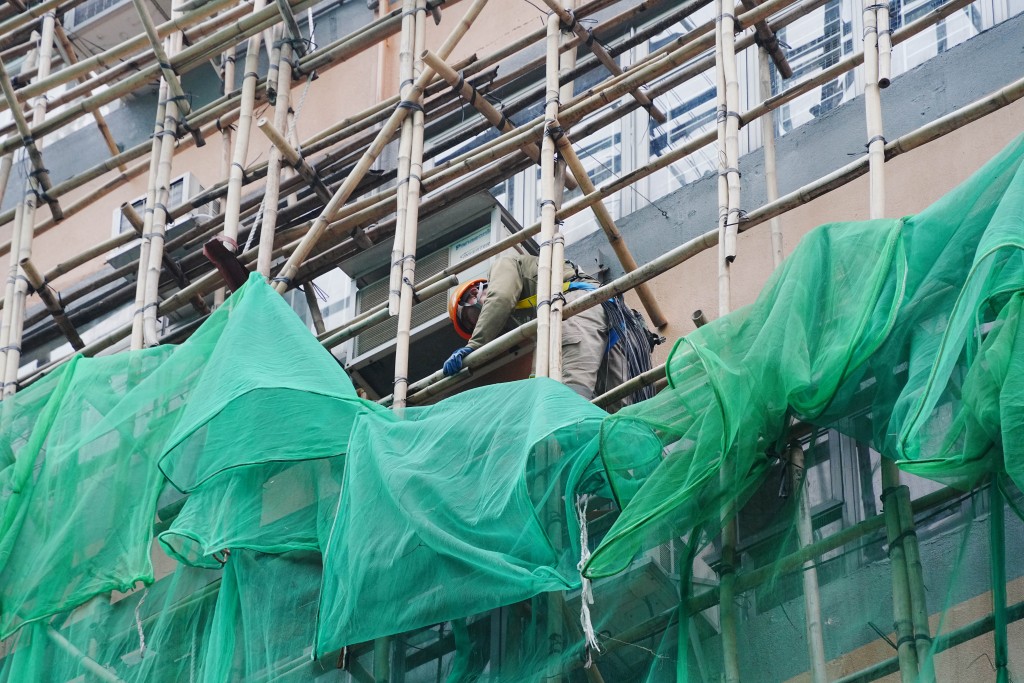
Hong Kong has adopted an updated national safety standard for scaffold protective nets that sets stricter flame-retardance requirements for certain types of netting, as scrutiny of construction-site fire safety continues following last year’s deadly Wang Fuk Court fire in Tai Po.
ADVERTISEMENT
SCROLL TO CONTINUE WITH CONTENT
The Buildings Department began applying GB 5725-2025, “Fall protection—Safety nets,” on September 1, the same day the mandatory national standard took effect in mainland China. It replaced the previous GB 5725-2009 version.
The department requires registered contractors using nets manufactured on or after September 1 under the GB 5725 standard to have their flame-retardant performance tested in accordance with the new version. Contractors must also provide designated laboratories with the nets’ manufacturing date and production method so that the appropriate tests can be applied.
The change comes after the November 26, 2025 fire at Wang Fuk Court in Tai Po, where scaffolding outside several blocks caught fire during major repair works. The incident prompted heightened attention to the safety and flame-retardant performance of materials used on external scaffolding.
Unlike the 2009 standard, which did not classify safety nets according to how they were manufactured, GB 5725-2025 divides them into three categories based on production method: twisted-woven safety nets, brushed warp knitted safety nets, and dip-coated safety nets. It also introduces corresponding structural requirements and marking rules.
The most significant change concerns flame resistance.
Under the previous standard, flame-retardant nets were subject to a uniform limit of four seconds for both afterflame time — the period during which a material continues to burn with a flame after the ignition source is removed — and afterglow time, when flameless burning continues.
Under the new standard, flame-retardant twisted-woven nets and brushed warp knitted safety nets must continue to meet a maximum afterflame and afterglow time of four seconds. For dip-coated safety nets, however, both limits have been tightened to two seconds.
The updated standard also requires product markings to identify the net’s manufacturing process, as well as its intended use, dimensions and protection grade. The changes allow contractors and testing laboratories to identify the type of net and apply the corresponding requirements.
Other revisions cover testing methods for impact resistance, penetration resistance, weather resistance and the relationship between breaking strength and elongation.
Ho Ping-tak, chairman of the Hong Kong and Kowloon Bamboo Scaffolding Workers Union (Tung-king), welcomed the tighter requirement for dip-coated nets.
Ho said the flame-retardant properties of dip-coated nets could deteriorate more quickly after prolonged exposure to sunlight, while the material itself could become more brittle. He said distinguishing them from warp-knitted nets and imposing a stricter flame-retardance threshold was a safer approach.
He also suggested that Hong Kong authorities conduct more frequent spot checks on dip-coated nets.
Ho said the clearer identification of manufacturing methods would also allow contractors to select nets according to site conditions.
“For walls that are frequently exposed to sunlight, drawn-filament nets can be used, while dip-coated nets can be used on walls without much sunlight. It gives contractors another option,” he said.
More than a month after the new standard came into effect, Ho said there had been no significant change in the supply of safety nets or in scaffolders’ day-to-day work.
Tiger Pulse
Should Hong Kong strengthen inspections of scaffolding safety nets at construction sites?
Voting Closes in 7 days