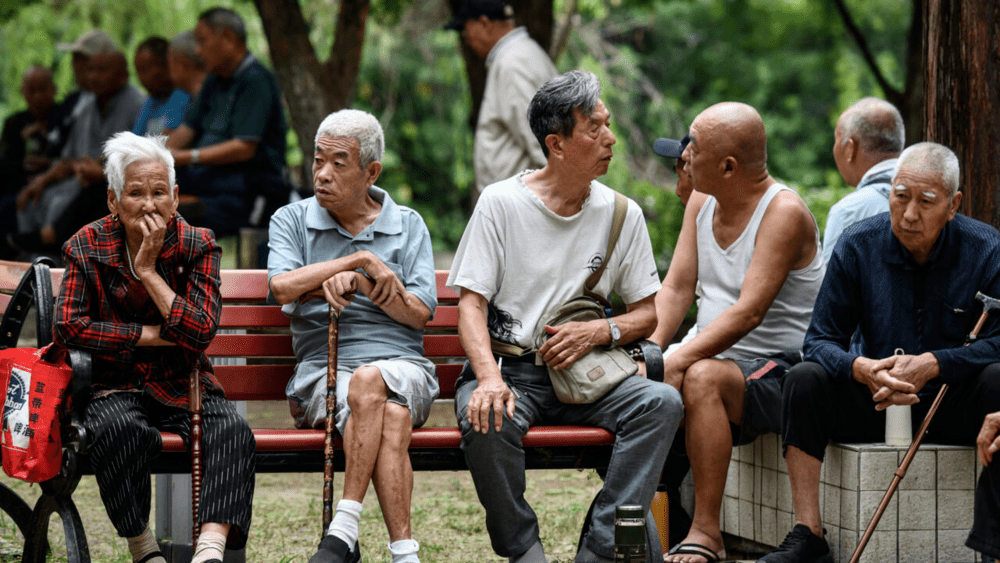
I think it is fair to say that dealing with old age is a growing problem just about everywhere but especially so in the western world. The good news is that China is creating its own solutions rooted in its ancient culture.
The art of growing old in China is shaped by obedience to both ancient Confucian moral duties and subsequent laws, rules and regulations. Old duties and modern rules work hand in hand.
This combination of Confucian exhortation to honor one’s parents and modern legal insistence on rules and institutions has created in China a very distinctive approach to elderly care. It is one that leans heavily on family responsibility alongside newly strengthened back-up systems run by the state.
At the heart of Chinese tradition lies the concept of filial piety, or xiao, a core Confucian virtue. In his Analects and other works, Confucius taught that respect for parents and ancestors is the root of social harmony.
Filial piety, he said, is never merely sentimental because it also maintains good behavior. Children should live near their elders, provide materially for them and perform rituals that affirm family continuity. After Confucius, for many centuries, the family unit acted as the primary social safety net and it was the family that was responsible for old people’s dignity, care, and social standing.
Subsequently, another line of Chinese philosophy, led by thinkers like Han Fei, was developing something called Legalism.
Where Confucius appealed to moral conscience and ritual, the Legalists trusted the law, bureaucracy, and enforceable responsibilities – in other words top-down legalistic solutions which came into play when moral persuasion alone could not ensure good order. And so it happened that over time Confucian moral education and Legalist rules sometimes competed, but most of the time happily complemented one another.
Which brings us to the present day and contemporary China – with its modern lifestyles and associated social issues – where this mixture of old and new, of moral expectation and legal enforcement, protects the elderly far better than in almost any western society. Filial piety, of course, remains the ideal because family care with close emotional closeness, family visits, and financial support remains the "gold standard" and is much treasured.
Then come the modern realities – rapid urbanization, mass migration, the demographic effects of the one-child policy and the resulting ‘4-2-1' family structure – four grandparents, two parents, one child. These modern realities strain the old Confucian ideals. When children work far from home and often have no siblings to share the duty of care, many elders face lonely isolation.
The state has responded by buttressing institutional assistance for the elderly with extended pensions, better healthcare coverage, community day centers, and more housing for seniors. Meanwhile, local governments have been promoting elderly-friendly urban planning and running publicity campaigns to urge every family to stay in touch with their parents.
Sadly, at times the law has to intervene. Today, neglect of the elderly can result in legal penalties to ensure that social, moral and family responsibilities are enforced.
This dual strategy – Confucian values supplemented by Legalism – is helping China lead the world in the care of its elderly. When families cannot cope, the state is there to assist. A delicate balancing act has to be maintained between filial piety, which could cause the state to shirk its responsibility, and over-reliance on the state, which risks eroding the personal family bonds that make old age meaningful.
I always believe that how a society treats its elderly reveals its values and I believe China’s unique values, anchored in ancient lifelong duties to parents and ancestors, and tempered by a political culture that builds rules and enforces responsibilities, is by far the best in the world. Growing old should always be met with both warmth and dignity.
Cheng Huan is an author and a senior counsel who practices in Hong Kong