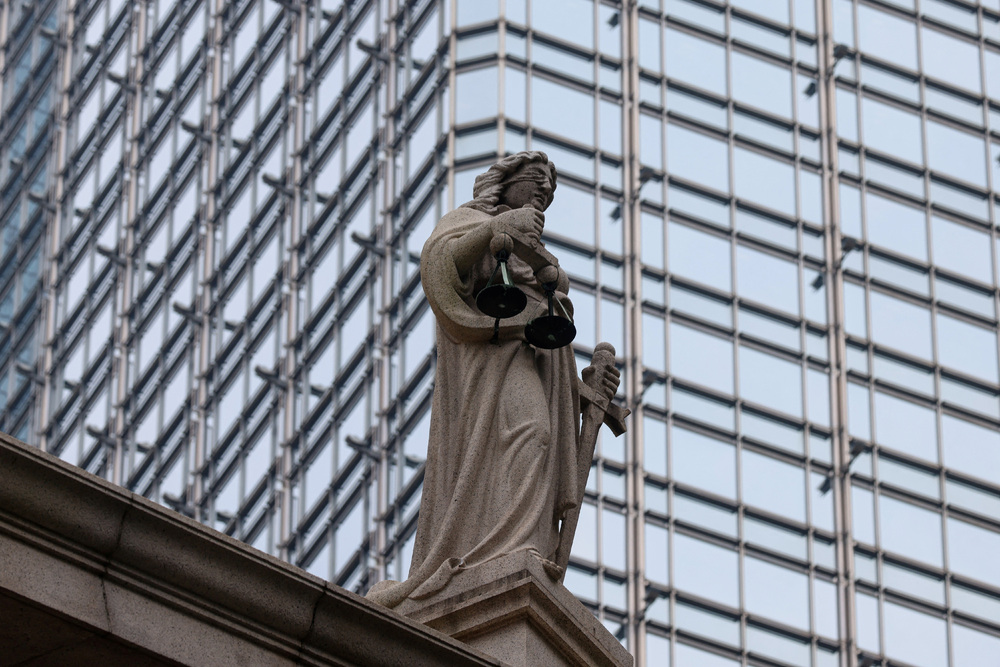
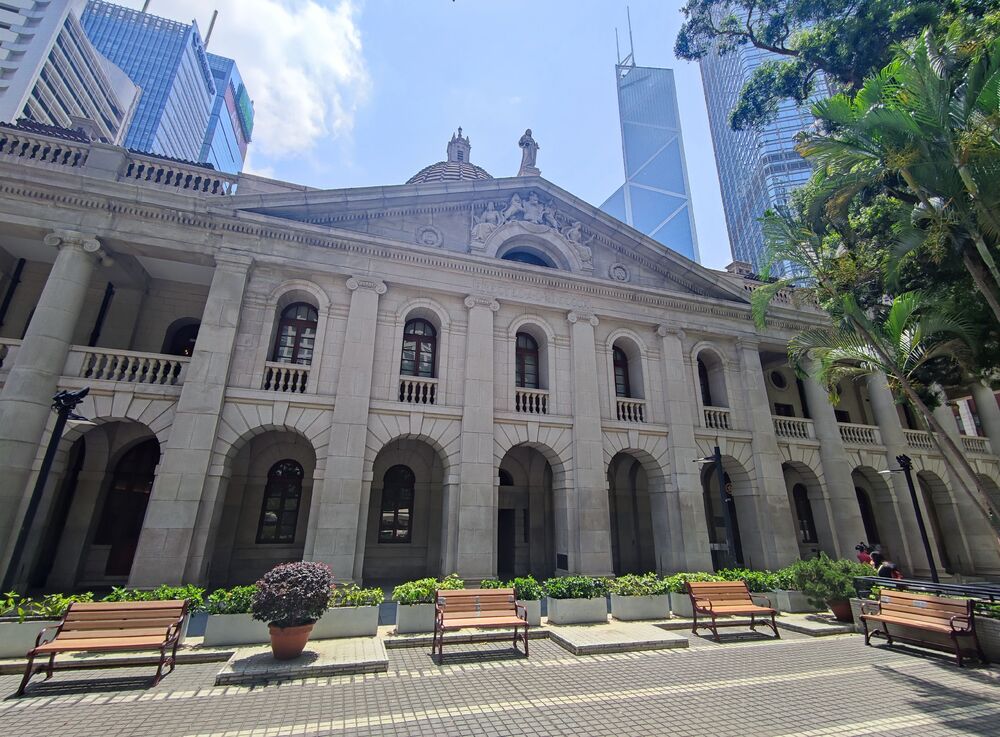
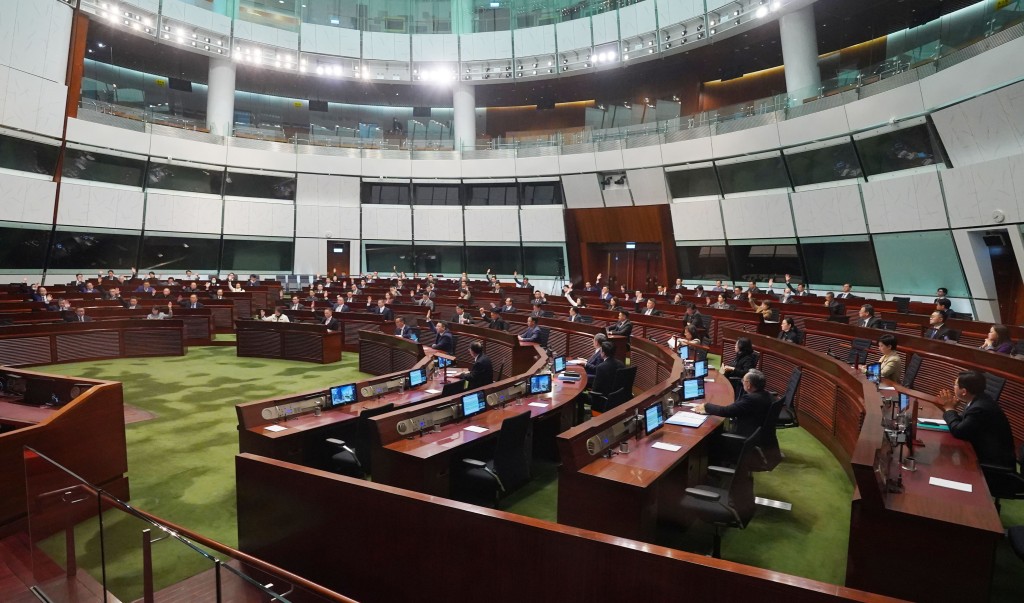
In recent months there has been a fierce debate in the United Kingdom about whether trial by jury should be abolished except in the most serious cases such as murder. There are cogent and respectable arguments put forward across the political spectrum. The debate in Britain is relevant to Hong Kong because we inherited the jury system from our former colonial power and all criminal trials in our High Court continue to be conducted before a jury, although the right to a jury trial has as good as been abolished in serious national security cases.
Sooner or later we will have to tackle the important issue of whether this system – a random selection of seven or nine men and women to decide the fate of a defendant – is suitable for a sophisticated international city like Hong Kong. After all, Hong Kong is both thoroughly modern and thoroughly Chinese and it is healthy to ask why are we using juries which have been called “quaint relics of English medieval jurisprudence.”
In England, the government’s main argument for abolishing juries in most cases is purely one of expediency. The English courts are in crisis with a backlog of nearly 80,000 cases waiting to be tried, and the judicial system is on the verge of “total collapse” according to Britain’s Justice Secretary. To justify his argument, he even cited the Magna Carta (the Great Charter) signed by King John in the year 1215: “To no one will we sell, to no one will we refuse or delay, right or justice” – in modern parlance, “justice delayed is justice denied.”
Some British opponents of juries are even calling for the total abolition of juries. The highly respected columnist and author Sir Simon Jenkins, who has himself served three times as a juror, is in no doubt. “Juries,” he says, “survive only in some English-speaking countries as quaint relics of medieval jurisprudence.
They deserve dispatch to the world of ducking, flogging, drawing and quartering.”
Interestingly, in Western countries with jury systems, more people are sent to prison than countries without juries. England and Wales imprison 145 out of every 100,000 defendants, and the United States imprisons a staggering 541. But jury-free Germany and Norway imprison only 71 and 54 respectively per 100,000. I cannot find any evidence that Hong Kong’s jurors have increased the prison population, probably because only the most serious cases go to the High Court and its jury system.
As in England, there is in Hong Kong an increasing backlog of delayed legal cases. This is especially true of trials in the High Court. Where the blame lies is not easily answered. In England the backlog of cases is blamed on the lack of sufficient investment in the judiciary, insufficient provision for Legal Aid, and a decline in the number of suitable lawyers.
As for Hong Kong, it inherited its jury system from English common law, and the principle of trial by jury is enshrined in Article 86 of the Basic Law. However, very few former British colonies have retained jury trials. Malaysia, India, Singapore, Sri Lanka and Myanmar all abolished jury trials. In India, Malaysia, and Singapore, it were trials for murder that acted as the catalysts for the abolition of juries.
In Malaysia, the catalyst was a notorious 1993 murder by the Malay pop singer Mona Fandey. She and her husband managed to convince an ambitious state assemblyman that with the help of black magic he was destined to be a chief minister. He was given a talisman in the form of a stick and hat that purportedly belonged to the late president Sukarno of Indonesia. In exchange, the naive assemblyman agreed to part with a substantial sum of money and land titles. Not long afterwards his gruesome body, dismembered into 18 parts, was found. The media had a field day, and circumstantial evidence together with an allegedly forced confession led to the conviction and execution of Mona Fandey and her husband.
Fearing that extreme publicity and media coverage might influence jurors in future cases, the Malaysian government subsequently decided the jury system was not suitable for determining guilt in serious cases. Then in 1995 it abolished the jury system altogether.
Singapore didn’t hesitate to abolish juries, having done so immediately after independence in 1969. Lee Kuan Yew, who was himself a Cambridge University trained lawyer, admitted he had once succeeded in defending four Muslims charged with murder by working “on the weaknesses of the jury – their biases, their prejudices….” Later, as prime minister, he said he found the jury system “a foolish, completely incongruous system and too alien to Asian culture,” and “had no faith in a system that allowed the superstition, ignorance, biases, and prejudices of seven jury men to determine guilt or innocence.”
Have a happy 2026!
Cheng Huan is an author and a senior counsel who practices in Hong Kong