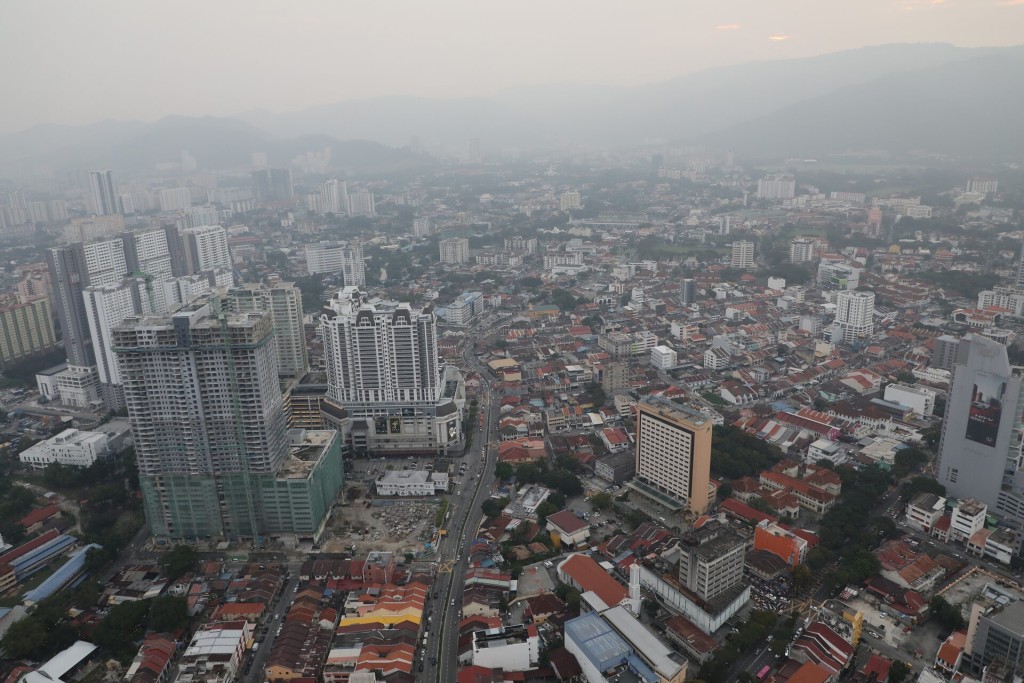
Nestled off the northwest coast of peninsular Malaysia, Penang stands as a stunning testament to cultural divergence and well-preserved historical architecture. For me personally the island evokes idyllic memories of the times my father would drive us from schooldays in Ipoh to Penang, where we would swim in the warm waters of Batu Ferringhi.
Recently, I went back to Penang and wandered about the historic streets of the bustling capital George Town. Beneath Penang’s tranquil, tropical exterior lies a fascinating history of migration and enterprise, which were the result of its unique status as a sanctuary of British law.
During the 19th and 20th centuries, waves of Chinese immigrants left their homelands in search of better fortunes. Huge numbers of Hokkien-speaking people from Fujian province arrived in Pulau Pinang, or "island of the areca nut." It had been known to Chinese travelers since at least the 15th century when Admiral Zheng He named it on his maps.
The primary catalyst for this Hokkien migration was not merely Penang’s geographical advantage as a trading port but the legal governance it offered. Before British intervention, other parts of the Malay peninsula operated local Malay laws and traditional customs. However, these systems did not align with the commercial needs of foreign merchants.
In 1786, British explorer Francis Light landed in Penang and established the free port of George Town (his son William founded Adelaide in Australia). The British thought so lovingly of Penang that they called it "the pearl of the Orient." They brought with them the rule of law and an independent, impartial judicial system. For a merchant class this was an invaluable safe haven. In British-governed Penang, contracts were legally binding and commercial agreements could be amicably honored.
Armed with institutional stability, the Hokkien community didn’t just survive; they thrived and mightily so. Penang grew into a cradle of immense wealth, producing lineages of Hokkien tycoons and billionaires that stretches from the colonial era to the modern day. Its economy has constantly evolved and today ranks as Malaysia’s leading exporter.
A few of the immense houses built by the super rich remain testaments to their taste and wealth. Yeap Chor Ee ("the grand old man of Penang"), who died in 1952, was a classic rags-to-rich Hokkien tycoon who rose from very humble beginnings as a barber and became by far the richest man in Penang and the founder of the Ban Hin Lee Bank.
A modern-day tycoon, Dato Seri Khor, whose ancestors arrived in Penang from Guangzhou and spoke the Teo-chew dialect, is now Penang’s most prominent property developer.
The tentacles of Penang have also stretched to Hong Kong. Penang-born and Hokkien-speaking Dato Seri Cheah Cheng Hye may have come to Hong Kong as a journalist, but he then became a tycoon after he co-founded Value Partners, a business that grew and grew to become one of Asia’s premier listed asset management firms.
Today the echoes of Penang’s unique history are visible everywhere. The legal and economic foundations laid centuries ago transformed the tiny island, which is only a third the size of Singapore, from a quiet Malay fishing village into a powerhouse of Chinese enterprise.
Cheng Huan is an author and a senior counsel who practices in Hong Kong