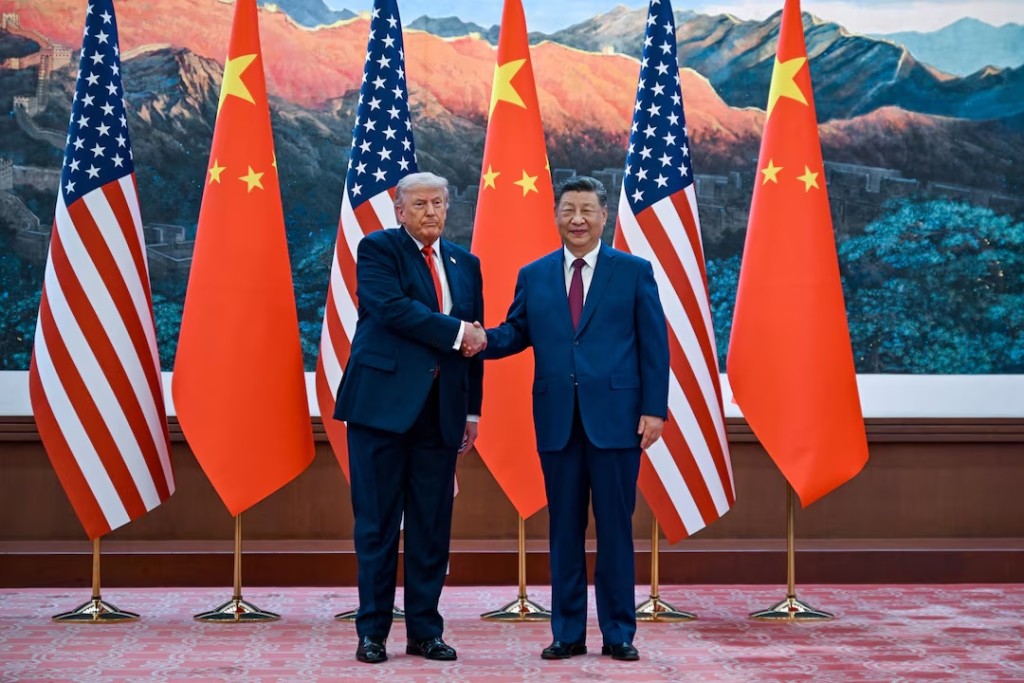
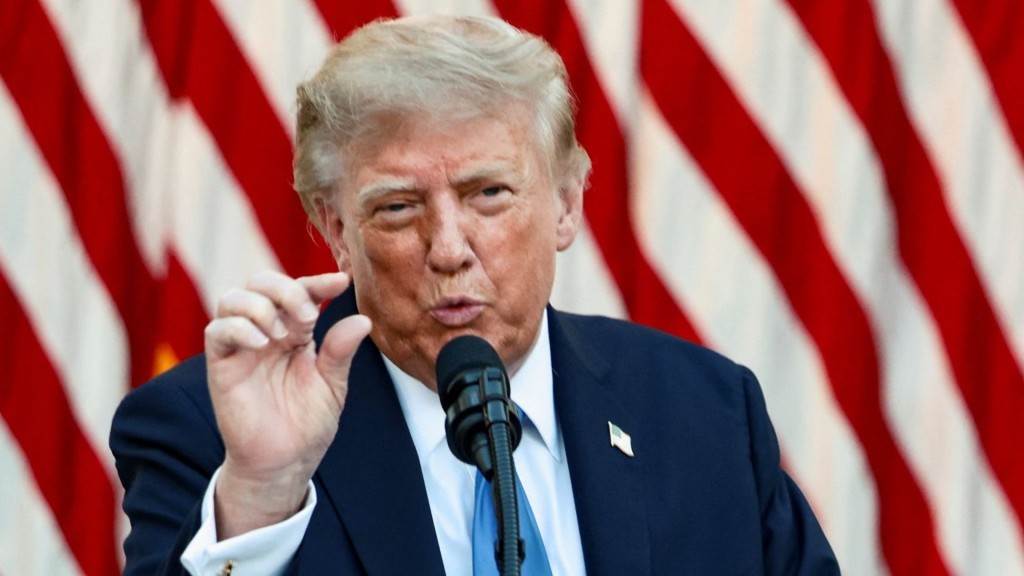
During Donald Trump’s recent visit to China, President Xi Jinping surprised his audience by recalling an ancient 2,500 year-old warning about how great powers can slide towards war. America and China must be careful, Xi warned, not to fall into a ‘Thucydides trap,’ a theory created by the Greek historian Thucydides in his history of the Peloponnesian War between Athens and Sparta. Thucydides concluded that “what made war inevitable was the growth of Athenian power and the fear which this caused in Sparta.”
Xi’s warning was both clever and timely because America’s determined reluctance to relinquish any of its hegemonic global power to China has created the most pressing, and dangerous, geopolitical question of our age. Are America and China sliding toward a great-power war? The danger signals are certainly flashing red.
I first learnt about Thucydides when I was studying international law at Cambridge University in the UK where his History of the Peloponnesian War was required reading. It is an immense book containing a forensic account of the struggle between Athens and Sparta. Part historical record and part philosophical meditation about war, the book, wrote Thucydides, preserves the war “for all time” and explains the patterns of human behavior that caused it – the fear, the honor, the self-interest that can drive states toward war. Thucydides believed the use of the law and diplomacy are essential if war is to be avoided.
Thus the phrase Thucydides Trap still today captures a specific dynamic of a rising power, China, that threatens to displace an established hegemon, the USA, and the friction that can escalate into war. As China’s economic and military capabilities grow, so too does the strategic anxiety of America. China then views American resistance as an attempt to contain China.
Of course, the warning by Thucydides should not be treated as inevitable. There have been many examples of rivalries between rising powers and ruling powers that have been sensibly settled without war. When wars have occurred it is usually because diplomacy has failed. The ‘trap’ exists not because states are inherently incompatible but because fear and misunderstanding may harden into hostility that lock both sides into an escalating spiral towards conflict.
The China-America rivalry is also nothing like ancient Greece. Athens and Sparta were culturally alike – separated by only three hours by car – and in direct military competition. The USA and China on the other hand are separated by oceans, linked economically, bound by intricate global institutions, and armed with nuclear weapons that render classical battlefield logic perilously obsolete.
What then can China and America do to reduce risk and avoid the trap?
First, to avoid miscalculations they must maintain honest and frank communications. Secondly, they must develop rules to govern competition between them so that rivalry has predictable boundaries. Thirdly, they must cultivate third-party mediation so that grievances can be aired and settled without public grandstanding. And finally and crucially, China and America must reach peaceful agreement on the future of Taiwan.
Thucydides’ final message was not of war but of hope. His essential belief was that a rising power and an established power can avoid mutual catastrophe. History, he said, offers both warning and guidance. If China and America follow Thucydides’ guidance they can build the political, legal, and institutional architecture that converts rivalry into a roadmap for peaceful coexistence.
Cheng Huan is an author and a senior counsel who practices in Hong Kong