

Read More






Will AI make me dumber? | Human Reinvented | Frank Ng & Ryan Ng
13-10-2026 05:00 HKT




HK unlikely to be hit as Typhoon Champi gathers strength
15-10-2026 17:54 HKT

Elon Musk unveils Tesla's 'flying' car
12 hours ago


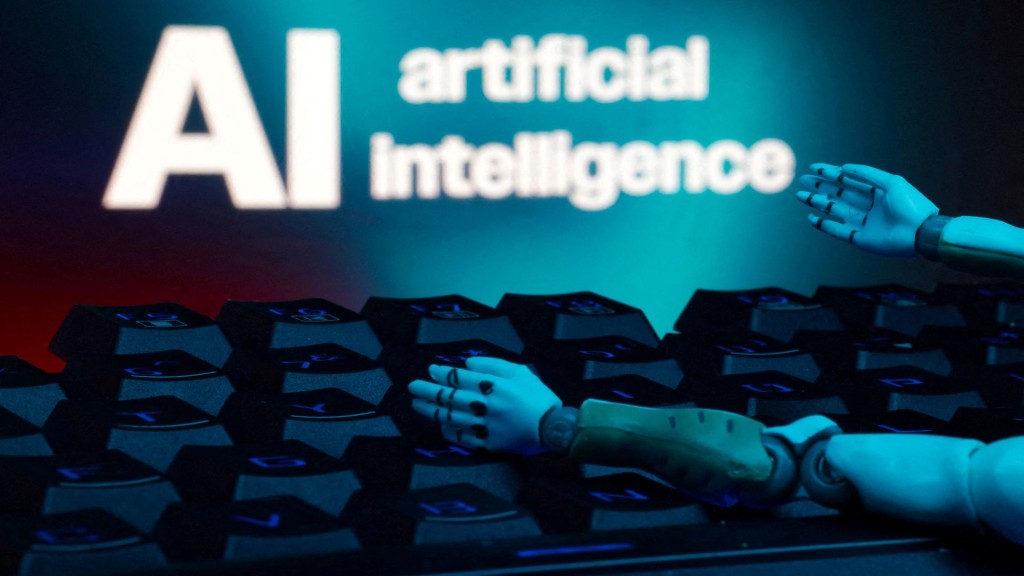
We often discuss artificial intelligence as either a magic shortcut or an imminent threat. After using different leading models for thousands of hours over the past three years, I have reached a simpler and more uncomfortable conclusion: AI does not change who you are. It exposes who you already are by amplifying the strengths and weaknesses you bring into the game.
Think of it like getting a “buff” in a video game, a multiplier applied to your existing stats. If your baseline strength is 100, a three-times buff takes you to 300. But if your baseline is only 10, the same buff brings you to 30.
The multiplier is identical, yet the outcomes are completely different. AI works in the same way. It makes visible the capabilities and weaknesses that are already there.
An MIT study back in November, 2024 examining how scientists use AI in materials discovery illustrates this pattern clearly. Scientists with strong judgment and domain expertise achieved dramatic gains, nearly doubling their rate of viable discoveries. They could evaluate AI-generated suggestions effectively, separating promising candidates from false positives. Scientists with weaker evaluation skills saw almost no benefit.
They couldn’t distinguish which AI-generated candidates were viable. Their ability to prioritize was close to random, so their performance barely changed. Worse, their inefficiency scaled up.
They tested more candidates, wasted more lab resources on false positives, and spent more time on failed experiments. In fact, without sufficient baseline judgment, the multiplier effect hardly activates at all. But the costs multiply just fine.
This is the uncomfortable truth about the coming decade. AI surfaces strengths that were once subtle and weaknesses that were once easy to mask.
The gaps you tolerate today determine whether you activate the multiplier at all.
The multiplier is already here. The baseline is the part we control. In future columns, we’ll examine which human capabilities matter most in the age of AI.
Frank Ng is a retired NASDAQ CEO, who co-authors this column with his son Ryan after publishing their book Hey AI, Let’s Talk!