
Read More
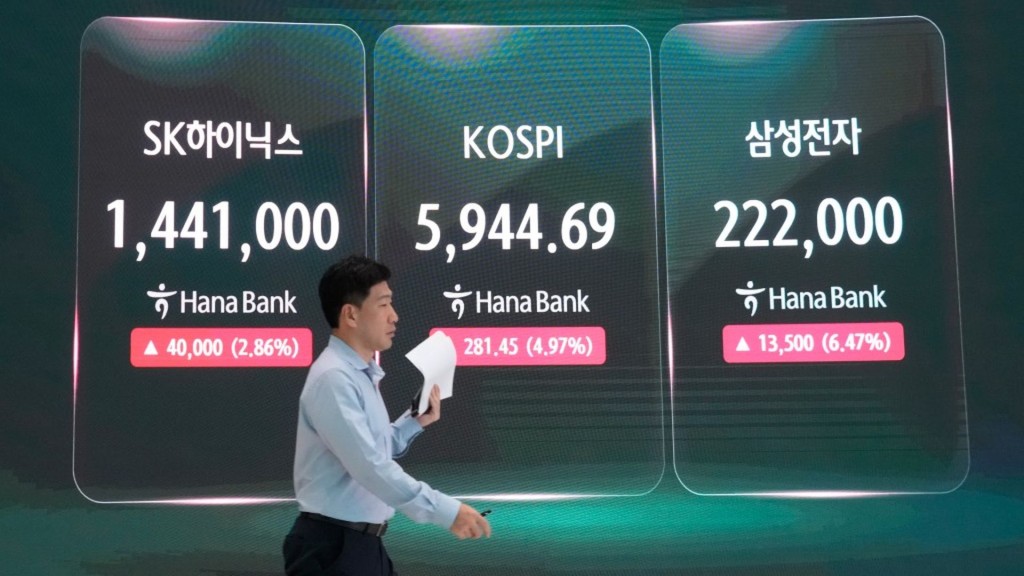
The Korean market’s dramatic reversal has been one of 2026’s most striking market stories. After leading performance in the first half, the KOSPI index has fallen by around 30 percent from its peaki. Foreign investors have withdrawn over US$130 billion (HK$1.01 trillion) from Korean equities this year, with trading turnover down roughly 70 percent from its late-May peakii.
ADVERTISEMENT
SCROLL TO CONTINUE WITH CONTENT
Yet short-term outflows do not erase Korea’s long-term industrial strength. The country remains a global powerhouse in memory chips, automobiles, batteries, and industrial manufacturing. For investors, the question is not simply whether to buy or avoid Korean equities but whether, amid uncertainty and elevated volatility, there is a different way to hold them.
Korean retail investors appear to have found one answer: covered call ETFs. These funds hold a basket of stocks while selling corresponding call options to generate premium income. In range-bound or modestly rising markets, that premium can enhance returns; in downturns, it can partially offset losses – at the cost of capping upside.
The appeal of covered call ETFs is evident in the numbers. Korea’s covered call ETF market has grown to 28.9 trillion won (about HK$167 billion), up about 10 trillion won since early April, nearly doubled from end-2025 and over fourfold in under two yearsiii.
Market swings tend to make option premiums more attractive, which may in turn support distribution yields. In the second half of 2026, several Korean covered call ETFs had annualized distribution yields above 25 percent. For investors seeking cash flow amid uncertainty, these products offer a structured approach.
Access for Hong Kong investors is widening. Historically, such exposure required a Korean brokerage account; now it can be accessed through a Hong Kong stock account. The CSOP KOSPI 200 Covered Call Active ETF [a synthetic ETF] (3537.HK), listed on the Hong Kong Stock Exchange in July, provides exposure to the KOSPI 200 index via futures while selling KOSPI 200 call options to collect premiums.
The ETF aims to distribute monthly [dividend is not guaranteed and maybe paid out of capital]iv. It has a target annualized distribution yield of approximately 36.70 percent as of end-Septemberv and will pay a monthly dividend of HK$0.29 per unit on November 5. The ex-dividend date is October 30vi – investors must buy before the October 29 market close to be eligible for the distribution. Investors should note that distribution yield is not total return, and covered call strategies are not risk-free. Understanding how these products work – and the risks involved – matters more than chasing headline yields.
Key risk reminder:
CSOP KOSPI 200 Covered Call Active ETF is an active exchange traded fund that uses swaps to obtain an exposure to the KOSPI 200 Index through KOSPI 200 Futures, and the return on KOSPI 200 Futures may not correlate with the spot price return of its reference asset, the KOSPI 200 Index. There would be potential escalation of costs that are associated with derivatives and are internalized by the product, such as swap fees. The KOSPI 200 Index is heavily concentrated in its top two constituents which are of the same sector. The product is subject to the relevant sector concentration risk.
Investment in the Product may also involve risks, including but not limited to investment risk, active investment management risk, covered call option writing risk, risks associated with investment in FDIs, synthetic replication and swap counterparty risk, KOSPI 200 futures contracts risk, Korean market risk, geographical concentration risk, trading risk, trading differences risk, and risk relating to distributions paid out of capital.
Investment involves risks. Investors should refer to the Prospectus and the Product Key Facts Statement for further details, including product features and the full list of risk factors. The past performance information presented is not indicative of future performance. This material is prepared by CSOP Asset Management and has not been reviewed by the Securities and Futures Commission in Hong Kong.
Footnotes
i Bloomberg, as of October 15.
ii Bloomberg, as of October 10.
iii KRX, as of September 28.
iv There is no guarantee that distributions will be made. The Manager may, at its discretion, pay distributions out of capital or gross income. Payment of distributions out of capital or effectively out of capital amounts to a return or withdrawal of part of an investor’s original investment or from any capital gains attributable to that original investment, which may result in an immediate reduction of the Sub-Fund’s net asset value per unit. A positive distribution yield does not imply a positive return on the total investment.
v The target annualized yield is calculated as follows: the average of monthly dividends per Unit distributed within the first year since launch * 12 / net asset value per unit of the fund on ex-dividend date (September 30; assume average dividend within the first year represents an equivalent monthly distribution rate). It is for illustrative purposes only. Actual distributions may vary due to market conditions and the Sub-Fund’s distributable income. It is not a forecast or guarantee of future distribution levels, yield, or returns.
vi Please refer to the CSOP announcement for more information.