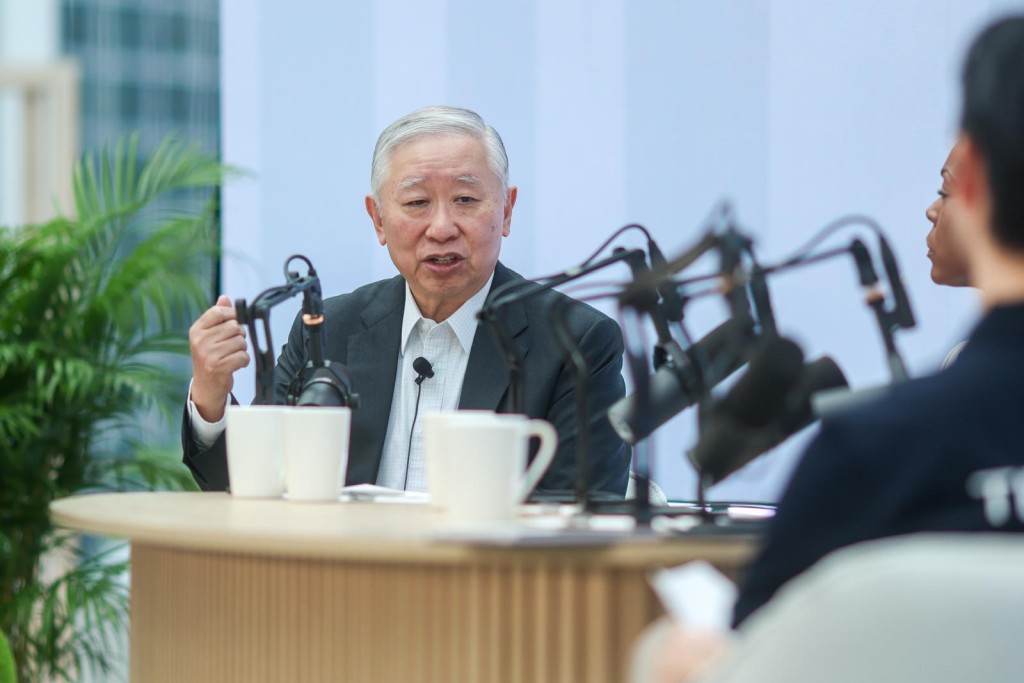
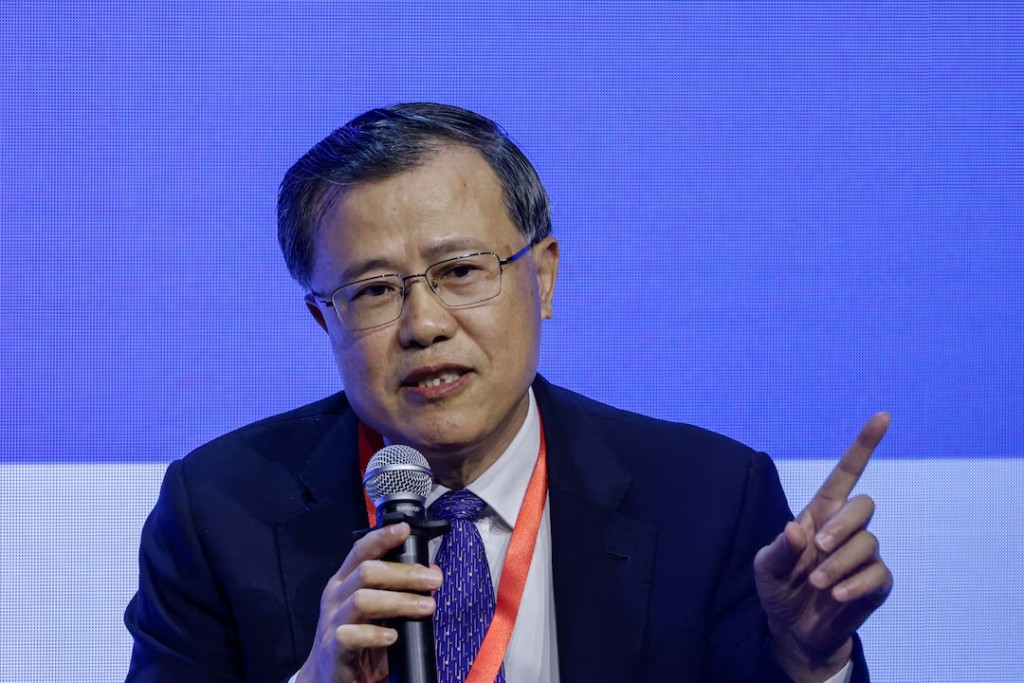
Climate technology must be reframed from an altruistic cause into a foundational "enabler" for the future, said Clara Chan Ka-chai, chief executive of the Hong Kong Investment Corporation (HKIC) on Tuesday at the inaugural TERA-Talk hosted by Full Vision Capital in Hong Kong.
At a forum titled “Are We Truly Ready to Commit to a More Sustainable Future?” Chan said the funding gap in green technology stems largely from how investors perceive the urgency and priority of climate change, compared to hotter sectors like artificial intelligence, semiconductors, and biotechnology.
She cited the example of the electric vehicle industry, noting that electric vehicles experienced explosive growth after the market recognized their long-term cost advantage over fossil fuels, a development path that can be replicated in other climate technology sectors.
Clara Chan.
"It's not like I invest today and tomorrow we will be making a great return from climate tech," she said. "Think of it like five years, 10 years from now—these are the technologies which form the basis of all other enterprises and industries to work."
She asserted that the HKIC can act as a catalyst to bring about capital sources and partnerships across jurisdictions, for a larger market scale.
Three pillars of climate investment: science education, government policy, and cost reduction
Jonathan Jia Zhu, partner and chairman of Greater China at Bain Capital, stated that science education, government policy, and cost reduction at scale are the three pillars of climate investment.
Jonathan Jia.
On the same forum, Jia expressed positive expectations for the integration of AI and climate, pointing out that on the one hand, AI has the potential to drive leapfrog breakthroughs in climate research, giving rise to high-performance, low-cost carbon reduction technologies; on the other hand, it can optimize the operational efficiency of energy-intensive traditional industries, reducing energy consumption.
Jia echoed that private equity firms and investors have a duty to generate returns for their limited partners and cannot deploy capital solely for a good cause.
The relation between energy, climate and geopolitics: UN
The push for energy transition is also increasingly intertwined with geopolitics and national security, according to Li Nan, director of investment and enterprise at the United Nations Trade and Development (UNCTAD), as geopolitical conflicts and trade uncertainties have driven up commodity prices.
She further pointed out that over 80 percent of global energy transition investment flows to only 10 economies, leaving 80 percent of countries outside the transition process. Affected by high interest rates and debt burdens, the capital cost for developing economies to develop renewable energy is twice that of developed economies.
Stable policy required for long-term investment
Nili Gilbert, founder of investment firm Lavenir, stressed that long-term investors require a stable policy regime to ensure their assets remain durable over decades. She pointed out that the large-scale borrowing for AI infrastructure has driven up sovereign bond yields and created capital competition with other sectors.
In the future, Gilbert believes it is necessary to guide AI development and low-carbon transformation to move in the same direction and coordinate, rather than competing for funds.