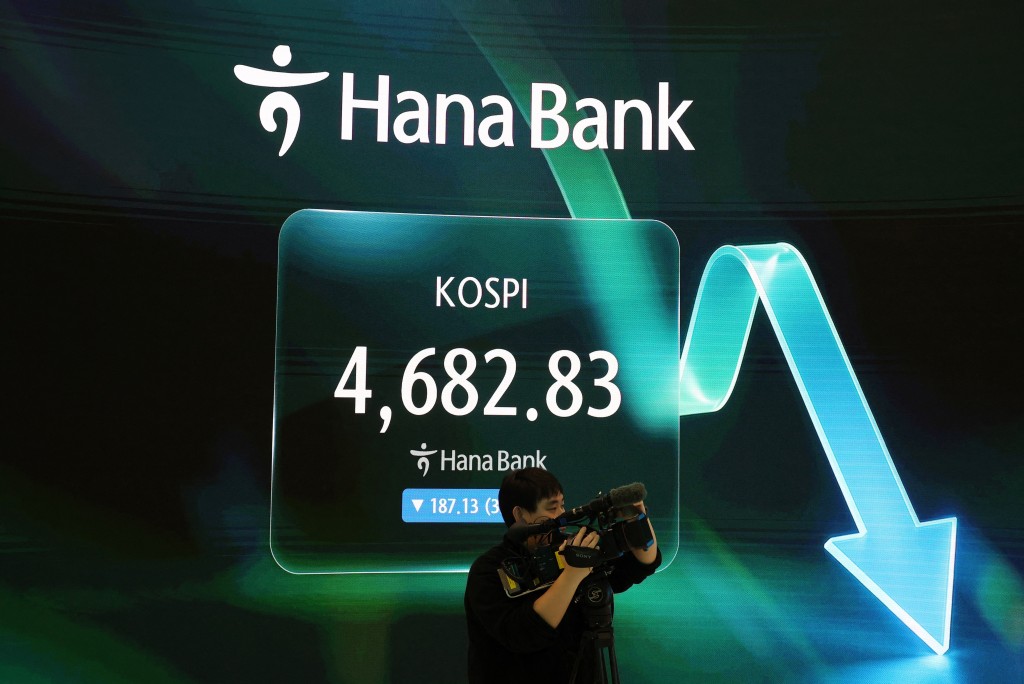
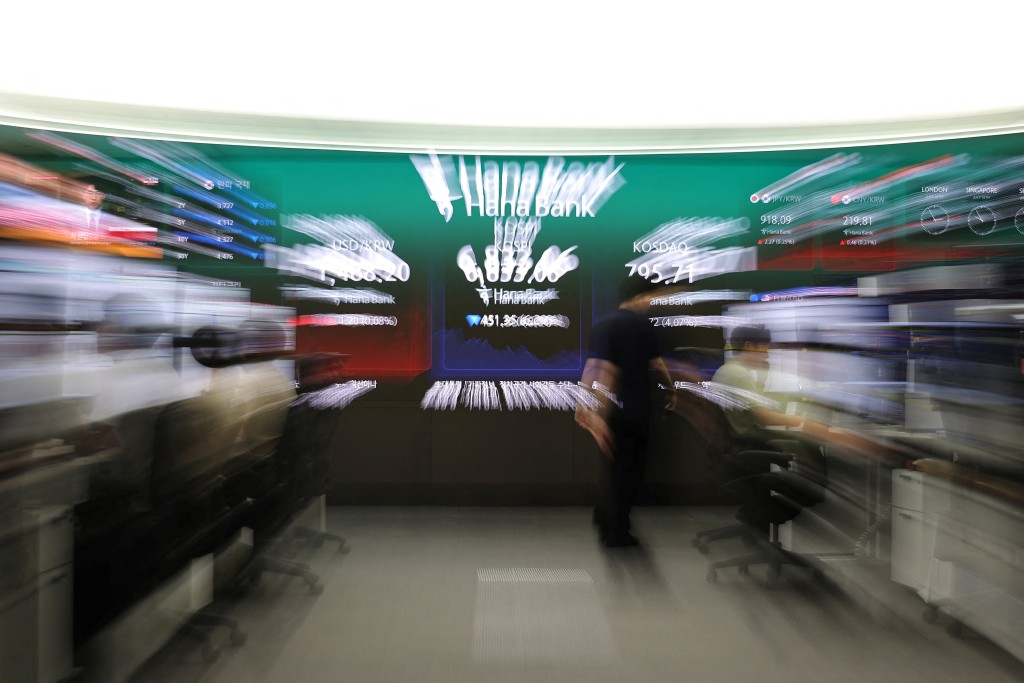
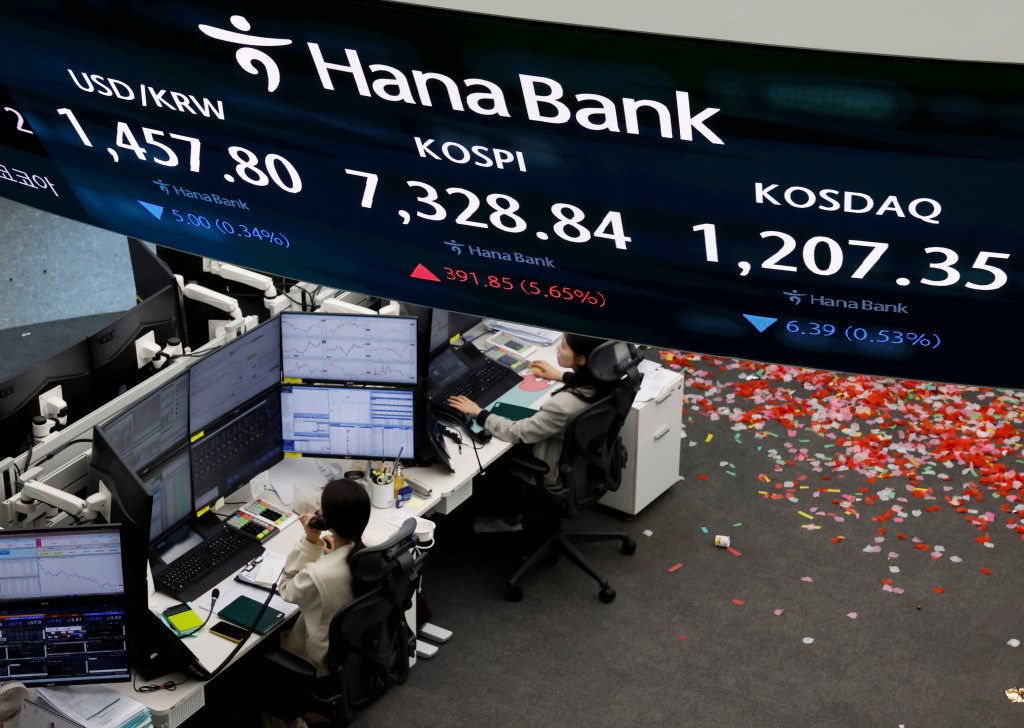
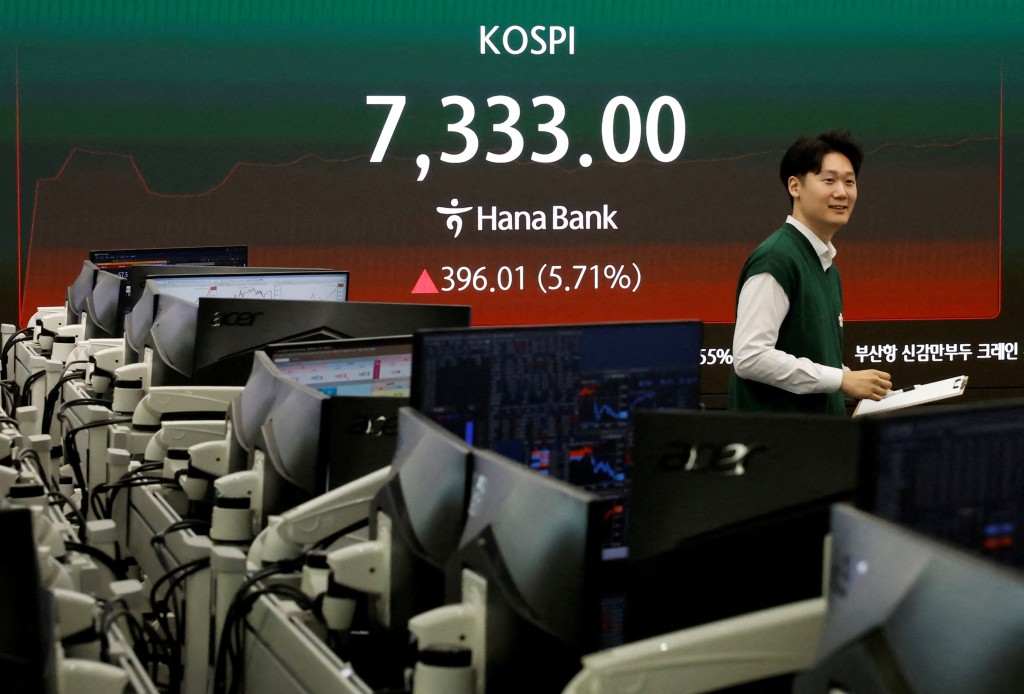
South Korean shares fell more than 3 percent on Monday as a government pledge to deploy market stabilisation funds failed to ease concerns over the AI trade and a broader technology selloff.
The benchmark KOSPI closed down 161.42 points, or 3.31 percent, to 4,708.54, the lowest close since January 13. The won strengthened, while the benchmark bond yield fell.
On Sunday, authorities said they would deploy market stabilisation funds immediately if conditions worsened, after the South Korean benchmark index tumbled to a 10-month low last week.
Finance Minister Lee Hyoung-il on Monday reiterated plans to stabilise the stock market if needed, but the announcement fell short of specific measures and thus market expectations.
"Ongoing stock market volatility is somewhat correlated with the US stock market," a spokesperson at the presidential Blue House said during a news conference.
Chipmaker Samsung Electronics fell 3.06 percent, while peer SK Hynix lost 2.52 percent.
Among other index heavyweights, battery maker LG Energy Solution slid 2.67 percent, while Hyundai Motor and sister automaker Kia Corp were down 2.94 percent and 2.04 percent, respectively.
The muted response to Seoul's policy rollout suggested investors remain more concerned about the outlook for global technology stocks than local efforts to shore up sentiment.
The sharp selloff on Monday underscores how rapidly changes in Wall Street sentiment toward AI-related spending can ripple through Asia's technology supply chain.
Investors have increasingly questioned whether massive AI investments will generate returns quickly enough to justify the costs.
The market breadth remained negative, with 824 of the 908 traded issues declining against only 71 advancers.
Foreigners were net sellers of shares worth 247 billion won (HK$1.44 billion).
Reuters