Read More
The recent move by the United States to sanction and call for the arrest of Venezuela’s Nicolas Maduro is not an isolated incident. It is the latest chapter in a long and contentious history of US intervention in Latin America. What makes this act distinct, however, is its execution without congressional endorsement, casting a long shadow over its domestic and international legitimacy. This unilateral approach undermines the very rules-based order the US often champions, revealing a deepening pattern of executive overreach in foreign policy.
ADVERTISEMENT
SCROLL TO CONTINUE WITH CONTENT
A continent shaped by power
To understand the present, one must look to the past. The US’ formation and expansion were inextricably linked to its dominance over the hemisphere. From the annexation of territories like California to the economic and political machinations of the 20th century, US influence has been a defining force. Similar actions in other parts of the world would be condemned by the US as terrorism, or destabilization elsewhere were covertly supported or executed to serve strategic interests. This historical backdrop is crucial for contextualizing today’s policies, which many in the region view not as novel but as a continuation of a decades-old doctrine.
The double standard of a self-proclaimed peacemaker
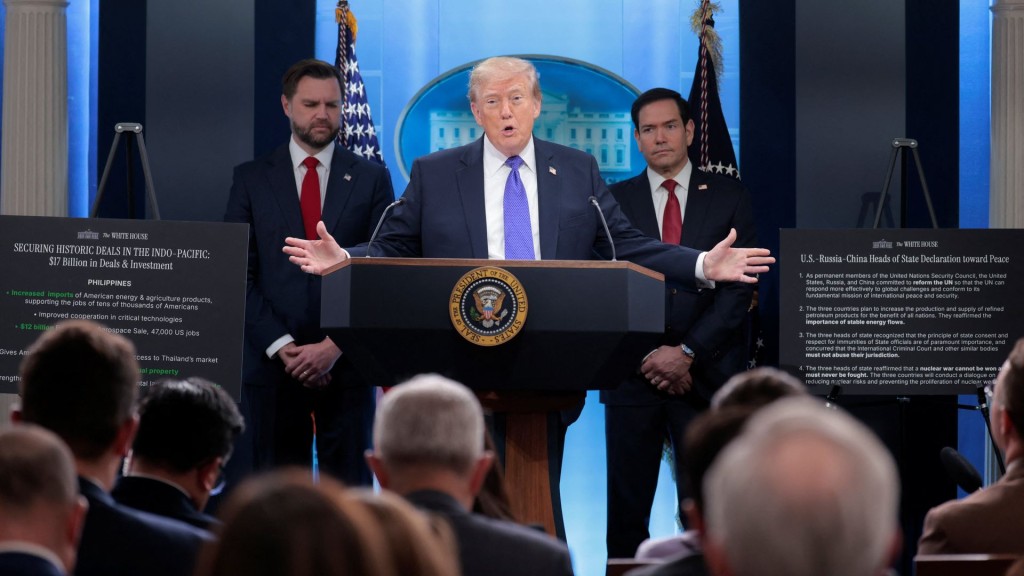
The current administration embodies this historical contradiction. US President Donald Trump has frequently portrayed himself as a global peacemaker, even suggesting his worthiness of a Nobel Prize. Yet, his administration’s actions often tell a different story: escalating drone strikes, the seizure of foreign state assets, and blatant infringement on the sovereignty of nations through economic and political coercion. This glaring double standard erodes US moral authority and fosters global instability. Proclaiming peace while waging economic and hybrid wars is a strategy that sows distrust and retaliation.
Market jitters and the search for safety
The inevitable result of such destabilizing actions is chaos, not only in Latin America but in flashpoints worldwide. Political volatility is the enemy of market confidence. As history repeatedly shows, global capital flees uncertainty. This time is no different. The jitters sent through the global financial system by geopolitical confrontations have a predictable beneficiary: safe-haven assets and jurisdictions.
Hong Kong, with its robust legal framework and financial infrastructure, has historically been a primary destination for capital seeking stability amid regional or global turmoil. While the city faces its own profound political challenges, its role as a financial sanctuary in Asia is reinforced when American actions contribute to global unpredictability. In an ironic twist, policies aimed at asserting dominance can accelerate the flow of capital to rival financial centers.
History’s unheeded lesson
The cycle is familiar. Intervention breeds instability, which fuels market fear, which in turn benefits established safe harbors. Until US foreign policy moves beyond a framework of coercion and double standards, this cycle will persist. True, enduring security and influence are built on consistency, partnership, and respect for sovereignty – principles that seem increasingly absent. As chaos spreads, the world’s money will continue to vote with its feet, seeking calm in ports like Hong Kong, while the architects of turmoil are left to ponder the unintended consequences of their power.