Read More





In a notable policy shift, US President Donald Trump has authorized the sales of Nvidia H200 AI chips to China. This decision, framed by Trump himself as a move to prevent accelerating China’s independent chip development, underscores the complex dynamics of the tech cold war. While the immediate market reaction saw a dip in Chinese chipmaker stocks, this likely represents short-term volatility rather than a long-term trend. The core narrative remains unchanged: this move may inadvertently fuel the very drive for self-sufficiency China aims to temper.
A primary driver behind China’s relentless semiconductor push is deep-seated cybersecurity concern. Beijing has long harbored suspicions about potential “backdoors” in foreign-designed chips, advocating for the adoption of domestic alternatives. This security imperative has translated into a concerted, state-backed effort to “buy Chinese.” Even as the H200 outperforms currently available local offerings, including Nvidia’s China-specific H20, its admission into the market serves as a high-performance benchmark. This comparison does not deter Chinese efforts but rather provides a clear technical target, reinforcing the national mandate to reduce critical dependencies on US technology.
The calibrated nature of the export is clear. The H200, while powerful, remains second-tier to Nvidia’s cutting-edge Blackwell and Rubin architectures slated for future release. This creates a persistent performance gap, a “known fact” that Chinese strategists view not as a disadvantage, but as a motivator. History offers a parallel: just as the global AI focus was dominated by US innovations like ChatGPT before the rapid rise of China’s DeepSeek, the semiconductor arena is poised for a similar dynamic. Access to the H200 provides Chinese engineers with a valuable learning tool, enabling them to reverse-engineer and innovate upon existing high-end designs, ultimately speeding up the development cycle for homegrown successors.
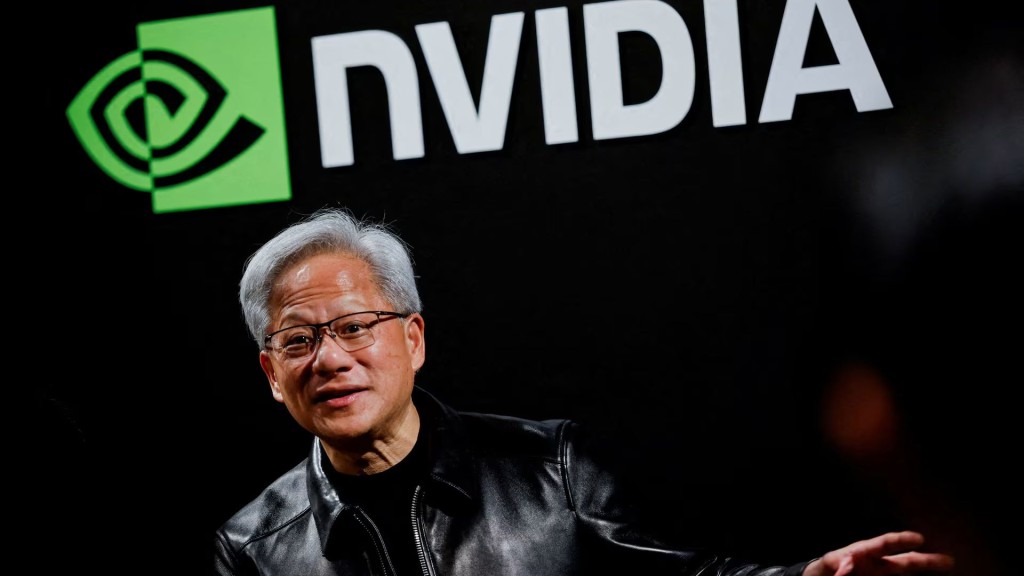
China’s confidence in this race is not unfounded. As Nvidia chief executive Jensen Huang Jen-hsun has acknowledged, China possesses a vast reservoir of AI talent. This human capital, combined with a systemic focus on strategic sectors, has allowed China to demonstrate an ability to develop and deploy AI solutions at a significantly lower cost and often with greater efficiency than US counterparts in certain applications. The nation’s tech ecosystem is built for rapid iteration and scaling, strengths that are now being directed squarely at the semiconductor challenge. The availability of the H200 may temporarily satisfy some market demand, but it simultaneously sharpens the focus of China’s extensive R&D apparatus.
Ultimately, the green light for H200 exports is a tactical maneuver in a protracted strategic contest. It offers temporary supply relief but solidifies Beijing’s long-term conviction. Every advanced chip imported is a roadmap for domestic innovation, spurring faster development of indigenous capabilities. The immediate stock market reactions are noise; the signal is China’s unwavering commitment to technological sovereignty. This move does not slow China’s semiconductor ascent; it provides a clearer benchmark on which to measure and accelerate its progress, ensuring that the journey toward cutting reliance on US chips only gains momentum. The AI chip race is far from over, and China is betting on its talent, efficiency, and national resolve to cross the finish line independently.