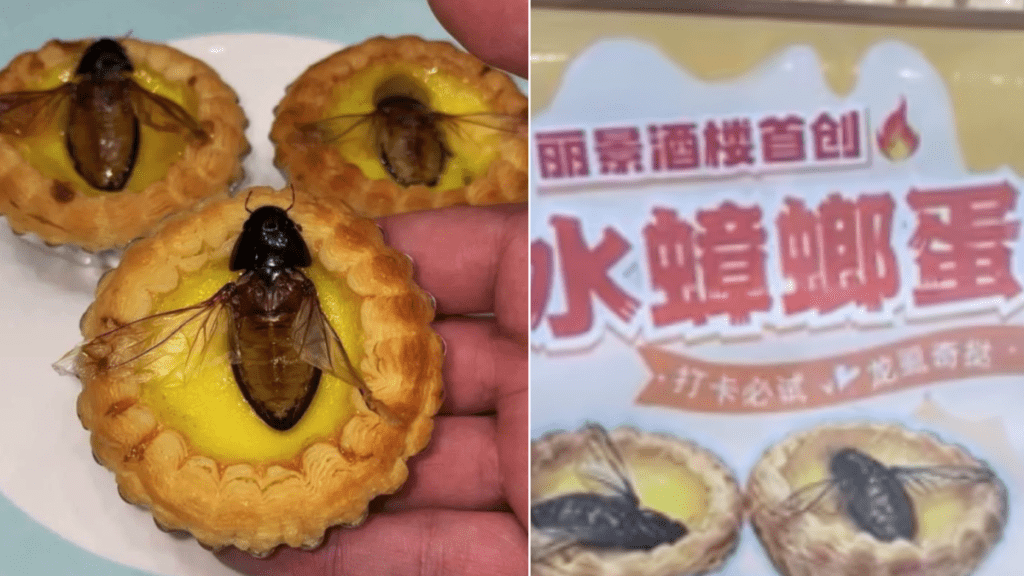
An unconventional new dessert featuring whole diving beetles perched on freshly baked egg tarts has captivated adventurous food lovers across southern China, turning a restaurant in Foshan, Guangdong, into an unexpected culinary sensation.
Known colloquially in the region as water cockroaches, the edible aquatic beetles—traditionally called longshi—have long been part of southern Chinese folk cuisine.
Their novel appearance atop a classic dim sum favorite has quickly gone viral on social media, prompting food bloggers and diners from across the border to visit the shop in search of a bold tasting experience.
Blending traditional Cantonese ingredients with baked pastries
The creator of the dessert, a restaurateur surnamed Pan, said the idea originated from his lifelong familiarity with traditional Cantonese ingredients and a desire to reinvent local dim sum.
Preparing the insects requires meticulous culinary care. According to Pan, the beetles must first be thoroughly deodorized to remove any lingering swampy scent before being deep-fried to achieve a crisp texture.
The frying process requires precise temperature regulation to ensure the delicate wings remain intact and visually appealing before each beetle is positioned atop a warm, custard-filled tart shell.
Distinct flavor profile and traditional wellness beliefs
Pan described the texture of the finished dessert as reminiscent of eating a standard flaky egg tart topped with a crunchy potato chip.
Beyond their novelty appeal, diving beetles hold a niche spot in traditional southern herbal culture. Pan noted that folk medicine has long attributed various wellness benefits to the insects, including alleviating nocturia, boosting kidney vitality, and nourishing the complexion. In line with Cantonese eating habits, diners typically peel away the hard outer wing cases before consuming the entire insect together with the sweet pastry.
Growing curiosity brings domestic and international food lovers
Since hitting the menu in October, the pastry set has been priced at 28 yuan for a serving of three pieces, maintaining a steady daily sales volume of roughly 20 orders.
The bizarre appearance has generated widespread curiosity, drawing visitors from neighboring Guangzhou as well as travelers crossing the border from Hong Kong.
The dish has also gained broader online traction, attracting an influencer from Beijing who journeyed south specifically to livestream herself sampling the dessert, along with an Italian food vlogger who documented the tasting experience for international followers.