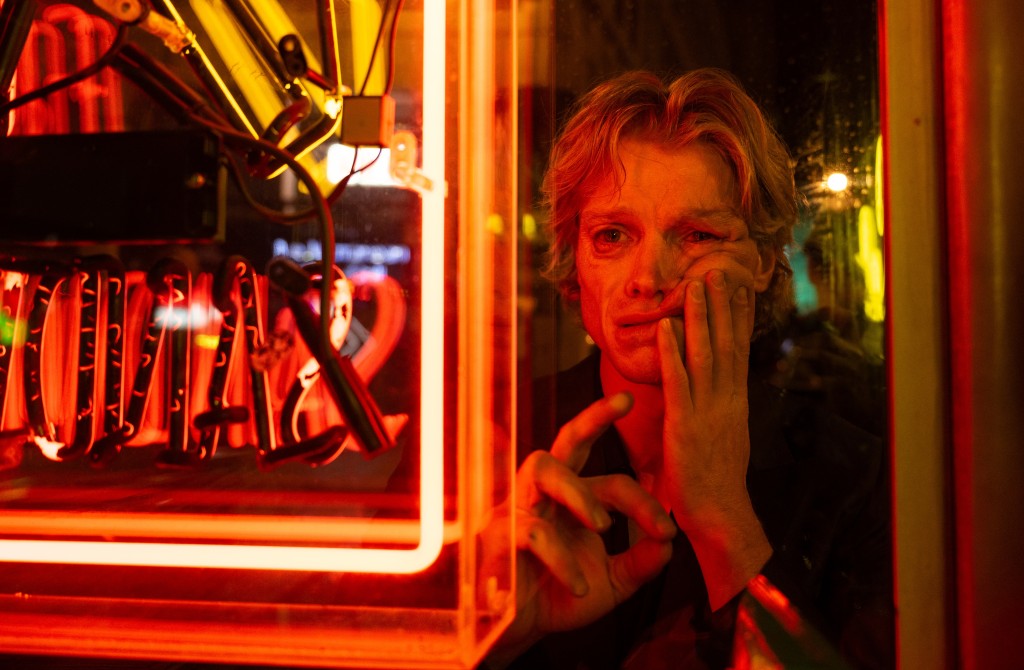
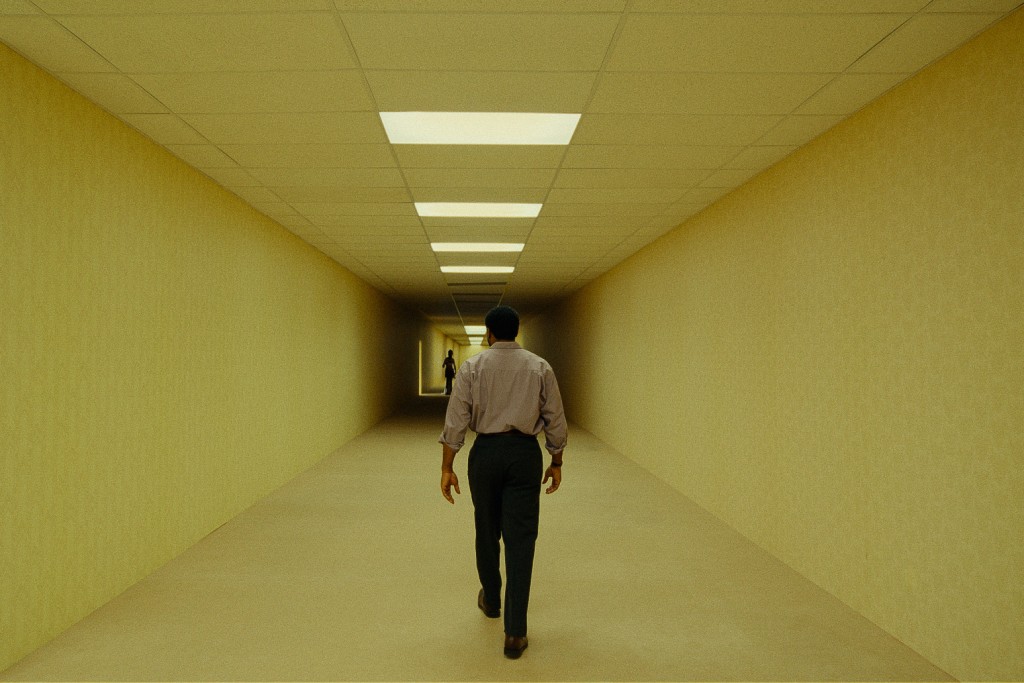
Tom Rhys Harries stars as Matt Hagen in Clayface. (Movie still)
DC Studios is stepping into unfamiliar territory with Clayface, a full-fledged horror thriller that trades capes and conventional superhero spectacle for disfigurement, fractured identity and revenge.
ADVERTISEMENT
SCROLL TO CONTINUE WITH CONTENT
Opening in Hong Kong cinemas on October 22, the 108-minute Category III film is directed by Speak No Evil filmmaker James Watkins, starring Tom Rhys Harries as Matt Hagen, alongside Naomi Ackie, David Dencik, Max Minghella and Eddie Marsan.
The story follows Hagen’s rise from the streets of Gotham to Hollywood leading man, only for his career to collapse after a crime boss leaves him severely disfigured. Desperate to regain his face — and the life that came with it — he turns to experimental treatment from scientist Dr. Caitlyn Corr, played by Ackie.
At first, it appears to work. But the treatment brings increasingly disturbing physical and psychological consequences, sending Hagen toward the shape-shifting figure DC audiences know as Clayface.
Rather than positioning him as a misunderstood antihero, the film approaches his fall as something closer to tragedy: a man trying to reclaim himself while steadily losing control of who, and what, he is.
Eighteen stages of prosthetics turn transformation into body horror
For a character whose body can reshape itself at will, Clayface could easily have relied on digital effects. Instead, much of Hagen’s deterioration begins with practical prosthetic makeup.
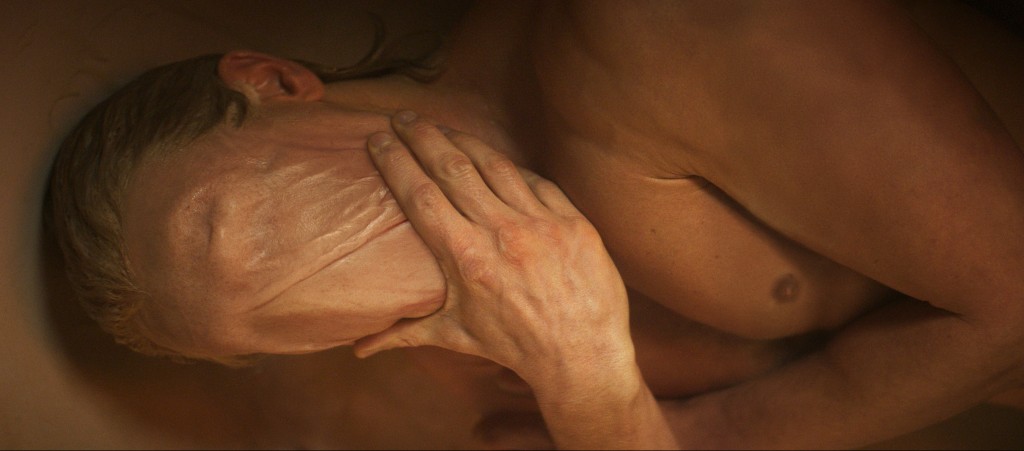
Legacy Effects helped create an 18-stage physical transformation for Harries, with production materials describing as many as 27 different looks once visual-effects extensions are included. The designs draw on medical and dermatological references rather than simply reproducing the exaggerated proportions of the comic-book character.
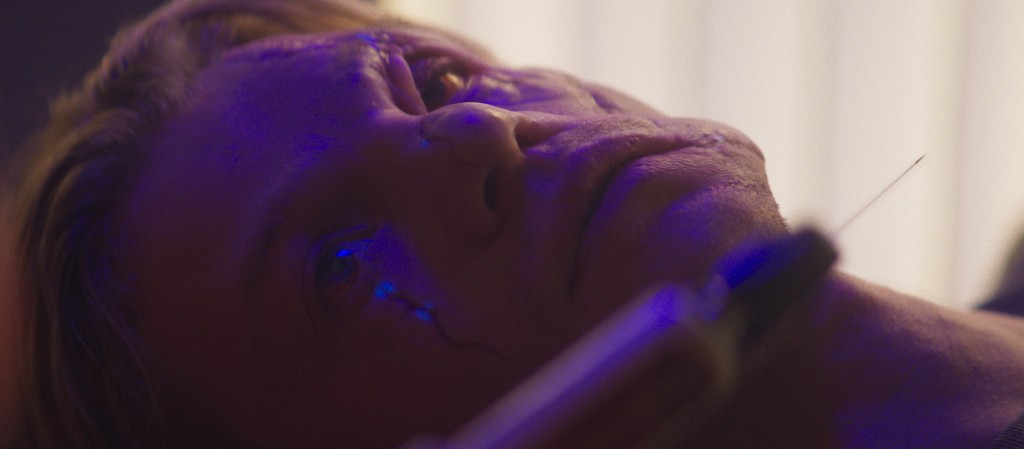
Thin silicone pieces were applied to Harries’ face, alongside contact lenses and oral prosthetics, with the process taking between two and four hours on some shooting days. Harries has said the discomfort itself became useful to the performance: “This pain is part of what the character experiences.”
(Clayface movie still)
(Clayface movie still)
Watkins also leans away from easy jump scares. Close-up images of skin, wounds and distorted facial features build a more intimate kind of unease — the fear that the body can stop behaving like something its owner controls. The director has cited body-horror classics including David Cronenberg’s The Fly, Videodrome, The Thing and An American Werewolf in London among his influences.
Beneath the monster is a Hollywood tragedy
The more unsettling idea in Clayface may be psychological rather than physical.
Before his transformation, Hagen has almost everything he once wanted: recognition, a leading-man career and the possibility of awards success. His face is not simply part of his appearance, but the instrument on which his entire professional identity depends.
When that disappears, the experimental treatment offers him a second chance. It also gives anger, insecurity and the appetite for revenge room to grow.
Harries described the script’s arc in tragic terms, saying: “Matt thinks he’s living in a romantic comedy, without realizing what he’s actually going through is a psychological thriller. ‘My God, am I the monster?’ — that’s the Greek tragedy of the whole thing.”
That sense of inevitability is central to the film. Harries has separately described the screenplay by Mike Flanagan and Hossein Amini as being structured almost like a Greek tragedy, built around three distinct acts.
Ackie’s Caitlyn is equally complicated. Rather than simply playing the scientist who saves him, her own ambition becomes intertwined with Hagen’s transformation. Their relationship gives the story a more intimate tension: two people who want to be seen, and whose choices gradually make that harder.
(Clayface movie still)
(Clayface movie still)
The result is less an origin story about acquiring a superpower than one about losing a sense of self.
Liverpool becomes a Gotham built to feel lived-in
Watkins’ Gotham is similarly interested in texture rather than comic-book polish.
Working with cinematographer Rob Hardy and Oscar-winning production designer James Price, the filmmaker looked to older photographs of New York and German Expressionist cinema to create a Gotham that feels oppressive, weathered and slightly claustrophobic. Buildings loom over the characters, skies are often obscured and grime is allowed to remain part of the frame.
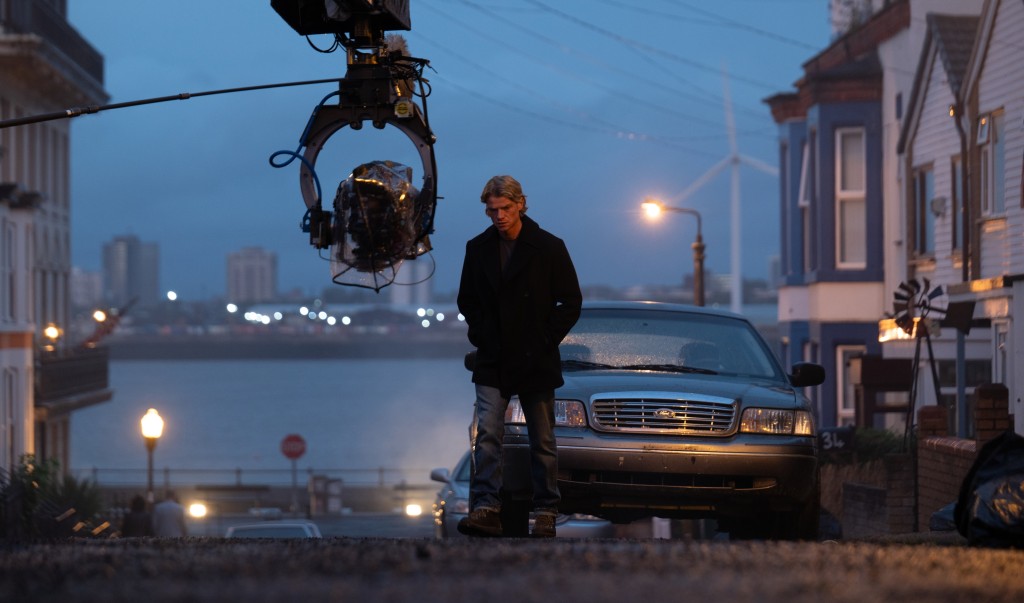
Much of the city was filmed on location in Liverpool, where production spent around three weeks shooting across 25 locations. The city’s historic architecture was repurposed for Gotham, with familiar buildings and infrastructure transformed into hospitals, police facilities, tunnels and other pieces of the fictional metropolis.
Many of the scenes were filmed on locations in Liverpool.
The contrast comes from Coast City. Its brighter scenes were filmed around Croatia’s Istrian coast, giving Hagen’s earlier life open skies, sunlight and warmth before the palette closes in around him.
Hardy mixed formats and older lenses to give the film a rougher visual texture, while the production design also slips in details for longtime DC viewers. Among them, the team says it found an original coffee table used in Tim Burton’s 1989 Batman and placed it inside Hagen’s penthouse.
It is an appropriately strange piece of continuity for a film that otherwise seems determined not to live in Batman’s shadow. Watkins has said he deliberately avoided turning Clayface into a parade of references to Gotham’s most famous resident, preferring to keep the focus on Hagen’s story.
That may ultimately be Clayface’s most intriguing transformation: taking a familiar Batman villain and stripping away the usual superhero framework until what remains looks more like a horror story about beauty, ambition and a man who can change into anyone — except the person he once was.