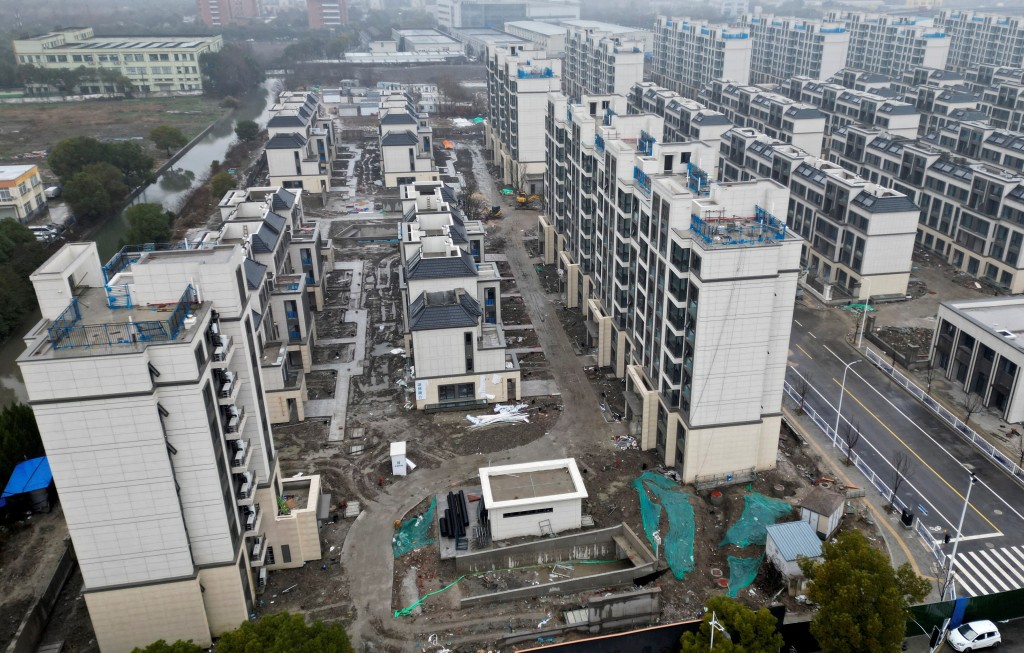
China's new home prices were stagnant in July, underscoring the challenges for a broad recovery of the housing sector as demand remained subdued.
New home prices fell 0.1 percent in July from the previous month, matching June's decline, according to Reuters calculations based on data released by the National Bureau of Statistics.
On an annual basis, prices fell 3.2 percent, slightly narrowing from a 3.3 percent decrease in June.
China's prolonged property market slump has added to growth pressures on the broader economy, as weak home sales and falling asset values weighed on domestic consumption and investment, offsetting strengths in manufacturing and exports.
While there have been signs of improvement in some markets this year, gains have largely been concentrated in major cities and have yet to signal a sustained nationwide recovery in housing demand.
Of the 70 cities surveyed, only 17 recorded month-on-month home price gains in July.
The number of cities reporting price gains remained below one-third of the total, indicating that the overall market has yet to emerge from its adjustment cycle and reinforced the property market's "K-shaped recovery" pattern, said Zhang Dawei, analyst at Centaline Property.
"Looking ahead, this tiered divergence in the property market is likely to persist. On the policy front, local governments are expected to continue tailoring measures to local conditions, with major cities focusing on unlocking demand from home upgraders and lower-tier cities prioritising efforts to reduce housing inventories," Zhang added.
Growth momentum had faltered in the second quarter, with the economy expanding at 4.3 percent year-on-year, the slowest pace in more than three years. Separate economic data released on Monday showed that retail sales, a gauge of consumption, grew less than expected in July while industrial output growth also slowed.
Property sales, investment and new construction starts all fell at a faster pace in the first seven months of the year, official data showed.
China's top leadership pledged in late July to support the economy with faster fiscal spending and new policies, without delivering major stimulus measures. The meeting did not signal stronger policy support for the housing market, despite acknowledging the need to stabilise it.
The recovery in larger cities also lost momentum in July. New home prices in tier-one cities were unchanged from the previous month, after rising 0.1 percent in June. Prices in tier-two cities fell 0.1 percent, compared with no change a month earlier, while prices in tier-three cities dropped 0.3 percent.
Prices of existing homes in tier-one cities rose 0.2 percent month-on-month in July, slowing from a 0.3 percent increase in June, while declines extended in smaller cities.
Supportive measures to spur housing demand this year were mainly introduced by local governments, including top-tier cities.
Capital city Beijing in early August further relaxed home-buying curbs, allowing more households to buy homes within the central area. It also allowed homebuyers to take out more mortgages through the housing provident fund programme.
Reuters