Norwegian electric car owners have a word for the way they feel when they look nervously at their battery indicators while driving in subfreezing weather: "rekkevideangst." It means "range anxiety."
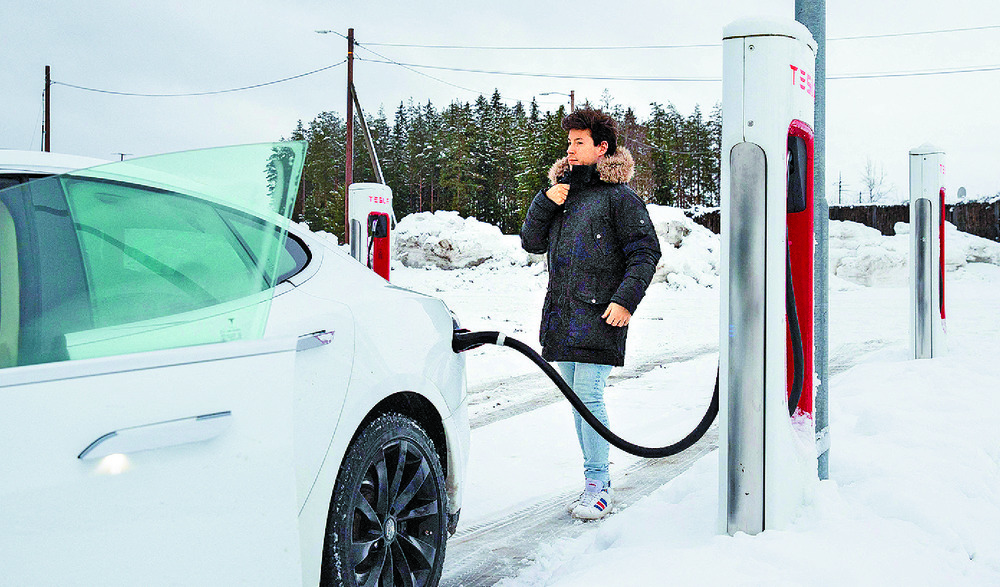
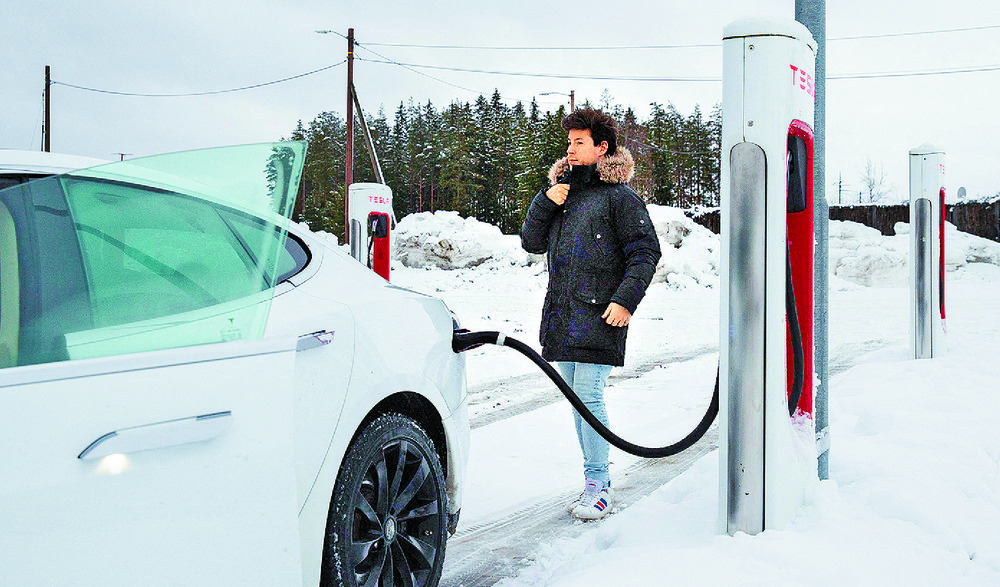
Tesla owner Philip Benassi has experienced it on cold winter days, but like other Norwegians, he has learned to cope with it.
With temperatures often falling below zero, rugged terrain and long stretches of remote roads, Norway may not seem like the ideal place to drive an electric car, whose battery dies faster in cold weather.
Yet the country is the undisputed world champion when it comes to zero-emission vehicles.
A record four out of five new autos sold in Norway last year were electric. And Norway is a major oil-producing country that aims to end the sale of new fossil fuel cars by 2025 - a decade ahead of the European Union's planned ban.
Benassi, a 38-year-old salesman for a cosmetics company, clocks between 20,000 and 25,000 kilometers a year. Like most new electric vehicle owners, he had moments of panic in the beginning when he saw the battery gauge drop quickly, with the prospect of it falling to zero on a deserted country road.
"I didn't know the car well enough. But after all these years, I have a good idea of how many kilowatts it needs and I know that it varies on whether the car has spent the night outdoors or in a garage," he said
The car uses much more battery when it is parked outside and "it takes quite a while for it to go back to normal consumption," he said.
In the cold season, how much range electric cars lose depends on the model and how low the temperature gets.
But the following rules of thumb apply, said Finnish consultant Vesa Linja-aho. "A frost of minus-10 degrees Celsius will reduce the operating range by a third compared to summer weather, and a severe one (minus-20 degrees or lower) by up to half. By storing the car in a warm garage, this phenomenon can be mitigated somewhat."
Drivers must plan their routes before long journeys, but car applications and Norway's vast network of more than 5,600 fast and superfast charging stations help make the process easier.
Electric cars accounted for 54 percent of new car registrations last year in Finnmark, Norway's northernmost region where the mercury falls to minus-51 degrees - a sign that the cold is not insurmountable.
Other Nordic countries that regularly experience chilly temperatures, such as Iceland and Sweden, also top world rankings for electric vehicles.
Norwegians are clearly sold: more than 20 percent of cars on Norway's roads are now electric - and green. That's because the electricity they consume is generated almost exclusively by hydro power.
Philip Benassi charges his car at one of Norway's 5,600 charging stations. Four out of five vehicles sold last year in the country – where temperatures fall to minus-51 degrees in some regions – were electric. afp
A village in Finnmark.