A Hong Kong IT expert has warned that AI is pushing cybercrime into an "industrialized" phase, after the FBI flagged a free hacking tool known as ARTEX as an emerging weapon in automated attacks worldwide.
In a FLASH advisory warning issued last Friday, the agency said the open-source, large language model (LLM)-driven autonomous penetration testing framework has been abused by malicious cyber actors since August.
The FBI said the tool, originally a legitimate security product released on GitHub in July, has been weaponized to locate targets and gain privileged access in under three hours.
It said the automated attacks mainly targeted the finance, technology, healthcare, and government sectors.
Although the developer took down the official repository in October, ARTEX continues to circulate through open-source forks, mirror sites, and commercial versions. It is added that researchers have found more than 1,600 publicly exposed ARTEX consoles by early November.
South Korea data breach
The warning also disclosed a serious breach at a South Korean financial institution that exposed the personal data of about 67,000 people.
Notably, hackers reportedly compromised the cloud backup system of the platform ConnectWise to launch a supply-chain attack, attempting to gain access to more than 2,250 downstream corporate clients.
According to the FBI, the hackers use ARTEX to find vulnerable systems, then disguise themselves as legitimate staff using stolen credentials
Traditional defenses struggle to detect hackers whose activity mimics normal administrators, the agency said, adding that the criminals will then create hidden accounts or backdoors to maintain long-term access.
Organizations and businesses are advised to disconnect affected management platforms, preserve log evidence, revoke suspicious authorizations, reset passwords, enable multi-factor authentication and review unusual login activity.
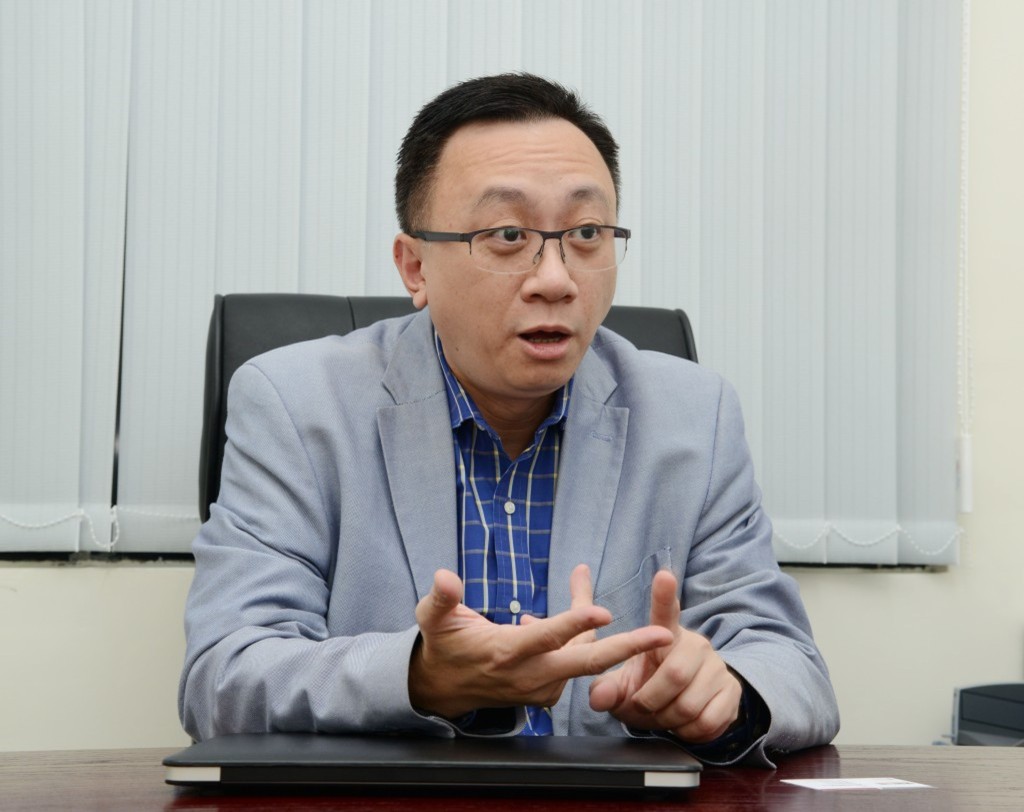
Francis Fong
'Industrialized' attacks: Francis Fong
Francis Fong Po-kiu, honorary president of the Hong Kong Information Technology Federation, told Sing Tao Daily, the sister publication of The Standard, that the FBI alert marked a fundamental shift in cyberattacks.
"What once required a whole professional hacking team can now be done by a lone attacker armed with AI tools," he said.
He described the trend as the "industrialization" of cyberattacks, stressing that the real danger lies not in the technology itself but in the abuse of companies' trust mechanisms.
With hackers' activity almost indistinguishable from normal administrative work, firms often discover the intrusion only after the fact, he added.
Noting ARTEX is not a virus or ransomware, he stated that its power lies in making attacks faster, cheaper and harder to detect.
"Companies don't need to abandon all AI tools, instead, they should immediately review third-party management tools and cloud authorizations, and revoke any unnecessary permissions," he advised.
Fong concluded that the key to cybersecurity in the AI era is no longer whether a system has vulnerabilities, but whether attacks are faster than a company's response.
He stressed that all firms must adopt a zero-trust mindset that assumes attackers already hold legitimate credentials — shifting from "preventing intrusion" to "rapid detection and containment.”