
Read More
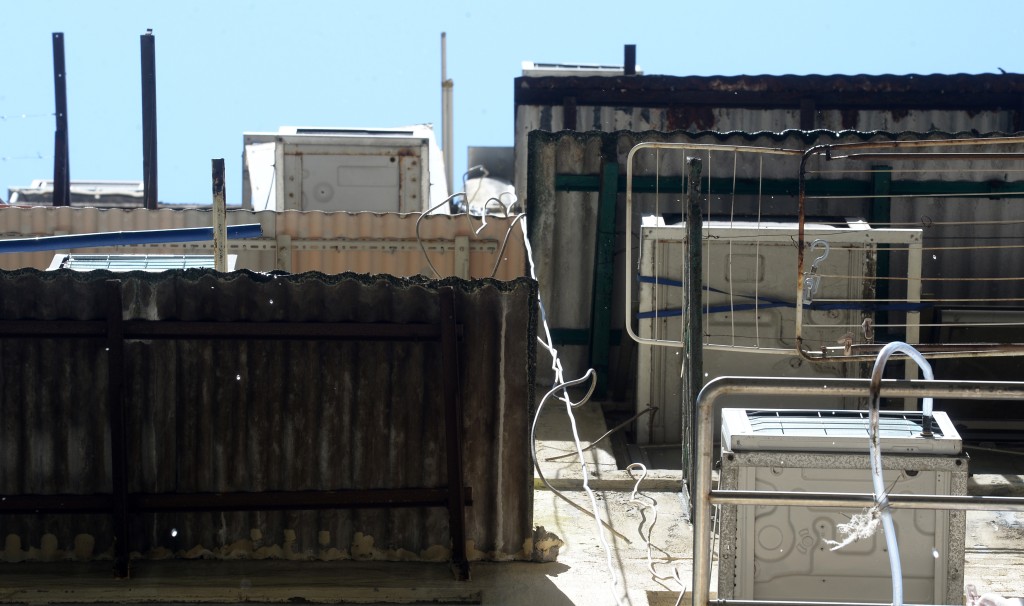
Authorities in Hong Kong are stepping up enforcement and introducing advanced artificial intelligence tools to tackle the persistent nuisance of dripping air conditioners, lawmakers heard during a Legislative Council panel meeting on Monday afternoon.
ADVERTISEMENT
SCROLL TO CONTINUE WITH CONTENT
Addressing the Panel on Food Safety and Environmental Hygiene, Acting Secretary for Environment and Ecology Diane Wong Shuk-han explained that the Food and Environmental Hygiene Department had adopted a targeted approach by designating more than 300 priority locations across the territory for intensive inspections.
By August this year, approximately half of those identified blackspots had seen problems resolved or significantly alleviated, prompting authorities to identify an additional 110 locations for continued surveillance based on ongoing risk assessments.
Wong also highlighted technological advancements in evidence collection, noting that the department had collaborated with local innovation and technology institutions since 2024 to develop a specialized investigation system.
The equipment incorporates infrared night-vision technology to pinpoint dripping sources in low-light conditions, while a third-generation version equipped with artificial intelligence image recognition has now been distributed to district environmental hygiene offices across the city, substantially reducing the time required to gather proof.
Compliance rates exceed 99pc as complaint volumes continue to climb
Following legislative amendments to the Public Health and Municipal Services Ordinance enacted last year, enforcement activity has expanded.
By the end of September, the department had issued around 8,100 nuisance notices, representing an annual increase of approximately 16 percent. Despite the growing volume of notices, compliance remained exceptionally high, with more than 99 percent of households taking remedial action within the stipulated timeframe.
Cooperation with private residential estates has also continued, with participating property management firms handling an average of more than 4,000 related complaints annually over the past five years.
However, lawmakers expressed concern over the swelling volume of public grievances. Legislative Council member Steven Ho Chun-yin pointed out that annual complaints had risen from over 31,000 in 2023 to around 38,000 in 2025, alongside an increase in nuisance notices. Ho questioned why annual resolution figures appeared to trail total complaints and asked how authorities planned to clear backlogs.
In response, Wong attributed the surge in reported cases to heightened public awareness generated by extensive government educational campaigns.
She emphasized that compliance had steadily improved, climbing from 97.2 percent in 2023 to 99.7 percent in 2025, and remaining at 99.4 percent through the first nine months of this year. She added that installing centralized communal drainage pipes in residential blocks offered the most durable remedy, noting that the Buildings Department now requires drainage plans for new buildings to designate condensation discharge systems.
Challenges persist in older buildings and subdivided units during peak night hours
Lawmaker Kitson Yang Wing-kit commended the overall compliance rate and noted that only 40 summonses had been issued, signaling substantial cooperation from residents. Nevertheless, Yang cautioned that the majority of dripping incidents stem from aging tenements, many of which have been partitioned into subdivided units lacking communal drainage infrastructure.
He asked what concrete guidance could be offered to tenants facing structural limitations and sought clarification on the deployment of frontline inspection teams.
Wong observed that many leaks originate from straightforward mechanical defects, such as corroded drip pans or dislodged hoses, which can be remedied quickly by hiring qualified technicians.
Addressing enforcement logistics, Deputy Director of Food and Environmental Hygiene (Environmental Hygiene) Alice Yeung Lai-shan explained that the department maintains a team of over 300 health inspectors responsible for air conditioning nuisances alongside other sanitation duties.
Recognizing that condensation and household air conditioner usage peak during the evening and overnight hours, the department deliberately concentrates roughly 70 percent of its inspection manpower on nighttime operations to ensure swift detection and response.