
Read More






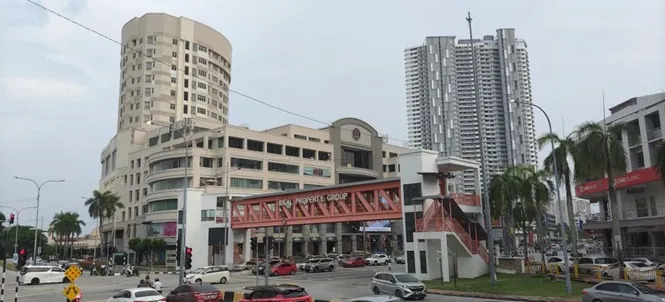
When a Hong Kong tycoon family bought Island Plaza just before the movement control order took effect on March 18, 2020, the mall on the outskirts at Tanjung Tokong had been without its department store anchor for nearly a decade, and most of its shoppers had drifted elsewhere.
The Law family paid an undisclosed sum. A Penang real estate specialist told a local daily in 2023 that the price was likely no more than RM130 million.
Six years on, the renamed Island 88 is 76 per cent occupied, and a premium grocer is due to open in November. The family has turned an almost empty mall into a food hub with a modest flow of shoppers and diners.
It wasn’t exactly a turnaround, but it’s definitely much better than before. The strategy behind it cuts against Penang’s retail logic.
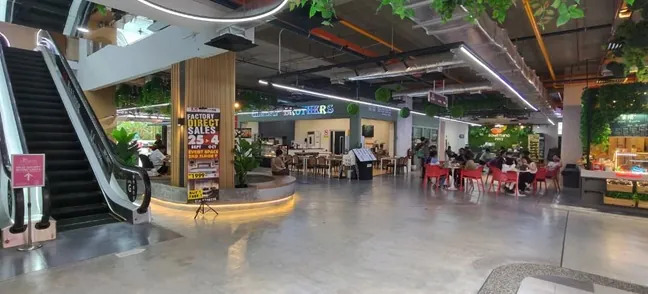
While the big malls compete on size, Island 88 is trying to take a different route, positioning itself, according to its management, as “a cosy, high-quality destination that feels tailored specifically to the community’s daily lifestyle needs”.
Island Plaza opened in December 1995 for RM200 million and brought premium concept stores such as Versace, Fila, Oshkosh B’gosh, Polo Santa Barbara and Mizuno to Penang for the first time. Newer, larger malls arrived in the 2000s and took its shoppers with them. Metrojaya, its anchor tenant, closed its department store in 2011, citing planned renovations.
The mall changed hands several times. Asian Retail Mall Fund II, managed by Pramerica Real Estate Investors, bought it from Belleview Group in 2007 for RM120 million and spent RM40 million on renovations. In 2015, Singapore-listed International Healthway Corp was reported to be in talks to buy it for about RM115 million.
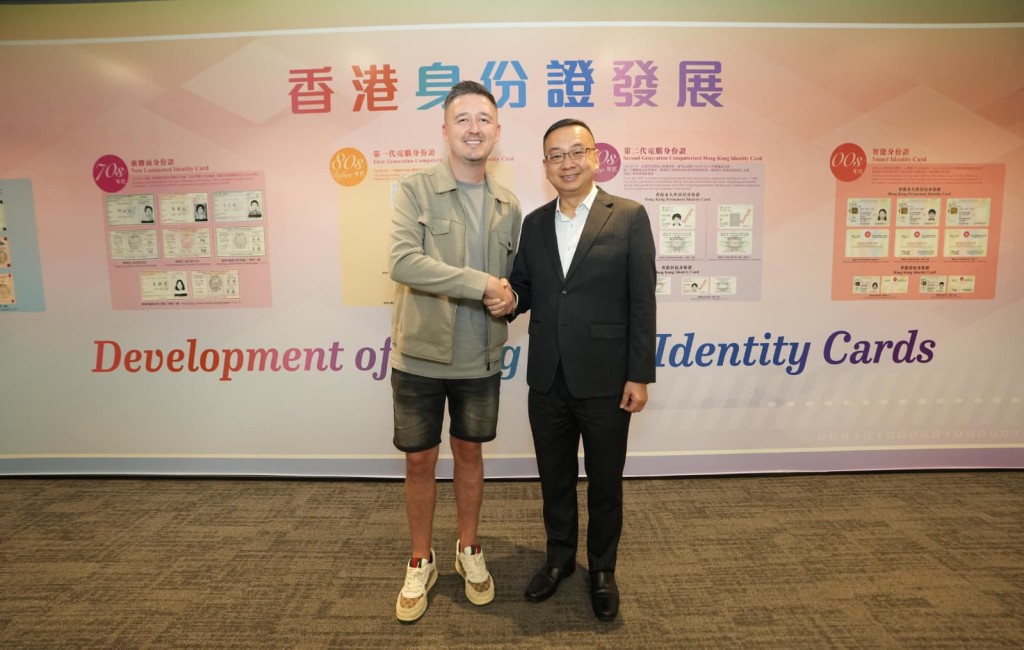
The eventual buyer was Paul Law, whose Penang holdings include The Boutique Residence Hotel Penang and Museum Hotel Penang. He chairs the mall’s management corporation, and his son, Philip Law, is its managing director.
The same specialist said the previous owners had been looking to sell for some time as the building deteriorated and quickly accepted Law’s offer. He estimated at the time that bringing the mall back to life would cost more than RM30 million.
Philip said the family saw Penang’s commercial potential from the start, and was drawn as much by its culture, heritage and food.
Reconstruction began in April 2023. The family borrowed its philosophy from Hong Kong’s Central Market, Philip said, where a heritage landmark was turned into a gathering place for dining and the arts. Not everything made the journey.
“What cannot be directly transplanted is the pace and density,” said Philip. “Hong Kong relies heavily on rapid commuter footfall and ultra-high-density vertical retail. Penang, by contrast, has a more relaxed, community-driven lifestyle.”
The mall’s layout and tenant pacing were reworked around leisurely dining and family outings, he said.

Progress has been steady, with occupancy at about 60 per cent in April 2025, when Philip hoped to reach 80 per cent by the end of that year. The target has since moved to the end of 2026, and he said the mall is “fully on track” to meet it.
Philip said success is not tied to any single measure. With the mall still growing, the focus is on keeping customers coming back and improving their experience.
Against the wider market, 76 per cent holds up well. Penang’s malls were 67 per cent occupied as at the second quarter of 2026, according to National Property Information Centre (NAPIC) data compiled by Henry Butcher Malaysia, well below the national rate of 77.9 per cent. Penang island malls fared better at 74.9 per cent, against 63.4 per cent on the Penang mainland. Island 88 sits just above the island’s average.
Meanwhile, Gurney Plaza and Queensbay Mall, both owned by CapitaLand Malaysia Trust, were each at least 99 per cent occupied as at March 31. Strip out the near-full prime malls, and the rest of the island fares worse than 74.9 per cent.
But the supply keeps growing. Sunshine Central in Air Itam, Penang’s newest big mall, opened in October 2024 with about 820,000 sq ft of lettable space, roughly the size of Gurney Plaza.
Penang has no shortage of shoppers. What it has is more mall space than tenants to fill it, and the established names on Gurney Drive take most of the demand. Island 88 cannot outbid that pull, so it competes on something else: food, community and a steady calendar of activities.
After a Mid-Autumn mooncake fair, the mall is lining up a Halloween celebration, an international bridal fashion week, a sports and outdoor lifestyle expo, a beauty and wellness expo, and Christmas festivities alongside a monthly shopper rewards programme.
“Rather than competing purely on mega-scale square footage, we are positioning Island 88 as a high-quality, curated neighbourhood destination, where convenience, premium grocery, exceptional dining, and community arts meet under one roof,” Philip said.
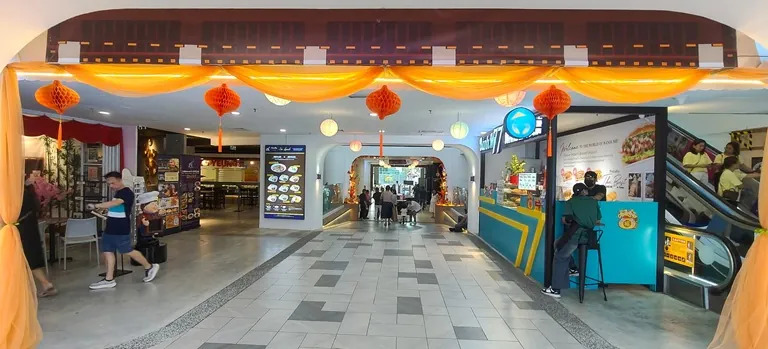
The mall has moved away from department stores and fashion towards food and lifestyle, with tenants chosen around the surrounding international schools, colleges and residential estates. “Modern shopping behaviour has evolved significantly,” said Philip.
He said consumers today prioritise dining, gathering, and experiential lifestyle visits before traditional retail shopping. “Our shift toward F&B and lifestyle aligns directly with this trend. We are seeing sustained traction,” he said. “It’s about creating an integrated lifestyle ecosystem rather than just renting out floor space.”
Philip said food drives daily traffic at a neighbourhood mall, and the mix runs from local fare to Japanese, Thai and Vietnamese, with more new concepts being sought. Food and art initiatives are aimed at students and younger visitors, alongside family-oriented retail and dining.
Nationally, though, fashion remains a strong draw for shoppers. Fashion and accessories were the fastest-growing retail category in the second quarter, with sales up 12.9 per cent, according to Retail Group Malaysia (RGM) figures.
That said, the emphasis on food is not without risk, as higher fuel prices and living costs have led diners to eat out less often or order cheaper dishes. RGM reported growth of just 2.5 per cent in the second quarter of 2026, below industry forecasts. In June, cafe and restaurant operators surveyed by the group expected sales to fall a further 2.3% in the second quarter.
A mall built around dining is exposed to exactly that kind of caution, and groceries offer no easy refuge. Supermarket and hypermarket sales fell 9.0 per cent in the same quarter, according to RGM. That is the market Island 88’s new anchor, Ben’s Independent Grocer (BIG), is entering.
BIG, which signed a memorandum with the mall in June through TFP Retail, will be the chain’s first outlet in Penang and the northern region, replacing Mercato, which operated at Island 88 until July 30 before moving to Gurney Plaza. Philip said the inclusion of BIG “instantly elevates our positioning”.
However, BIG will not have the suburb to itself, as Village Grocer opened its first Penang store at City Junction in Tanjung Tokong in 2022. Two premium grocers in one suburb say a good deal about who lives there.
Whether the catchment will keep both busy is less certain, although Philip said the mall is also seeing more regional tourists from Indonesia, along with travellers and expatriates from Hong Kong, Korea and China. However, the core trade remains local, drawn from Tanjung Tokong and Batu Ferringhi.
The Law family has bet against the “go big” trend by investing in a boutique neighbourhood mall, even though its new anchor tenant is called BIG. So far, the numbers suggest the “go small” strategy is gaining traction.