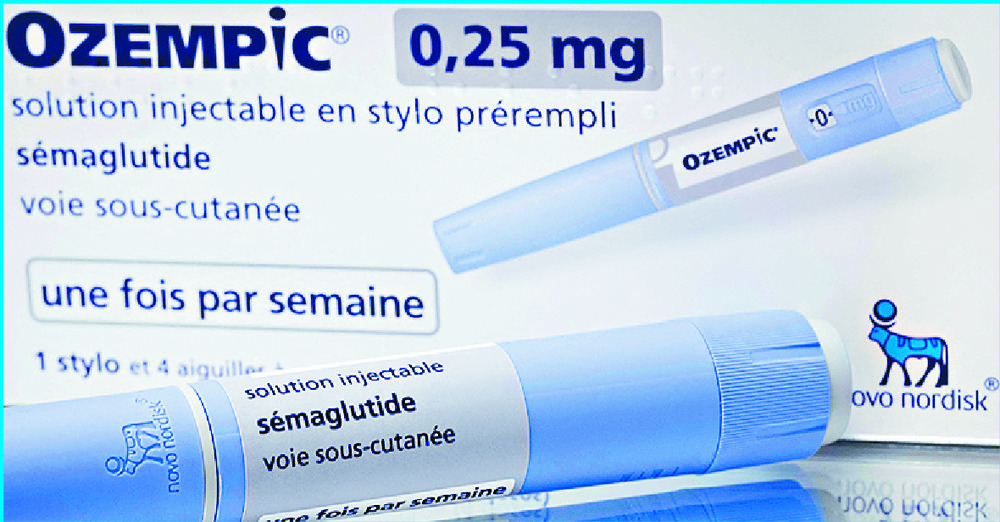
Diabetes drug Ozempic has become a social media phenomenon for its weight-loss properties, but soaring popularity has led to global shortages and doctors warning of side effects.
Videos under #Ozempic have nearly 600 million views on TikTok, where many users update followers regularly about their weight loss.
"Losing 40 kilograms in less than three months is possible" thanks to Ozempic, a French TikToker said in a typical post in December. "It's a miracle."
The injectable drug from Danish pharmaceutical firm Novo Nordisk was developed and approved in numerous nations to treat type 2 diabetes.
The drug's active ingredient, semaglutide, binds itself to the receptors of a hormone that controls blood sugar, stimulating the release of insulin when glucose levels are high. It slows down how quickly food leaves a person's stomach, reducing appetite.
In early 2021, researchers found almost three quarters of people who used the drug lost more than 10 percent of body weight.
Novo Nordisk has since developed a semaglutide drug with a higher dosage called Wegovy specifically for obesity. It was approved for use in the United States in 2021 and in Europe and the United Kingdom last year.
Wegovy is not yet on the UK and French markets or in several other countries, but Ozempic is available with a prescription.
This has led to a rise in people without diabetes obtaining prescriptions for Ozempic as well as "falsified prescriptions," says Jean-Luc Faillie, a pharmacology specialist at France's Montpellier University.
Douglas Twenefour, head of care at Diabetes UK, says Ozempic "is not a medication for people who do not have diabetes or are at risk of type 2 diabetes."
And France's medicines regulator, ANSM, has urged doctors to only prescribe Ozempic for diabetes.
There has not been a particularly "sudden increase in consumption in recent months," the ANSM says, but there were "supply tensions" worldwide.
Novo Nordisk says "stronger than anticipated demand" for Ozempic resulted in "intermittent availability and period stock-outs" around the world. So the company's global manufacturing facilities "are now operating 24 hours, seven days a week" to bridge the gap.
Doctors have expressed concern that people with diabetes may not be able to get hold of semaglutide because of soaring demand from people seeking to lose weight.
Karine Clement, an obesity specialist at a French research institute, says when Wegovy does become available it's important for people to follow prescriptions closely. "It is not a magic drug," she says. "As is always the case with obesity it must be accompanied with a comprehensive treatment plan."
Doctors have also expressed concerns about the side effects of semaglutide, which Faillie says have been under-discussed.
"Neither patients nor prescribers are motivated to report" side effects, he adds.
Nausea is the most common side effect of the drug.
But Faillie points to "rarer and more serious risks such as acute pancreatitis - which can occur even at lower doses - biliary disorders, and rare cases of severe constipation.
He also points to an "increased risk of thyroid cancer" following several years of treatment.
While the risks are reasonable considering the benefits for diabetics, Faillie adds, "there are still uncertainties, particularly in obese patients over the long term.
"If it is used to lose a few kilograms then the therapeutic benefit is zero. That would just be cosmetic, while the risks remain."
Ozembic is intended for the treatment of diabetes not obesity. AP, XINHUA