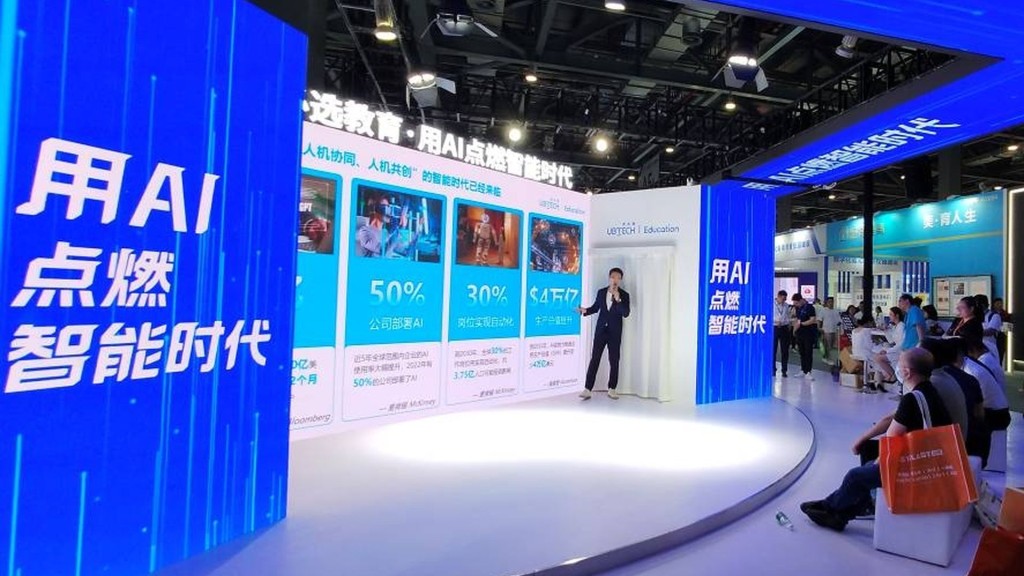
In a rapid 70-day surge, nine major Chinese technology firms unveiled 10 next-generation artificial intelligence models – ranging from Zhipu's GLM-5.2, Alibaba's Qwen3.8-Max, and DeepSeek's V4 Pro. While global generative AI conversations were once dominated by US giants such as OpenAI and Google, Chinese companies are increasingly capturing international headlines and search traffic.
Data indicates that this momentum is driven by performance. DeepSeek V4 Pro scored 53 on the Artificial Analysis Intelligence Index v4.1.1, narrowing the gap with leaders like GPT-5.6 Sol (61) and Claude Opus 5 (63).
Crucially, Chinese models offer a stark cost advantage: DeepSeek averages just US$0.06 (HK$0.47) per task compared to Claude's US$2.34. As enterprise AI deployment prioritizes scalability, this price-to-performance ratio has made Chinese models a practical choice for business integration.
This technological reach is shaping global strategies. Apple Intelligence's integration of Alibaba and Baidu AI services in China underscores the maturity of the local ecosystem in language processing and regulatory compliance. Meanwhile, cross-border technology ties persist in pragmatic forms, such as Ford's battery partnership with Chinese battery manufacturer CATL in Michigan, reflecting a landscape defined by both competition and cooperation.
European adoption further challenges the stereotype that Chinese AI wins solely on price. According to a study from the market research firm International Data Corporation, European firms prioritize security, compliance, and performance over cost. Kitty Fok, managing director of IDC China, noted that performance standards and local regulatory alignment take precedence, with competitive pricing serving merely as an added benefit.
The global AI landscape is evolving into a pragmatic, multi-polar ecosystem. Rather than a market dominated by a few universal models, future enterprise adoption will rely on multi-model flexibility, hybrid orchestration, and localized solutions to balance performance, compliance, and cost efficiency.
Francis Fong is a Hong Kong IT and Telecom expert who frequently represents the industry in public discussions about innovation, digital transformation, and technology policies