Artist residencies are often judged simply by the work they produce. But their real value often lies in the new relationships forged and the discipline of the process: the conversations, unanticipated encounters, and adjustments that shape the work in less visible ways.
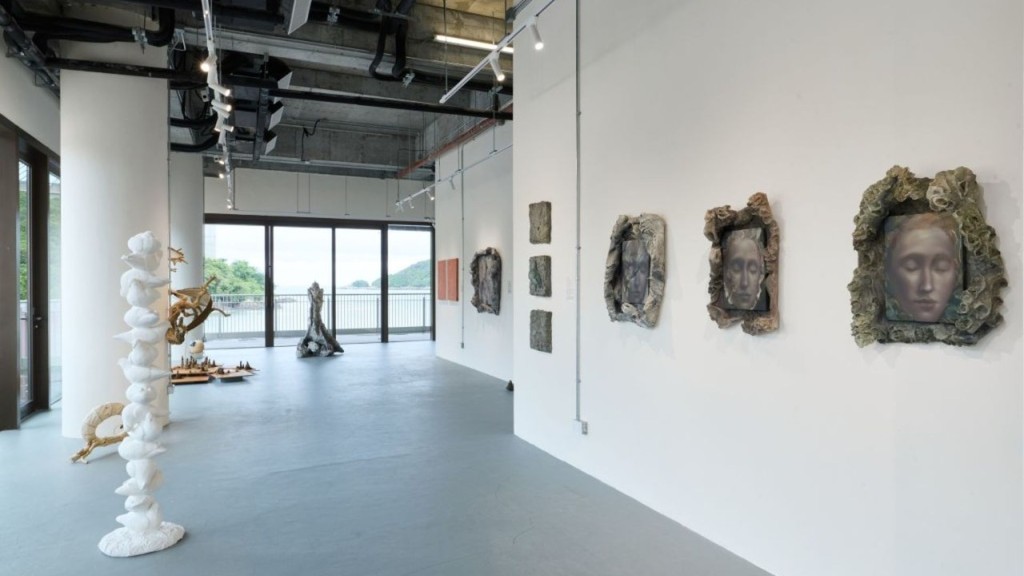
That is why "Undercurrents," the recently extended exhibition at Ma Wan 1868, mattered. The show has just closed, but its significance lies less in the final display than in the 10 weeks that preceded it. WestK Academy's first artist-in-residence pilot brought together six Hong Kong artists and five from the Czech Republic, placing them in the converted industrial buildings of Ma Wan 1868. They worked alongside one another, and responded to an island where the sea, traditional village life, high-rise views and the machinery of modern Hong Kong all sit within the same frame.
The results were impressive. Michal Bacak's charcoal landscapes and delicate works on silk caught the odd, layered character of Ma Wan: not quite rural, certainly not urban, yet surrounded by the city's infrastructure. Hung Fai's dense ink work, Maze III, offered a different kind of map – one shaped by repetition, pressure and the mental traffic of city life.
Other artists turned to what Hong Kong loses, preserves and half-remembers. Vvzela Kook's virtual return to the Jumbo Floating Restaurant was one of the show's more pointed works. Since the restaurant sank, it has become a familiar kind of Hong Kong absence: once a landmark, now a memory repeatedly revived in images, stories and digital form. Rivian Cheung approached tradition from another angle, adapting traditional paper-crafting techniques and folk-craft skills within a sculptural practice centered on natural materials.
For all of the artists, this was cultural exchange at its best. The exhibition worked because they had time to be thrown off balance by Hong Kong: to sit with its contradictions, and to let the place unsettle their habits of looking and creating. They were not simply introduced to the city; they stayed with it long enough for its undercurrents to surface in the work.
That is the real lesson of WestK Academy's first residency: given time, the city does more than provide a setting; it becomes part of the work.
Bernard Charnwut Chan is the chairman of the West Kowloon Cultural District