I have always believed in nuclear power as an excellent source for electricity generation. It generates almost no emission, fuel prices are steady, and it can operate continuously under all weather conditions.
But isolated incidents such as those in Three-Mile Island, Chernobyl, and Fukushima have cast doubts in the minds of some people, creating the perception that nuclear power is unsafe. But while there are very few direct cases of casualties associated with these incidents, the fear of radiation hazards looms.
The emeritus vice chancellor of City University, professor Wei Guo, often says it is like people fearing ghosts, but no one can actually prove that they have met one. It is partly due to this misconception that has led to the resistance toward building more nuclear plants worldwide.
But developments in technology have given rise to newer generations of nuclear power stations. When operated professionally with all precautions, nuclear power can be more safe than thermal power plants. The plants linked to incidents were of the first generation; modern plants, from those utilizing pressurized water reactors onward, have at least a two-pass system for a cooling water circuit, ensuring that any radiation leaks from a reactor are not emitted outside.
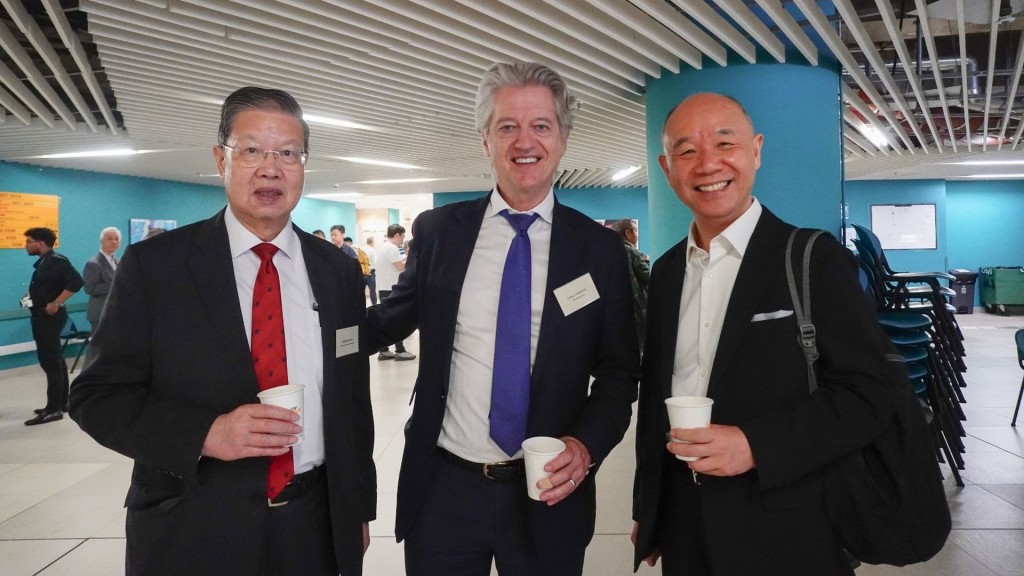
I had the benefit of attending a nuclear power forum recently, and was pleased to learn the latest developments in nuclear technology from leading experts across the United Kingdom, Europe, and the mainland.
The development of small modular reactors will allow data centers to operate without fear of power shortages. They have been proven successful in other countries, though I doubt if these would apply to Hong Kong, as we do not have an ancillary block for our tall buildings, and they may cause problems with our power utilities.
But other developments have also drawn my attention. I have learned that nuclear fusion technology is gradually getting real. Previously, the application of this technology was limited by the need to operate at high temperatures, which made it difficult to replicate for large-scale operation, as special materials would be required for reactor containers. With the successful application of plasma technology, we can see light at the end of the tunnel as those limitations will no longer be valid. Given continuous development, we may see commercial operation within the next decade.
The advantage of nuclear fusion, compared with current nuclear fission technology used in existing nuclear plants, is that there is a significant reduction in radiation risks alongside higher efficiency. Fuel costs will therefore be even lower, and plants can be located near dwelling places without risk. The recent development of high-temperature superconductor technology enables the generation of a much stronger magnetic field at extended periods, yielding much higher performance.
The French International Thermonuclear Experimental Reactor nuclear power fusion plant is the largest nuclear fusion experimental project in the world, which aims to achieve production on a power-plant scale using HTS technology. Many countries cooperated to build it. It is a model for collaboration, with 34 countries including the United States, China, Korea, Japan, Russia, and India working together. The American project director, speaking at the forum, was proud to say that this was a gleaming example of international cooperation, crossing politics and culture.
Without getting too much into technical details, this experimental plant can generate 500 megawatts of nuclear fusion power, with a huge vessel containing plasma – allowing continuous fusion activities and for tritium breeding to feed future nuclear fusion plants for safe operation.
Once again, this demonstrates the power of cooperation, which is widely practiced among engineers all around the world. They work together to produce results, which benefits all mankind; ethnicity and politics do not deter them from working together as one team. It is the only way to make technical progress, as no one country possesses all the necessary knowledge and skills.
Veteran engineer Edmund Leung Kwong-ho casts an expert eye over features of modern life