Read More





Will AI make me dumber? | Human Reinvented | Frank Ng & Ryan Ng
13-10-2026 05:00 HKT


Three arrested over missing fire door frames in public estate lift overhaul
16-10-2026 20:10 HKT
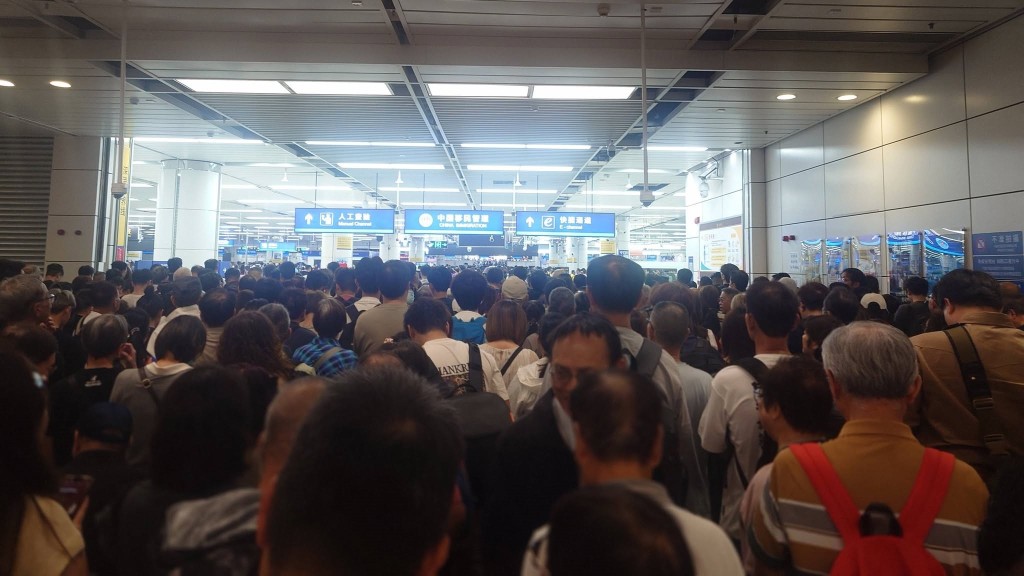


In mid-September, a World War II bomb was unearthed during some foundation work in a construction site in Quarry Bay. It was assessed to be still active and required defusing before removal. The exercise was classified as very dangerous and 6,000 residents in 18 building blocks adjacent to the site had to be evacuated urgently, as any accidental explosion during the defusing exercise could cause serious damage to building facades and structures within one-kilometer diameter and threaten occupants' safety.
Bomb disposal is always a dangerous exercise, and the Bomb Ordnance Disposal Unit, also known as the Explosive Ordnance Disposal or EOD Bureau, specially trained for this purpose, was immediately deployed. Such personnel used to be expatriate police officers until the last three decades when local police officers took over.
The bomb was identified as an AN-M65 unit, commonly used by US Air Force. It is about 1.4 meters long and weighs 1,000 lbs (approximately 450 kilograms) and estimated to contain half of its weight in TNT explosives. They have front and rear fuses, and dismantling them on-site was considered not a safe move. It was decided that cutting an opening on top of the shell and igniting the TNT would be a much safer operation.
TNT is a chemical compound often used in construction, mining, and demolition activities and considered totally safe when properly applied. It is inherently stable and can be handled safely. Simply dropping or shaking it, or even setting it on fire, should not cause an explosion. But when detonated in an enclosed compartment, it will quickly expand to a volume of 1,000 times within fractions of a second, releasing a huge level of energy, causing serious harm to everything in its vicinity. In technical terms, the energy released is in the order of 4.6 megajoules per kg.
For military use, TNT is packed in a strong steel shell, with front and rear detonators to release it power. To ensure safe transport and installation beneath the wings of an aircraft, the fuse system is inhibited by a wire shackle mechanism. When bomber aircraft reach targeted sites, the pilot releases the bomb by firstly pulling out a wire to activate its fuse system. Rotating vanes, powered by air movement generated as the bomb gathers speed from the force of gravity, then trigger the detonation system. The vane assembly flies off mid-flight to get out of the way and as the bomb hits the hard surface of a target, the fuse ignites a booster charge which in turn ignites a much more powerful auxiliary booster charge to cause the TNT to explode in the shell.
In the case of this bomb, it probably landed in the storage godown of the old Taikoo Sugar Mill and was cushioned by sugar cane or bags of sugar grains. This could have prevented the final triggering of the fuse. The buried bomb miraculously stayed there through many construction activities as the sugar mill made way for industrial buildings, and then recently, for a new commercial development. But such an occurrence is not uncommon as a similar bomb was discovered recently at the Wan Chai Waterfront during railway construction for the Shatin to Central Link.
For the dismantling and removal operation in Quarry Bay, to ensure safety to residents in the area, the EOD determined that it would be necessary to evacuate all residents within a close distance of the construction site. The area immediately surrounding the bomb was then shielded by layers of sandbags to minimize damage should the bomb explodes during defusing.
A team of some 20 EOD officers worked in short shifts to ensure that they could focus their total attention for a complete, faultless operation. A water laser cutter – imparting very high water jet pressure – accompanied by steel grit, were used to carve out a large opening on top of the shell. The water jet helped to cool the metal cutting process to minimize chances of heating up the bomb. Having opened it up, the TNT powder was then burnt slowly through a controlled process, either within the shell enclosure, or removed and burnt outside.
This is as demanding as an expert surgical operation, but at far worse conditions at a construction site instead of an operating theater in a hospital.
The operation, including preparation work for protection of the area, took some seven hours. All TNT explosives were burnt off, and the shell was inspected to ensure no explosive residue remained inside before it was finally removed for disposal.
For those who are interested to see what the cut-out shell looks like, there is one on display on the platform of the Exhibition Centre Station.
Wars are devastating, and the aftereffects can be long-lasting. There may still be other bombs buried in the foundations of some buildings in Hong Kong, but thanks to the good work of our Police EOD team, Hong Kong residents can continue to enjoy daily life without too much interruption, even when such explosives are discovered and need to be removed. We are thankful to their courage and fine work.