Read More





Six months before a scandal over extramarital affairs and alleged Chinese intelligence ties toppled Nvidia chief executive Jensen Huang, a little-known 31-year-old short seller published a 40-page report warning that the chipmaker had a serious "China problem" and flagging Huang's ties to a Singapore-based buyer.
Christian Lamarco, founder of three-person activist short-selling firm Culper Research, released the report on May 13 — drawing widespread indifference as Nvidia shares traded at US$225.83 and hit a fresh high the following day.
The stock has since tumbled roughly 35 percent, closing down 3.3 percent at US$145.98 on Thursday after touching a 52-week low of US$145.71, even after Nvidia reported third-quarter revenue more than doubled to US$115.8 billion earlier this week.
Huang resigned as chief executive, president and board member on November 12, sending shares down 4.34 percent that day to US$166.19 before six consecutive sessions of losses deepened the sell-off. Nvidia's stock is now down nearly 39 percent from its October 6 record close of US$239.24.
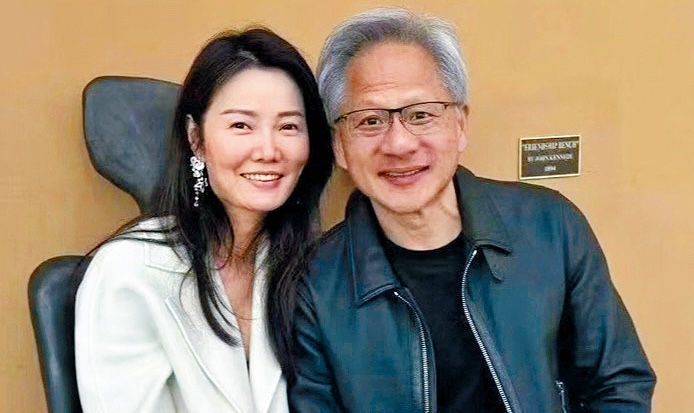
While most of Culper's May report questioned whether Nvidia was accurately disclosing its China exposure — estimating that more than 20 percent of its compute revenue could still be traced to China despite US export curbs — a paragraph at the top of page 3 warned of an "uncomfortably close relationship" between Huang and Alice Huang, a former executive director at Singapore-based cloud firm Megaspeed International.
Lamarco said his investigation was sparked by earlier New York Times and Bloomberg News reports detailing how Jensen Huang and Alice Huang, who are not related, had been seen socializing with tech executives in Asia. Using paid expert networks to interview current and former Nvidia and Megaspeed employees, he found staff who were similarly puzzled by the pair's relationship.
Culper did not share its findings with Nvidia or Megaspeed before publishing. In the report, the firm stressed its short position was "not a bet that AI will fail," adding: "We are short Nvidia for one reason: the company has a serious China problem."
Initially, the report drew little beyond hostile messages, including one calling Lamarco developmentally disabled and another telling him to "watch out," according to the New York Times.
"Everyone was just mocking us, and now everyone is singing our praises," Lamarco told the newspaper after Huang admitted to an affair with Alice Huang following earlier denials.
Lamarco has declined to disclose how much Culper made from trading Nvidia or whether the firm still holds a short position. He also rejected casting activist short-selling in noble terms.
"Short sellers can get sanctimonious about it," he said, according to the Times. "Dude, you made US$20 million last year — don't tell me you're doing it as a public service."
Lamarco has since told MarketWatch that Megaspeed was only the "tip of the iceberg," claiming his team identified at least six other Southeast Asian firms showing similar red flags.
The crisis escalated in late October after the New York Times reported that US intelligence officials suspected Alice Huang, also known as Huang Le, of being a Chinese intelligence asset — an allegation Beijing has rejected. Subsequent reports of alleged affairs involving two Nvidia employees hastened Huang's departure.
Nvidia named chief financial officer Colette Kress as interim CEO and appointed longtime director Harvey C. Jones as its first-ever board chair while it searches for a permanent successor.
Despite an open letter signed by Elon Musk and calls backed by US President Donald Trump to reinstate Huang — and remarks by Huang that he would be "honored" to return — Nvidia's board said this week it has no plans to reappoint him.
Huang is scheduled to testify before three US House committees on December 1 over potential national security breaches linked to advanced chip access, with Nvidia General Counsel Tim Teter set to appear for a closed-door transcribed interview on December 2.
Lamarco, who grew up in upstate New York, developed an interest in investing while majoring in finance at Grove City College, a small Christian liberal arts school in Pennsylvania, the Wall Street Journal reported.
Because Wall Street firms rarely recruited on campus, he cold-emailed his stock research to hedge funds,landing a role at a Chicago long-short fund after graduating in late 2016. In 2019, he moved to Pittsburgh with a few months of savings to strike out on his own, registering his firm's parent company as Shadyside Partners after a local neighborhood.
He named his research outfit after the Culper Spy Ring of the American Revolution. Now operating out of a Brooklyn apartment with two analysts, Culper spent years targeting alleged scams and overvalued stocks with far less fanfare.
Short sellers routinely face pushback from investors and targeted companies, which often dismiss their reports as biased or misleading. Lamarco said private investigators have repeatedly followed him over his work.
With Nvidia still reeling, Culper is already gathering intelligence for its next campaign. "There is a relatively large target in the works," Lamarco said, though he added that "by its nature, nothing will be as sensational as this."