Fewer than one percent of directors possess dedicated information technology, artificial intelligence or cybersecurity expertise, among 100 large-cap Hang Seng Composite Index (HSCI) companies, Grant Thornton reported on Tuesday.
Cybersecurity expertise makes up merely 0.56 percent of disclosed director competencies, with AI‑related skills at just 0.26 percent. While 59 percent of firms flag cybersecurity and AI as principal risks, only 11 percent have set up dedicated board‑level committees to oversee these threats.
Grant Thornton urged the boards of Hong Kong listed companies to close the AI and cybersecurity skills gap by moving beyond traditional finance profiles and recruiting digital expertise.
The findings come in the first full year after the Hong Kong Exchanges and Clearing (0388) updated its corporate‑governance rules to boost board effectiveness and diversity. The reforms introduced mandatory disclosures of board‑skill matrices, performance reviews, director training and limits on Independent Non‑Executive Directors (INEDs).
Disclosure has improved but lacks depth with board skills matrices disclosed by 61 percent of large-cap HSCI companies, trailing the 80 percent rate among S&P 500 peers. The figure fell to only 17 percent in the worst IT sector, signalling substantial room for corporate‑governance transparency improvements among local‑listed tech firms.
Director training was widespread on regulatory and ESG topics, but only 33 percent of companies reported covering AI or cybersecurity, with 86 percent of training delivered through reading or self-study.
Meanwhile, with the nine-year hard cap on long-serving INEDs approaching Phase 1 in 2028, and a new cap limiting INEDs to fewer than six concurrent listed company directorships (with a 3-year transition period), companies face growing pressure to refresh their boards.
Average board size stands at 10.7 directors now, with INEDs holding 48 percent of seats. This year, average INED tenure has decreased from 6.8 years to 5.8 years, which means companies are accelerating board refreshment in response to the new INED tenure cap.
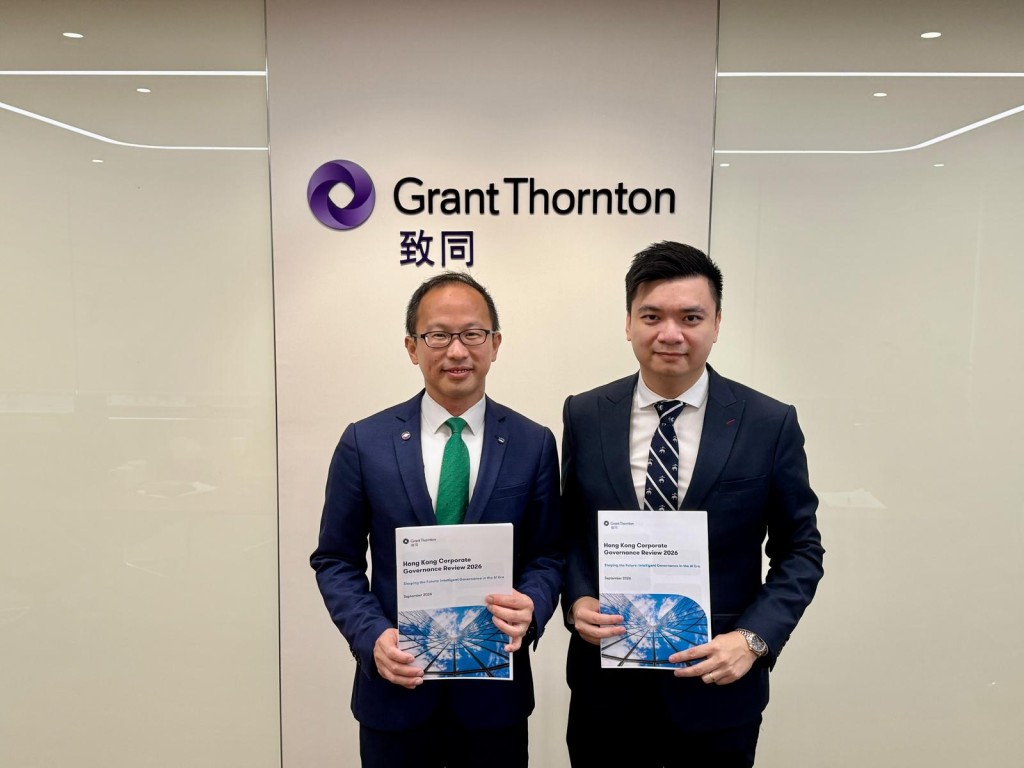
“While the transition period under the new rules runs through July 1, 2028, we are already seeing board‑renewal activity pick up, especially among small‑and‑medium‑sized listed companies,” said Barry Tong, partner and head of Advisory of Grant Thornton Hong Kong.
Ivan So, advisory director of the company, said that only roughly 10 percent of directors at large Hong Kong listed firms this year are first-time board members, a figure far below the 30–40 percent in the US market and 25–35 percent in the UK. Recruitment for local blue‑chips remains highly insular, with the market heavily drawing on a narrow circle of seasoned directors with compliance expertise.
Female director representation has shown consistent growth, rising to 22 percent this year from 21.8 percent in 2025, but remains well below European averages of 34–40 percent and North American levels of 30–33 percent.
The next focus for market advocates should be pushing more companies to meet the international target of 30 percent board diversity, Tong said.
Frank Feng