Read More


At least six hikers fall ill on Chung Yeung Festival holiday
19-10-2026 17:22 HKT
Macron and wife dance at Celine Dion concert amid French riots
19-10-2026 13:26 HKT


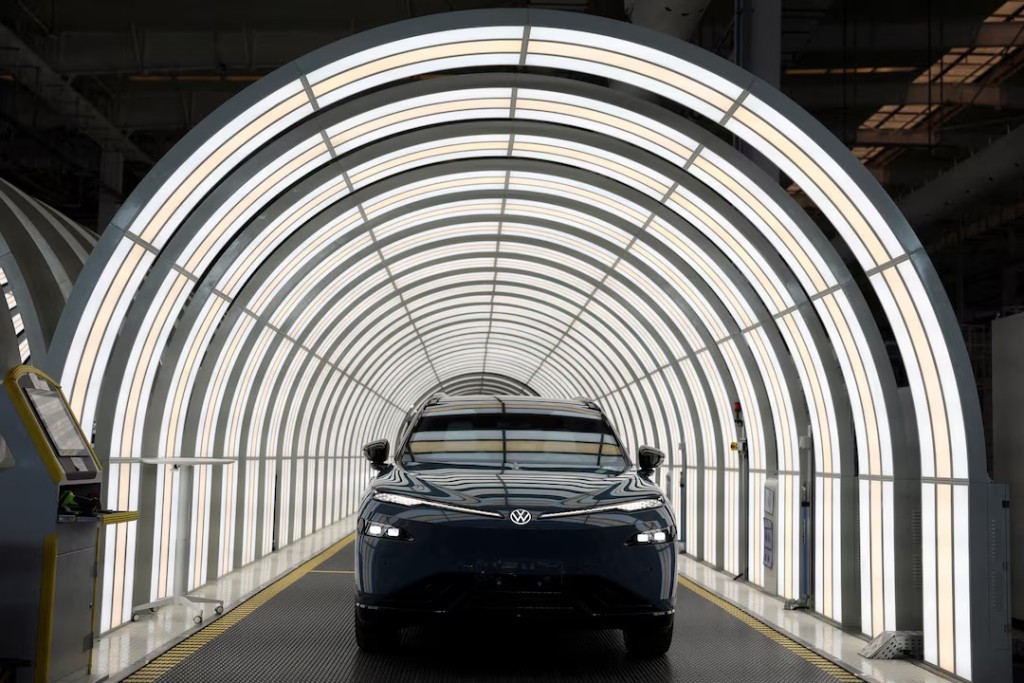
When Volkswagen turned to EV maker Xpeng in 2023 to help fix its flailing Chinese business, executives touted the partnership as a shortcut to developing cars tailored for China at the high speed of the local auto sector.
Three years later, the alliance’s first product exemplifies Volkswagen’s descent in the world’s largest car market. The ID. UNYX 08 electric SUV sold an average of 267 vehicles a month between its April launch and August, data from automotive consultancy ThinkerCar show. That’s a fraction of the 3,622 monthly sales Volkswagen initially aimed to achieve this year, according to company planning documents.
The weak debut reflects Volkswagen’s battle to revive its fortunes in China, where it reigned for decades until 2022 as the top automaker. China represents the challenge at the heart of Volkswagen’s global crisis: A market that once contributed nearly 50% of group profits now accounts for about 10%. That stunning reversal has forced the company into the biggest restructuring in its 89-year history.
The UNYX 08 also highlights a persistent problem in Volkswagen's China strategy. Volkswagen recognized the market’s shift toward higher-end technology and sought local partners to catch up. Yet the German automaker struggled to turn those bets into commercial success.
This report is based on a Reuters review of previously unreported company documents and interviews with six people familiar with Volkswagen, including current and former executives and consultants. It shows the automaker's ambitions ran ahead of what its products, pricing and sales strategy could deliver.
Volkswagen sold the UNYX 08 through a nascent and limited distribution network. The vehicle also struggled against newer, software-laden Chinese electric SUVs.
Volkswagen didn’t comment on the sales forecasts in the documents. In a statement, the automaker said its partnership with Xpeng has delivered a new electric architecture to underpin locally made models and support faster vehicle development – a project it said was completed in a record 18 months. The UNYX 08 SUV and the related UNYX 09 sedan were additional outcomes of the tie-up, the company added.
Xpeng declined to comment.
Problems with the UNYX 08 began with the vehicle itself. The car launched with a price tag of about $34,260. But similarly priced Chinese rivals offered more-sophisticated features. Xiaomi’s YU7 had an advanced sensor package; Zeekr's 7X offered fast charging. Xiaomi sold almost 57,000 YU7s and Zeekr sold more than 21,000 7Xs between April and August, compared with about 1,300 UNYX 08s, according to ThinkerCar.
"Chinese customers ask: Why buy an expensive German car if they can get the technology much cheaper,” said Pedro Pacheco, vice president of research at Gartner.
Stephen Reitman, an auto analyst at Bernstein, recalled that Volkswagen showed analysts computer renderings of the Xpeng-linked models in April 2024. "The next day we went to the Beijing auto show and you could basically see this kind of design already on the market," Reitman said.
A distribution gamble compounded the product’s challenges, five people told Reuters. Volkswagen largely sold the UNYX 08 through a separate, new dealer network run by Volkswagen Anhui, an EV-focused venture, rather than the more than 3,000 dealerships Volkswagen operated with joint-venture partners FAW and SAIC.
Volkswagen Anhui’s far-smaller footprint meant many consumers were unaware the vehicle existed, two of the people said.
Volkswagen said sales of the Anhui models, including the earlier UNYX 06 and 07, were growing. The unit had expanded its sales network to 166 outlets and was working with FAW-Volkswagen at selected dealerships, the company said, adding that this approach aimed to reach more customers.
FAW and SAIC didn’t respond to questions.
For Volkswagen, the Xpeng partnership follows a string of troubled ventures, missed opportunities and abandoned initiatives in China that spanned batteries, autonomous driving, charging infrastructure, software and even flying cars.
Volkswagen was “too slow in building the competence they need today,” said Stefan Bratzel, founder and director of the Center of Automotive Management, a German research institute.
The dilemma faces nearly every foreign automaker in China. Having fallen behind in software, batteries and vehicle platforms, foreign brands have turned to Chinese partners to stay in the game. Yet access to Chinese technology doesn’t guarantee they can match local rivals’ speed, execution or appeal with consumers.
Chinese brands led by BYD and Geely have gained share by bringing software-rich vehicles to market faster and often at lower prices, forcing once-dominant rivals including Volkswagen and Toyota to fight for relevance.
Despite the UNYX 08’s weak reception, Volkswagen is setting similarly aggressive targets for its next model developed with Xpeng, the UNYX 09 sedan. The car is due to reach showrooms this month.
Company product-planning documents earlier this year forecast average monthly sales of nearly 4,900 vehicles, with annual volume exceeding 90,000 by 2034.
At Volkswagen, ambitious forecasts can be essential to securing approval for new models from Wolfsburg headquarters, which can incentivize managers to submit optimistic projections, according to two people familiar with its planning.
Volkswagen initially expected to sell 32,600 UNYX 08s through the end of 2026 and 70,400 next year, the planning documents show. Those plans, made in 2024, show the automaker also expected annual sales of more than 120,000 vehicles later in the product cycle.
But early this year, Volkswagen cut the 2026 projection by more than 60% to 12,300 vehicles, the documents show. It nevertheless forecast sales of 64,000 in 2027, about 10% below the initial target.
In recent weeks, the company has been advertising the UNYX 08 at a 17% discount on the April launch price.
Volkswagen saw the Chinese disruption coming. At a 2019 presentation for investors and shareholders, Volkswagen Group China said it was preparing nearly 40 locally produced new-energy vehicle models — EVs and plug-in hybrids — by 2025 and could deliver 1.5 million in China that year.
It achieved less than one-tenth of that target, delivering 115,500 battery-electric vehicles in China last year, according to company data.
As China's EV market accelerated, Volkswagen explored various local tie-ups, hoping to unlock the speed and expertise it lacked, according to three people, corporate records and public announcements.
Two people familiar with Volkswagen's China partnerships said the company called this approach "marriage and divorce" – forming alliances with local companies to learn from them, then exiting once it had absorbed what it needed.
Around the time Ralf Brandstaetter became Volkswagen China's chief executive in August 2022, the automaker explored cooperation with BYD – China’s largest EV maker – including potentially using BYD's Dolphin platform for the Jetta brand, according to two people. Those efforts haven’t been previously reported.
During due diligence, Volkswagen staff examining BYD's finances were struck by the Chinese automaker's lower manufacturing costs, one of the people said. BYD wasn’t interested in collaborating, the two sources said. Reuters couldn’t establish why a deal didn’t happen.
The Chinese EV maker would seize Volkswagen’s crown as China’s sales leader in 2023.
That same year, Volkswagen also explored a partnership with Leapmotor, according to the two people. Stellantis ultimately struck a deal with Leapmotor later that year.
Volkswagen declined to comment publicly before publication on Reuters’ reporting about possible partnerships with BYD and Leapmotor. After the story was published, Volkswagen denied having any discussions with BYD regarding collaboration.
BYD didn’t comment, while Leapmotor didn’t respond to questions.
Some partnerships that did materialize generated new problems rather than solving old ones. Reuters reported in July that Volkswagen's canceled flying-car project had become mired in legal disputes with a Chinese partner.
A venture with Chinese startup Du-Power to build fast-charging stations also went awry. The tie-up, launched in 2020, ended in shareholder disputes, litigation and supplier complaints alleging unpaid bills, corporate filings show. In 2024, the startup sued Volkswagen China and the venture’s executives and directors, alleging harm to its business interests.
Volkswagen told Reuters that China’s Supreme People’s Court dismissed the startup’s claims in March. Neither Du-Power nor the court responded to questions.
In some ways, Volkswagen’s predicament illustrates the success of China's industrial policy. In exchange for market access, Volkswagen tied up with Chinese automakers, shared technology and invested — only to be outsold by local players.
Those checkered bets are now colliding with a market in convulsion after years of breakneck growth.
In a September 10 message to staff reviewed by Reuters, Brandstaetter described an industry facing an "exceptional" contraction. He said Volkswagen expected China’s passenger-car market to shrink by 20% this year, or about 4.5 million vehicles.
Brandstaetter said industry profit margins had fallen to 1.5%, product cycles had compressed from seven years to three, and new EV models were seeing steep sales declines after three months.
Volkswagen, he wrote, must urgently "align our production capacities with market realities" and eliminate "unnecessary duplication" among China brands and entities — a reckoning with a crisis years in the making.
In 2019, one in five passenger cars sold in China was a Volkswagen. In the first eight months of this year, the group’s share had fallen to 10%, according to the China Passenger Car Association.
What distinguishes Volkswagen’s plight is its deep dependence on China and its struggle to execute a decisive transformation in a market now dominated by Chinese companies. That made its Xpeng bet pivotal.
One former Volkswagen figure compared its predicament to that faced by Nokia, Kodak and BlackBerry: The automaker’s leadership assumed its brands would endure, even as the market shifted toward Chinese competitors with superior technology and faster innovation cycles.
Bill Russo, founder of Shanghai-based advisory firm Automobility, sees the comparison as a useful warning but not yet a verdict. Volkswagen still has a path to recovery, he said.
The risk, he added, “is that the market moves faster than the company can reinvent itself.”
Reuters