Winning Hong Kong’s first gold medal at the 2026 Asian Games brought renewed attention to wushu, but the sport remains relatively niche in the city, according to Hong Kong athlete Lydia Sham Hui-yu.
“Not everyone is interested in taking up wushu, and the sport is quite demanding,” Sham said.
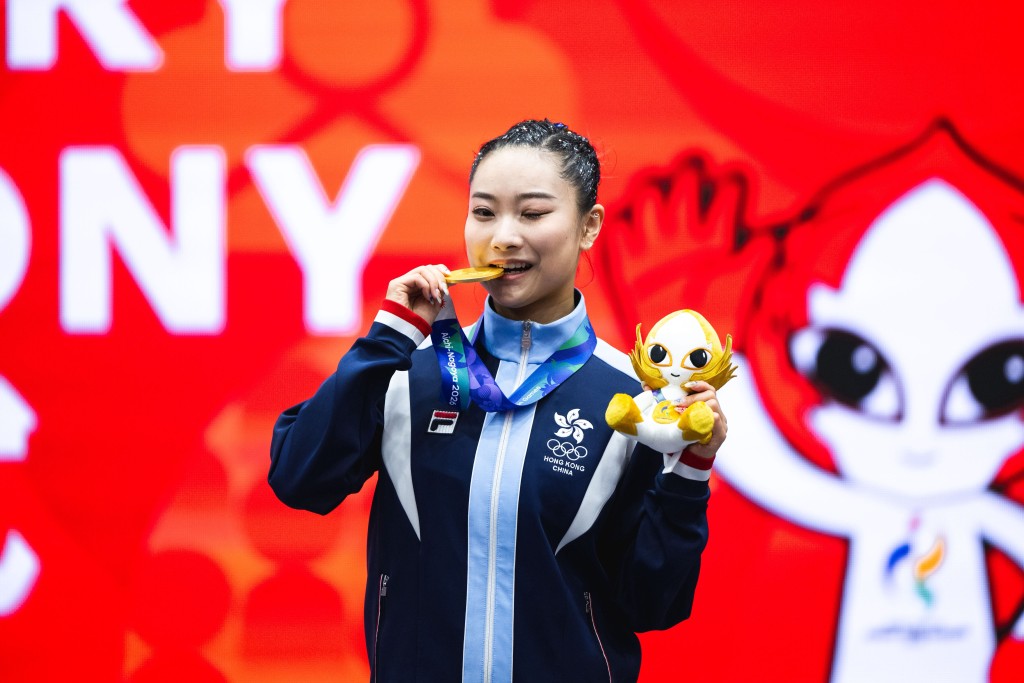
The 26-year-old won the women’s changquan title at the Games, showcasing a discipline that combines explosive power, technical precision and graceful movement.
Lydia Sham won Hong Kong’s first Asian Games wushu gold in 16 years, since the 2010 Guangzhou Games.
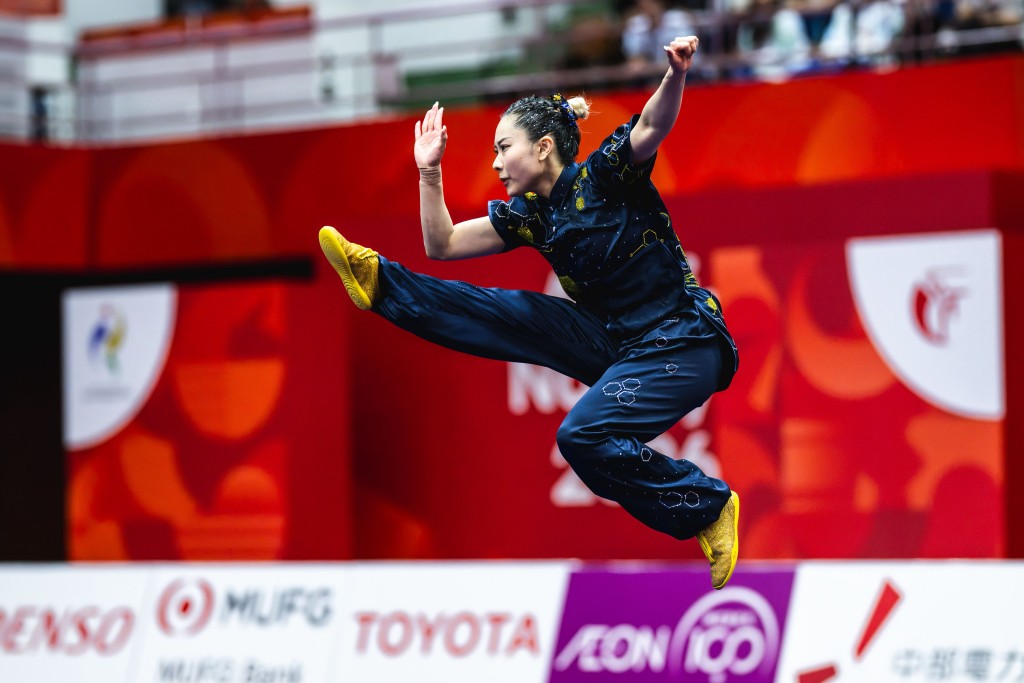
Wushu competitions are broadly divided into two disciplines: taolu, which involves performing choreographed routines, and sanda, a combat sport involving sparring. Sham specializes in taolu, performing sequences of martial arts techniques that combine offensive and defensive movements. Judges assess athletes on factors including movement quality, overall performance and degree of difficulty.
Sham began learning wushu at the age of six and was selected for the Hong Kong team at eight. After around 20 years in the sport, she now competes in three disciplines: changquan, jianshu (sword) and qiangshu (spear). As some competitions combine results from all three disciplines to determine a single medal, she divides her training time relatively equally among them.
Despite her Asian Games victory, Sham believes there is always room to improve in wushu, where even the smallest mistake can affect an athlete’s ranking.
“Winning gold in one competition does not guarantee that you will win gold in the next. Even the slightest mistake could cause my ranking to drop significantly,” she said.
Sham sees similarities between wushu and other performance-based sports, such as rhythmic gymnastics, but said wushu stands out for its combination of beauty and power.
“It can look powerful and stylish, while also being beautiful,” she said.
For Sham, wushu’s significance also lies in its cultural heritage. The sport preserves traditional Chinese martial arts by incorporating techniques and principles of attack and defence into choreographed routines, passing these traditions down through generations.
To attract more people to the sport, Sham hopes more children will have opportunities to learn wushu from an early age. Mastering its techniques takes time, she said, and those who start at nine or 10 may find it more challenging to develop the necessary skills.
Introducing wushu in kindergartens and primary schools could give children an earlier start, allowing them to build the foundations and physical skills needed to progress in the sport.
With wushu set to feature at the Dakar 2026 Youth Olympic Games for the first time, Sham sees its inclusion as an encouraging step towards wider recognition. She hopes the sport will one day become part of the Olympic Games.
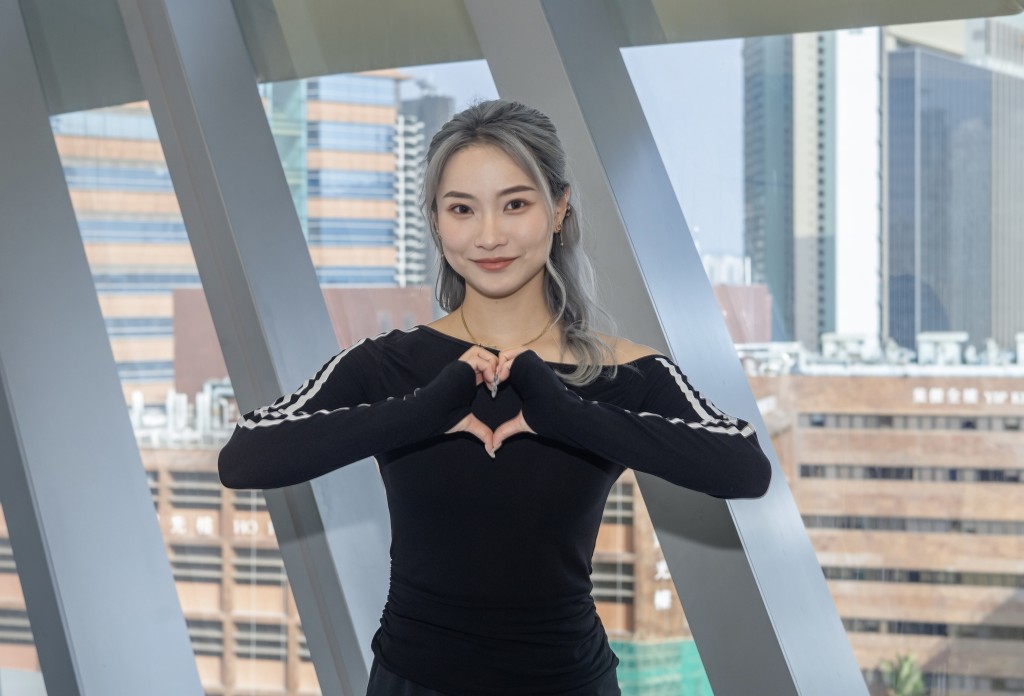
Lydia Sham describes wushu as a sport that combines power with beauty.
Physiotherapy offers a path beyond wushu
Beyond her life as an elite athlete, Sham is studying physiotherapy at The Hong Kong Polytechnic University. Her interest in the profession began at 16, when she re-injured her ACL and spent much of the year attending physiotherapy sessions.
Watching physiotherapists at work, she realised she wanted to help injured athletes. Having experienced injuries herself, however, she said she could not be certain how long she would be able to continue competing.
“I don’t want to say how many more years I can compete or when I will retire. I just want to do my best and see how far I can go,” she said.
If an injury eventually forced her to stop competing, Sham said she could return to her studies, complete her degree and pursue a career in physiotherapy.
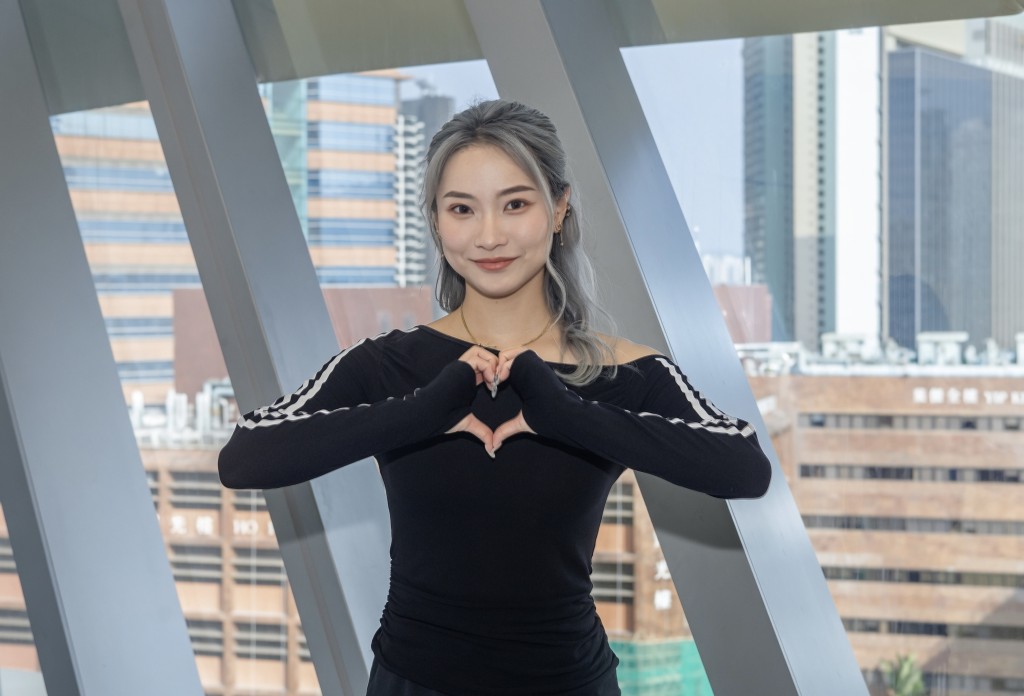
Lydia Sham is studying physiotherapy at The Hong Kong Polytechnic University, hoping to help injured athletes recover in the future.
EXO offers motivation beyond the training floor
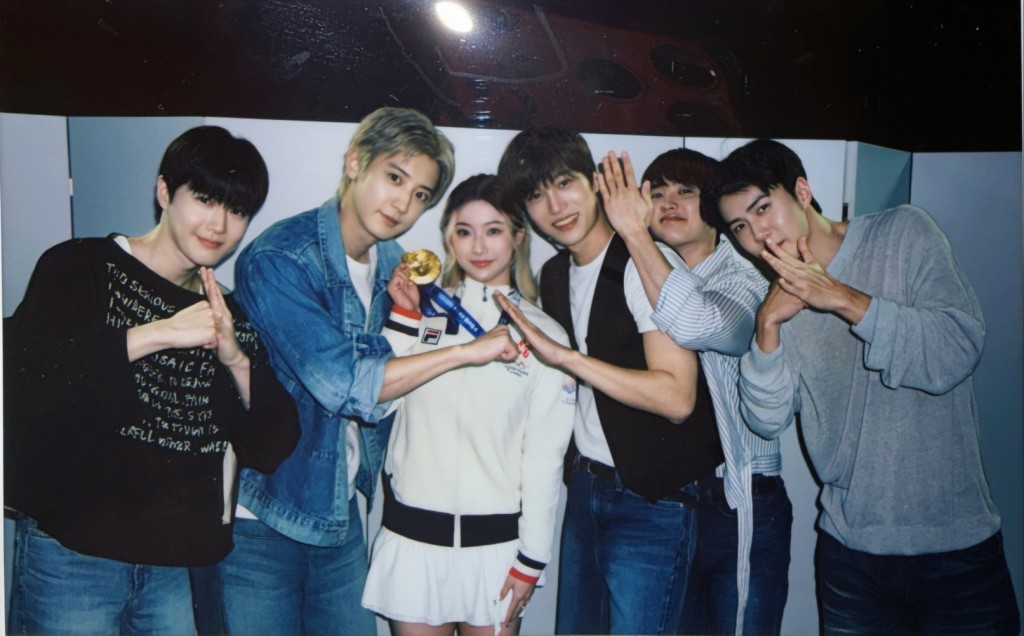
For Sham, inspiration also comes from outside the sporting world. Following her favorite K-pop group, EXO, is more than a hobby — it offers a welcome escape from the pressures of elite sport and motivates her to keep improving.
A devoted fan of South Korean boy band EXO for 13 years, Sham said the repetitive nature of high-intensity training can leave athletes feeling bored and frustrated, sometimes making it difficult to remember why they started.
“When I see them shining, it motivates me to keep going and makes me want to become someone who can shine like them,” she said.
Ahead of the 2026 Asian Games, Sham met EXO member Kai at a fan-signing event and told him she would compete at the Games. When he asked whether she could win gold, she said she would do her best.
Sham later incorporated EXO’s logo into her competition uniform. After winning the women’s changquan title, she shared a video recounting their interaction, saying she had achieved the goal she had told him about.
The video earned her recognition among fellow K-pop fans, with Sham becoming an example of how someone can pursue sporting excellence while remaining a passionate fan.
Sham said being successful in her own field could help her stand out and become more recognizable to her idols, giving her another reason to keep pushing herself.
“I think you need to stand out in some way for people to remember you,” she said.
Lydia Sham poses with EXO members in a photo, holding a gold medal.