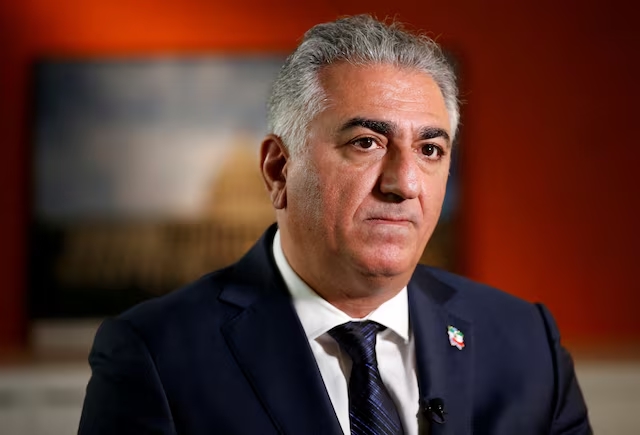
Reza Pahlavi, the exiled son of Iran's late Shah, appealed to the country's security forces to abandon the cleric-run state, voicing hope for toppling the Islamic republic after Israel launched military strikes.
In a social media post, Pahlavi blamed Supreme Leader Ayatollah Ali Khamenei for having "dragged Iran into a war" with Israel and described the government in Tehran as "weak and divided."
He also claimed Khamenei had "gone into hiding underground" and lost control of the country.
"The end of the Islamic republic is the end of its 46-year war against the Iranian nation," he wrote, "Now is the time to rise."
Pahlavi also claimed that he had told the military, police, and security forces to "break from the regime".
"To the international community: do not throw yet another lifeline to this dying, terrorist regime," Pahlavi added.
Pahlavi was the crown prince in Iran's pro-Western monarchy, which was overthrown in the 1979 Islamic Revolution that brought the theocracy to power.
He lives in exile near Washington and said he is not necessarily looking for the restoration of the monarchy but wants to use his name to support the movement for secular democracy.
Israel sees the Islamic republic as an existential threat but was allied with Iran under the late Shah, Mohammad Reza Pahlavi.
Pahlavi has also enjoyed warm relations with Israel, which he toured two years ago.
Pahlavi has repeatedly described the Islamic republic as frail, including after mass protests broke out in 2022 after the death of Mahsa Amini, who had been arrested by morality police who enforce modest dress on women.
While Pahlavi has many admirers in the Iranian diaspora who support a return to the monarchy, it is uncertain how popular this idea might be within the country.
Many Iranians have bitter memories of repression under the Shah, and others might reject Pahlavi over his outreach to Israel, especially if he tries to ride to power on the back of a foreign invasion.
The last ruling family of Iran was the Pahlavis, who came to power in 1925 when a former military officer Reza Shah Pahlavi removed the previous Qajar dynasty from power.
Reza Shah pushed for major changes in the country, like building roads, schools, and a strong military. However, his strict leadership and ties with Nazi Germany led to him being forced to step down in 1941 by Allied forces during World War II.
He was succeeded by his son, Mohammad Reza Shah Pahlavi, who was also Iran's last Shah and ruled from 1941 to 1979.
Known for his close relationship with Western countries, especially the United States and Britain, he launched the White Revolution which aimed to modernize the country with land reforms and advancements in women's rights.
While many in the West praised these changes, in Iran, many critics viewed them as a push for Western values that threatened the country’s Islamic and traditional customs.
(AFP, news18 and NDTV)