Read More





Jollibee founder buys Mid-Levels luxury flat for $160.75m
24-11-2026 20:48 HKT



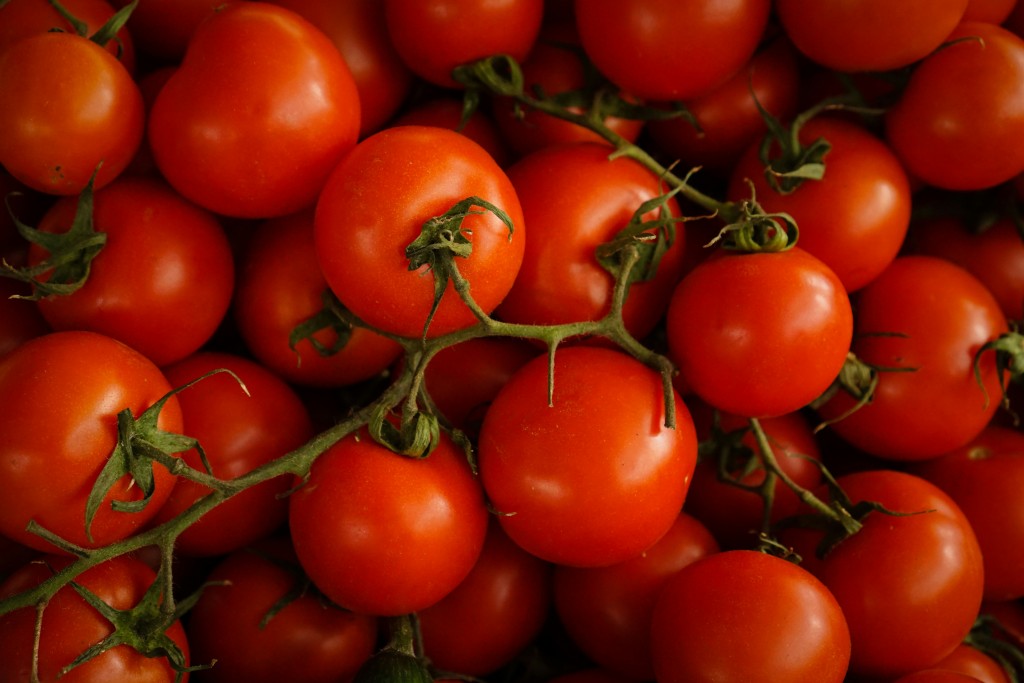
Recently, a netizen posted on Threads asking, "My tomatoes have spots—does anyone know what this is? Can I still use them?" It turns out that the yellow-white spots on tomatoes are traces of "ghost spots," which are related to gray mold disease.
According to the British gardening platform Bite Sized Gardening, gray mold disease is common in open-field and net-house cultivation, and is especially likely to develop in late winter and early spring, under low-temperature and humid conditions, when nighttime temperatures drop below 20°C, when leaves are dense and poorly ventilated, or when fog forms in spring. The primary infection source of the pathogen is conidia, which can spread through air and water, infecting aging leaves or entering through wounds.
However, ghost spots are only traces of epidermal infection, and the flesh may not be damaged. Taiwan's Ministry of Agriculture Agricultural Research Institute explains that ghost spots occur when conidia directly invade the fruit epidermis from the air, forming hollow circles only in the epidermis. After the fruit turns red, the lesions become yellow-white, affecting appearance, but do not necessarily cause the flesh to rot. Therefore, if a tomato only has ghost spots and no soft rot, off-odor, or mold, it is generally edible.
Another type of spot cannot be taken lightly. The Market Supervision Administration of Lengshuitan District, Yongzhou City, points out that tomatoes with black spots cannot be eaten. This type of black spot is mainly caused by Alternaria, and the toxin produced by this fungus is called Alternaria toxin, which has carcinogenic risk. When a tomato shows black spots and rot, the rotten part must absolutely not be eaten, because fungal metabolites, i.e., fungal toxins, can still be detected within 2 cm of the rotten area; beyond 2 cm it is relatively safe.
However, from a health risk management perspective, it is difficult for people to accurately determine the extent of toxin spread, and they should not risk eating rotten tomatoes. If a tomato shows:
Black spots
Soft rot and oozing liquid
Off-odor
Gray-brown mold on the surface
The entire tomato should be discarded. Never cut away the rotten part and continue eating, to avoid ingesting fungal toxins.
Besides the spot issue, unripe tomatoes are also not suitable for eating. The Market Supervision Administration of Lengshuitan District, Yongzhou City, reminds that unripe tomatoes contain solanine, which is harmful to the human body. Solanine has a certain toxicity. Although eating a small amount will not cause poisoning, eating a large amount in a short time may cause symptoms such as nausea and vomiting.
Therefore, to be safe, if you buy tomatoes that are not fully ripe, you can leave them for a few days until the solanine decomposes and its content decreases, then cook them thoroughly before eating. In addition, an appropriate amount of vinegar can be added to promote the decomposition of solanine.
Gray mold is a common disease in open-field and net-house cultivation in late winter and early spring. The pathogen prefers low temperatures and humidity, and combined with dense, poorly ventilated leaves or the high-humidity environment of spring fog, it is especially suitable for disease development.
Home prevention suggestions:
Store in a cool, ventilated place, avoiding humidity and standing water, to reduce fungal growth.
Eat as soon as possible after purchase, keep dry during storage, and avoid squeezing that causes wounds.
If fruit with gray mold, soft rot, or fallen fruit is found, discard immediately to avoid spore spread.
The main value of tomatoes does not come from a particularly high content of a single nutrient, but from their overall balanced combination: low in calories, high in water, easy to feel full, and suitable for weight management. The nutritional combination of tomatoes is relatively simple:
Lycopene: A fat-soluble, powerful antioxidant substance
Vitamin C: Helps the immune and nervous systems
Dietary fiber and potassium: Promote intestinal health and regulate blood pressure
Although tomatoes are beneficial, there is no need to eat large amounts. It is generally recommended to take in 200 to 300 g per day (about one to two medium tomatoes) to meet daily needs; excessive consumption may instead cause stomach discomfort.
Many people are used to eating tomatoes raw. Nutrition and functional medicine expert Dr. Liu Po-jen once shared that lycopene is a fat-soluble nutrient and the main source of the red color of tomatoes. It is regarded as the body's "natural protective shield," helping fight cumulative oxidative stress and chronic inflammation. Lycopene must go through two major steps—"heating and cooking" and "pairing with oil"—to be effectively released and absorbed by the human body. The heating process releases lycopene, and stir-frying tomatoes with oil (such as olive oil or camellia oil) improves the absorption rate. Because lycopene is fat-soluble, it can also be paired with oil even when eaten raw to improve absorption. Therefore, cooked tomatoes can exert greater benefits than raw ones.
Source: Bite Sized Gardening