Read More
Financial Secretary Paul Chan Mo-po raised eyebrows when he told lawmakers he would be rather restrained from tapping new income sources as he worked on the next financial budget, due in February.Perhaps Chan should take a cue from Elon Musk, who is spearheading an ambitious attempt to downsize the bureaucracy of the US federal government to slash the annual deficits by a third - a whopping US$2 trillion - which is a truly scary sum.
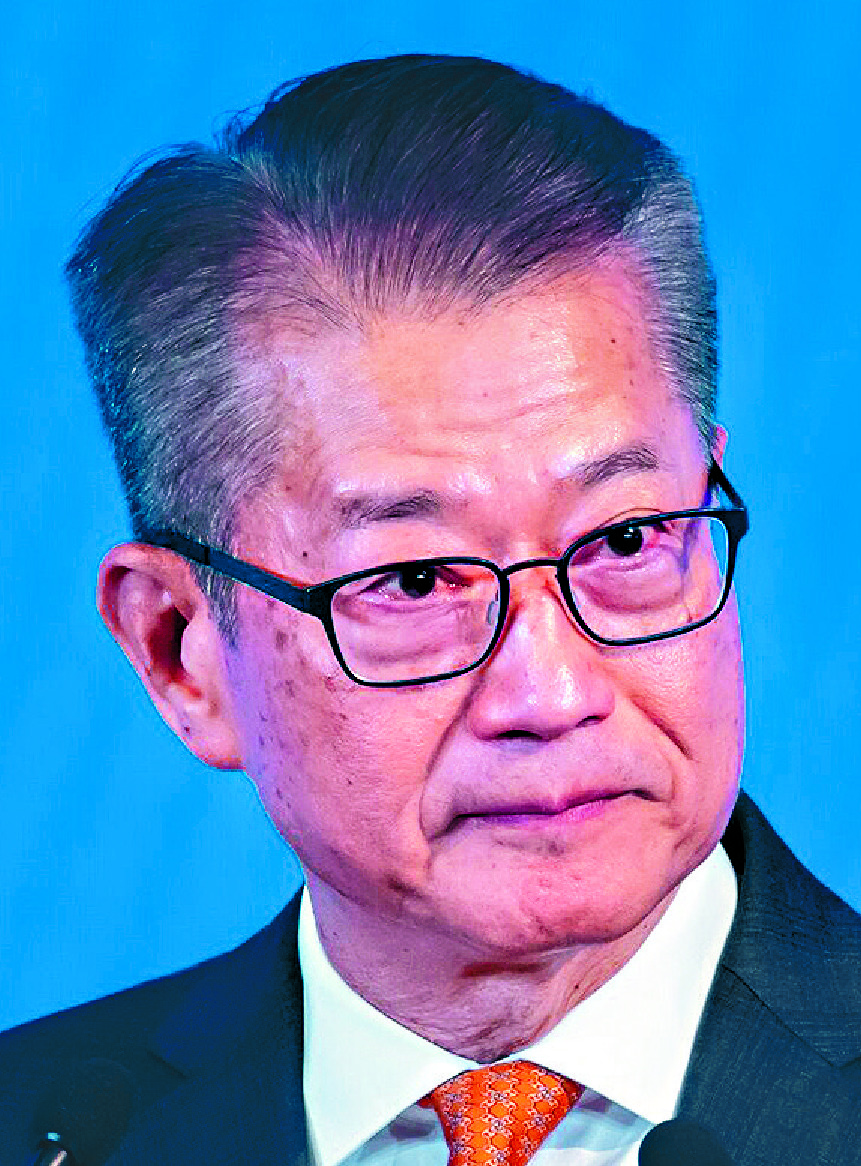
Instead, he would focus on cutting government expenses.
ADVERTISEMENT
SCROLL TO CONTINUE WITH CONTENT
If Chan could learn from Musk and be genuinely serious about government efficiency, he would be able to achieve considerable savings by starting with civil service bureaucracy. Then, the financial secretary would be able to restore some health to public finances.
It is essential to downsize the bureaucracy if meaningful savings are to be attained on a recurrent basis.
But Chan appeared to be not so determined during the Legislative Council financial affairs panel meeting, where all he had to say was that he would communicate with policy bureaus to find out if there was room for further spending cuts.
He should have been bolder, setting a target for all departments to meet.Anyone who has been monitoring the government's financial health will not be surprised by Chan's delayed admission that the deficit for the current fiscal year will more than double to HK$100 billion from the original forecast of a little more than HK$48 billion.
It has never been difficult to make the prediction in wake of the progress of land sales that have been extremely poor since the year began and the strong economic headwinds facing all companies. Some companies are still very profitable but they are in the minority.When revenues from land sales, profits tax and stamp duties have all dwindled, the reality must be faced and admitted.
The admission that the deficit will go up to HK$100 billion is still somehow misleading because the borrowings of HK$86.5 billion in the form of various government bonds are included in the book as revenues rather than liabilities. If these borrowings were excluded as revenues from the balance, as they should have been, the actual deficits would be much higher.It is small wonder that some lawmakers have complained that the government is living on debt.
Is this why the administration is desperately looking to the private sector for funding to bail out mega development projects, including the Northern Metropolis, to which the government is committed?Nonetheless, as Chinese General Chamber of Commerce chairman Jonathan Choi Koon-sum has noted, Hong Kong practices a free economy and the government cannot compel private businesses to make investments unless it is commercially sound to do so.
As the government looks to the private sector for funding, officials must set an example to show to everyone that they are money wise and spend only where needed.Chan's pledge to reduce public spending is welcome. The question is whether he will reflect this commitment strongly in the upcoming budget.Paul Chan