Read More
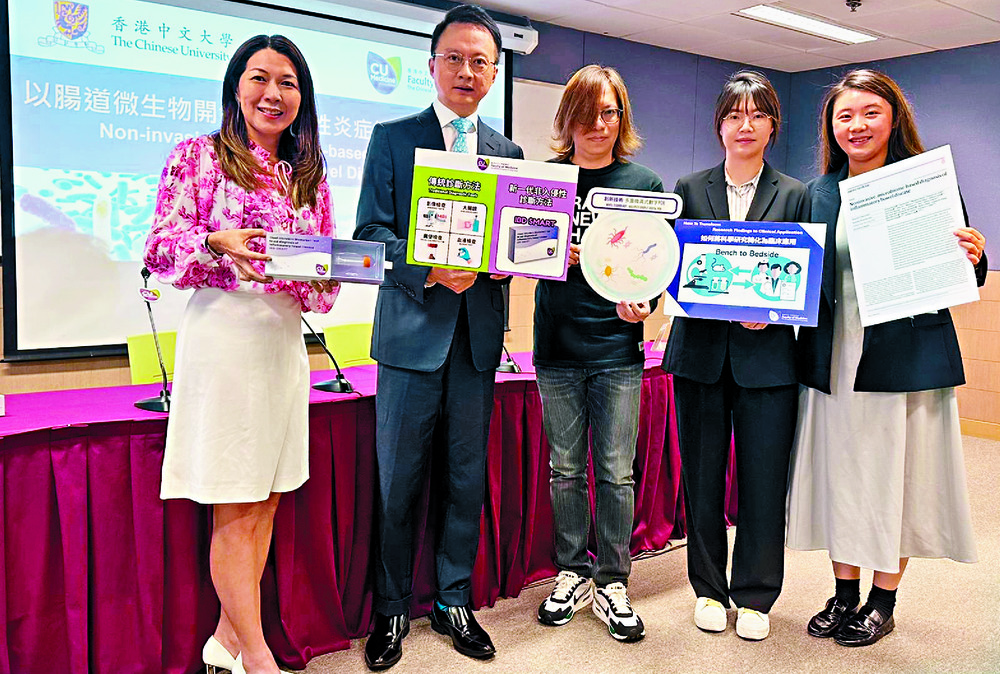
Henry SiuThe innovative test is significantly cheaper and faster than traditional methods, costing only several thousand Hong Kong dollars and providing results within one to two weeks, according to Ng Siew-chien, assistant dean of its faculty of medicine.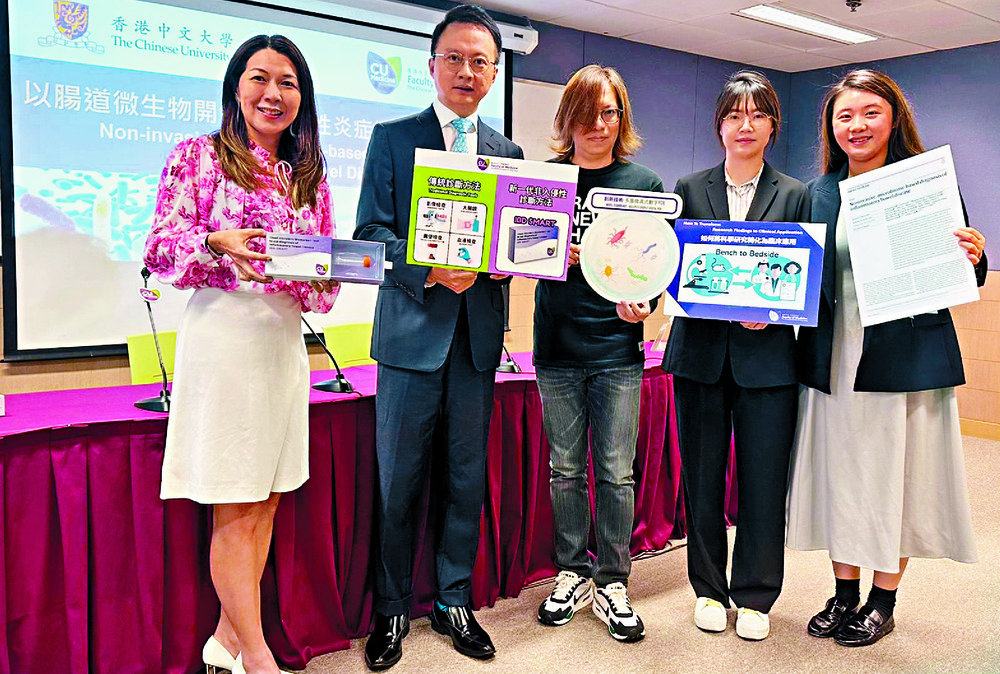
The Chinese University of Hong Kong has developed the world's first noninvasive test for the early diagnosis of inflammatory bowel disease that is expected to be available for clinical use by 2027.
ADVERTISEMENT
SCROLL TO CONTINUE WITH CONTENT
In contrast, traditional diagnostic methods can cost between HK$80,000 and HK$90,000 and may take 12 to 18 months.
Zheng Jiaying, a postdoctoral fellow at CUHK, said: "We used samples from nearly 6,000 subjects across various regions and ethnicities, employing machine learning to develop the world's first droplet digital polymerase chain reaction test."
The ddPCR test is a stool test that boasts high sensitivity and about 90 percent accurate. It analyzes bacterial genes in gut samples, allowing for the differentiation of bowel diseases in a single test, whereas traditional diagnostics often require multiple procedures, including scans, colonoscopies, blood tests and various stool tests under specialist supervision.
"It is very simple and convenient, as patients can perform the stool test themselves," Ng said.However, patients on antibiotics cannot take the test, as their stool would not yield accurate results due to the absence of detectable bacteria.
Ng said early diagnosis of bowel diseases enables doctors to provide precise medication and tailored treatments, preventing the condition from worsening and leading to severe complications, including cancer or the need for gastrectomy.Francis Chan Ka-leung, a professor of medicine and therapeutics, said:, "Currently, colonoscopy is the only method to differentiate inflammatory bowel diseases, but it is both expensive and invasive, leading to low patient acceptance."
He added that existing identification methods, such as metagenomics, are complicated and time-consuming, while quantitative PCR, though faster, lacks sensitivity and accuracy."Therefore, we aimed to create a more affordable option that avoids unnecessary and complex treatments," Chan said.
Said Eric Lam Wai-lun, 52, diagnosed with Crohn's disease -a type of bowel disease in 1996: "I spent over HK$80,000 in a private hospital before being referred to the Prince of Wales Hospital. I lost 31.75 kilograms and was so exhausted that I could barely walk. I even contemplated suicide due to the mental toll of my condition."He recounted a year-long wait for diagnosis, during which he was repeatedly hospitalized for treatment, eventually leading to a gastrectomy.
"I am relieved that there is now a way to diagnose bowel diseases early in a single test, sparing future patients the suffering I endured," he said.