Read More

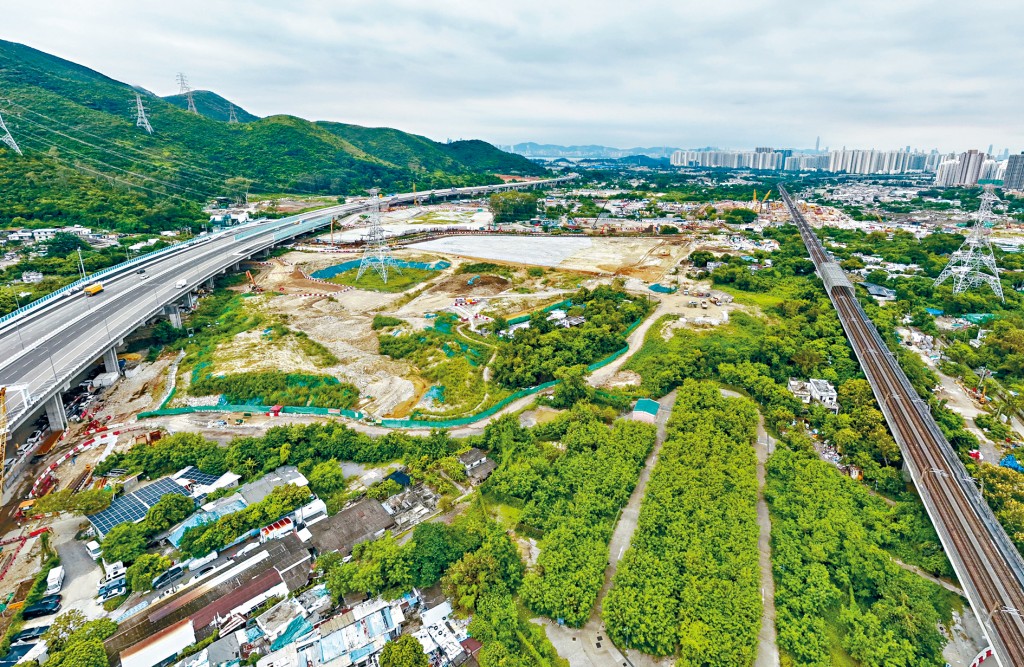


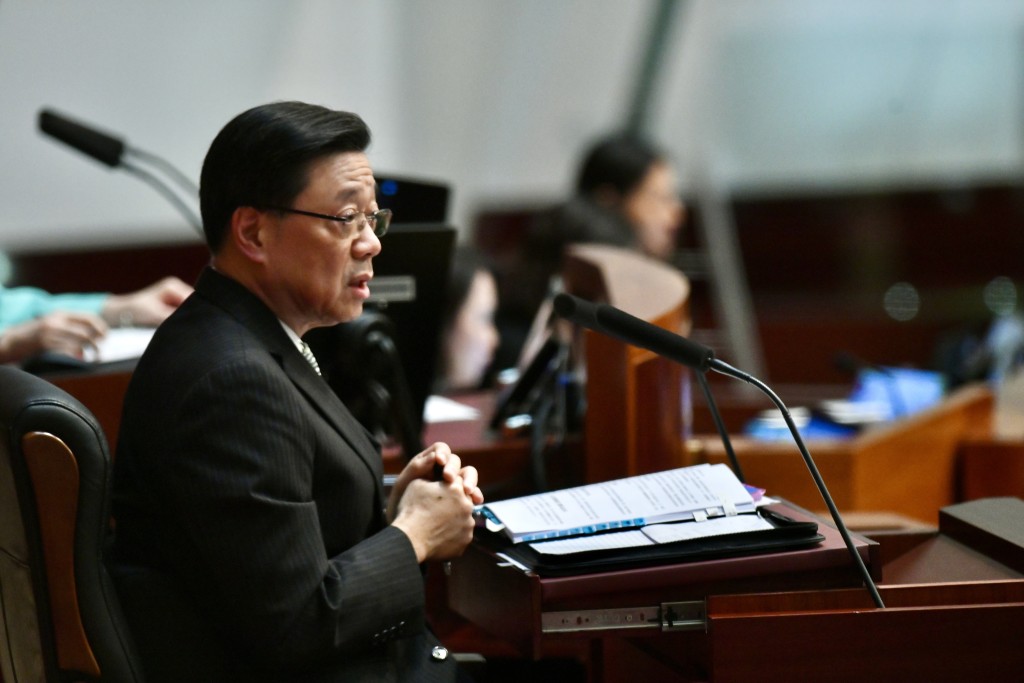

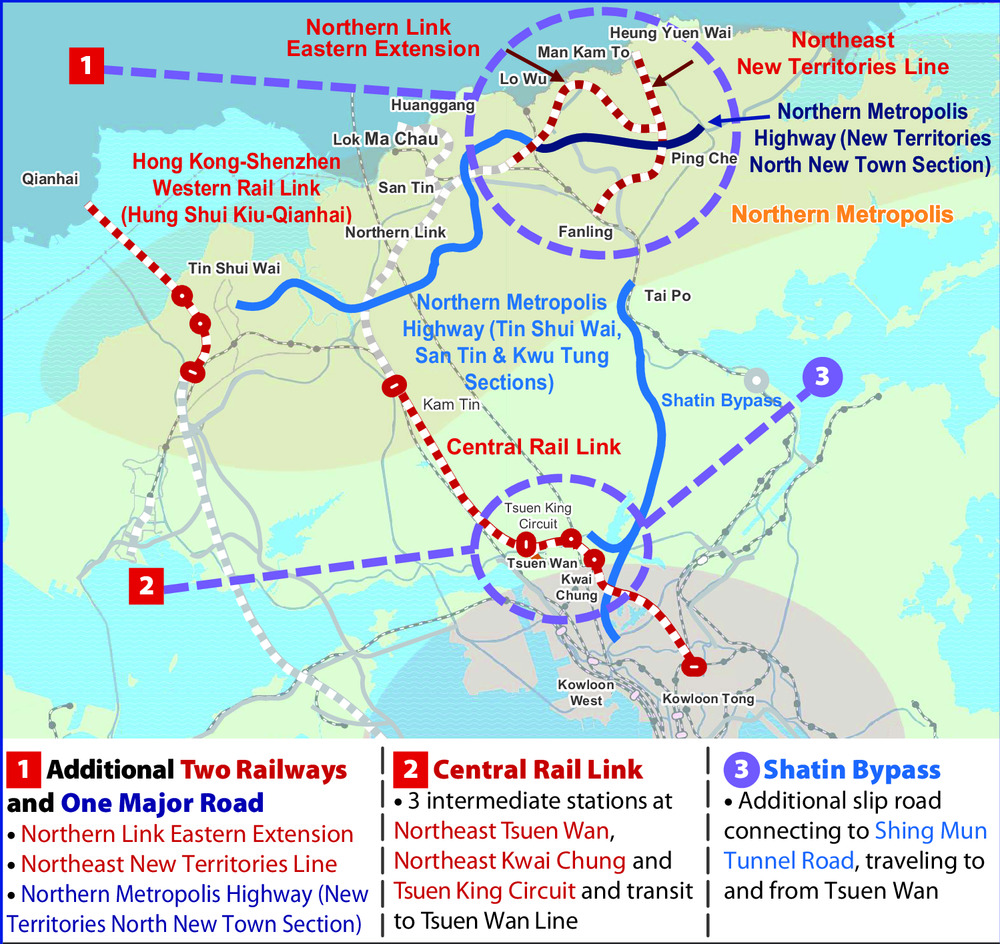
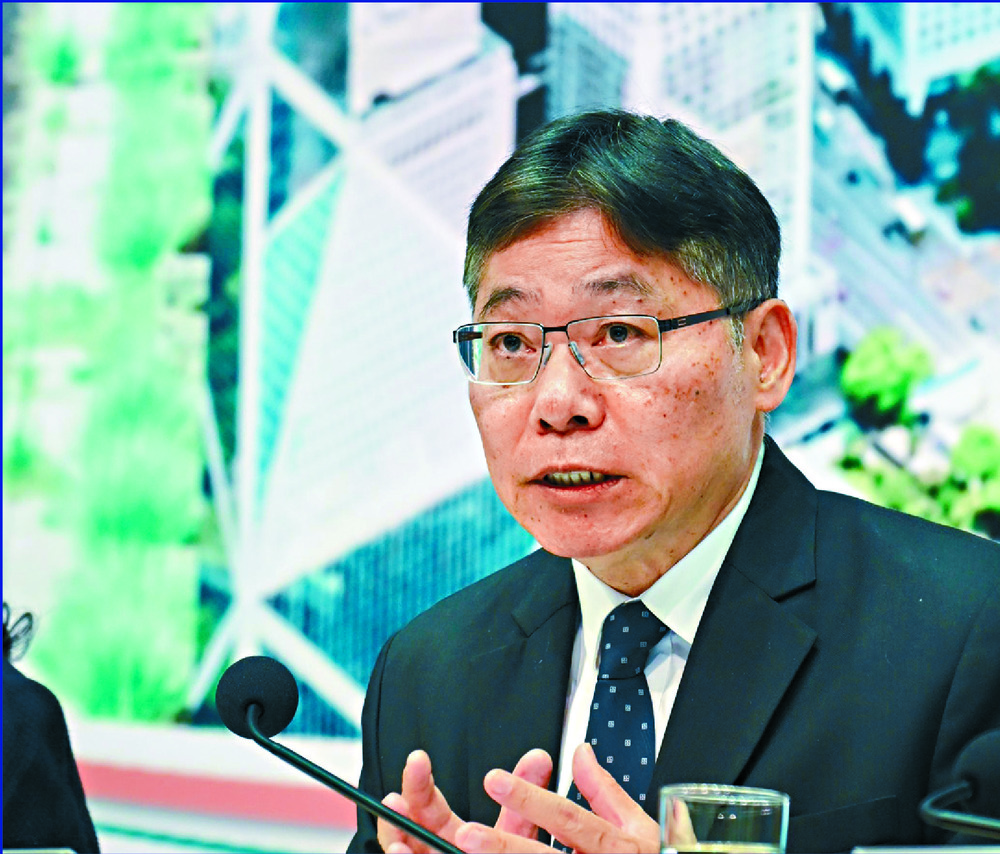
Four more border points - apart from Lo Wu and Lok Ma Chau - will be covered by railway services, Secretary for Transport and Logistics Lam Sai-hung said as he unveiled a transport infrastructure blueprint yesterday.
The four points are Man Kam To, Heung Yuen Wai, Huanggang and Shenzhen Bay.
But planners do not intend to build the North Island Line at this stage, though it was proposed 10 years ago, as Lam said the existing Island Line can fulfill demands until 2046.
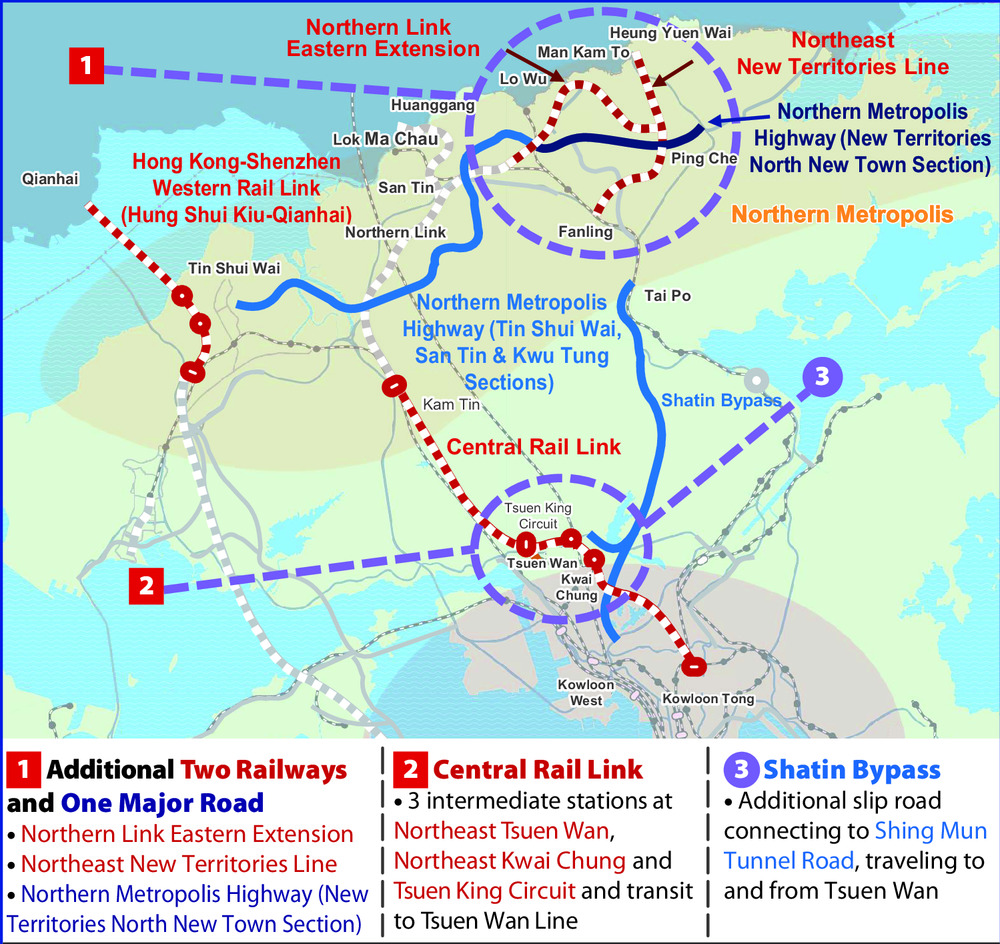
The blueprint proposes three enhanced railways and three major roads, recommended in 2022, and an additional two railways and one major road in the Northern Metropolis.
One of the three railways, the Hong Kong-Shenzhen Western Rail Link connecting Hung Shui Kiu and Qianhai, can carry passengers directly to Shenzhen Bay port while and the Northern Link spur line will connect to Huanggang Port.
Both railway services are expected to be finished between 2034 and 2038.
Cross-boundary travelers could also access Man Kam To port and Heung Yuen Wai port via the NOL Eastern Extension and Northeast New Territories Line, which are the newly added two railways, upon their commissioning after 2039.
The 17-kilometer Central Rail Link will run between Kowloon Tong and Kam Tin, with stations at Northeast Tsuen Wan, Northeast Kwai Chung and Tsuen King Circuit for transit to Tsuen Wan Line.
It is expected that after the link commences service a ride from Kam Sheung Road to Kowloon Bay can be shortened to 32 minutes from 43.
For the four-kilometer southern extension of the Tseung Kwan O Line planners will minimize the land area required for the railway facilities and reduce exposed areas for reclamation required for the railway.
The three roads will be the Northern Metropolis Highway, Shatin Bypass and Tseung Kwan O-Yau Tong Tunnel. There will also be a tunnel linking Hong Kong Island to Lantau.
But Lam said it was too early to reveal the price of the infrastructure because a long time frame makes it impossible to do an accurate estimate.
"It's a bit premature for us to release the cost estimate for a project that will commence construction probably 10 years from now," he said. "And I don't think it would be good to have a cost estimate that may not be realistic."
Referring to the North Island Line proposed in 2014, Lam said an upgraded signaling system on the Island Line increased the railway's capacity, and large-scale infrastructures like the Northern Metropolis will change where people live and work.
"There is no urgency to take forward NIL up to 2046 and the need for the line would be reviewed in due course," Lam said.
Meanwhile, heavy rail systems will not be adopted for the South Island Line West due to its limited climbing capacities.
Lam said planners are studying other suitable alternative systems that can meet the demand and will finalize the technical proposal next year.
In addition, the smart and green mass transit systems in Kwun Tong and Kai Tak will not be completed until 2034 at the earliest.
Lam said authorities will invite operators to express interest in the projects next year, as authorities work on the design of the two systems.
Our Hong Kong Foundation vice president Ryan Ip Man-ki hopes the government will announce more details of the implementation in a timely manner.
It is important too, Ip added, to make advance arrangements for workers and work materials to ensure the smooth completion of railway services.
DAB legislator Frankie Ngan Man-yu hopes authorities will expedite implementation of the East Kowloon transit system, and complete the tendering and selection of the operator in 2027 to allow construction work to commence in the shortest possible time.
stacy.shi@singtaonewscorp.com