Getting a feel of the old Central Market is now within reach with the revitalized market opening up 13 preserved stores to commemorate its reopening in 2021.
Located on the ground and third floor, the stalls have cultural-heritage themed decorations and original features, such as meat display tables or fish tanks.
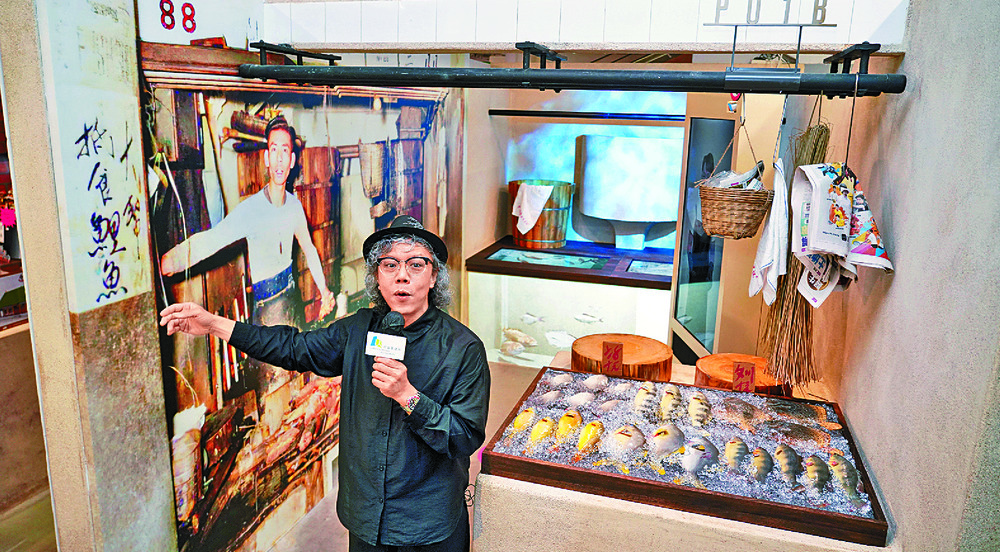
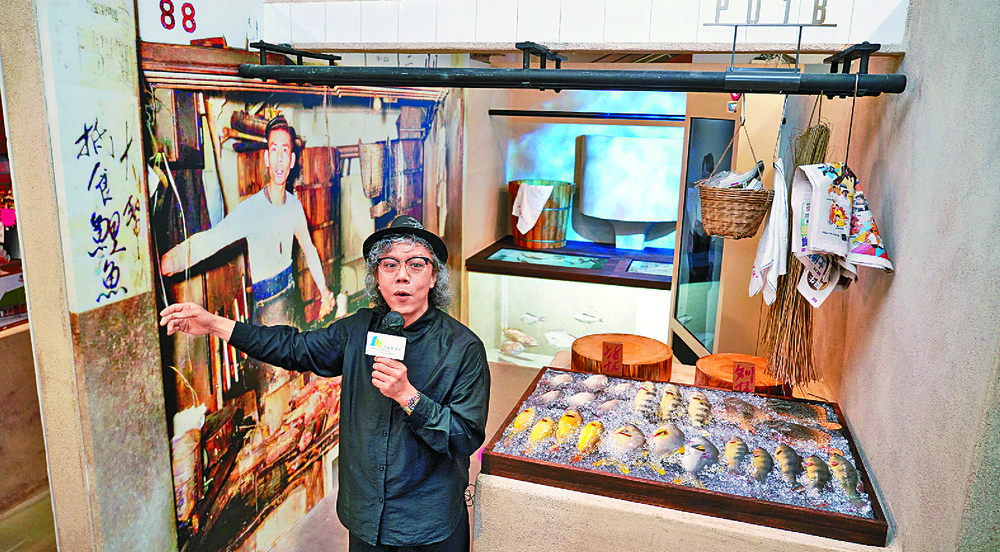
The highlight is a fish stall, recreated with renovated parts of the original stall and enhanced with interactive devices.
"We wanted to let people know what life was like back then, so we used multimedia to recreate the fish stall," said visual and digital artist Victor Wong-tat, who set up a visual effects company and recreated the stall.
"We created the props [for the fish stall] at a movie level," he said.
A lifesize video display of fishseller "Shing" is shown in "Chiu's fish stall," where with a detection device and a 4k camera, he will automatically take selfies with visitors, who just have to scan a QR code on screen.
"It looks as if Shing actually took a photo with you in real life," Wong said.
At other times, Shing reverts to fishseller mode, shouting "come and look at our fish! They just came in and are very fresh!"
Shing, played by an Urban Renewal Authority employee, is acting the role of the grandson of Chiu, the owner of the fish stall.
The name for the stall came from a historical film photo from the 1950s that showed its storefront and two men working in it.
While the actor was picked for looking similar to one of the men in the film photo.
"The photo got very blurry when we tried to enlarge it, so we used AI to enlarge and recolor the photo," Wong said.
Then the team manually compared the photo to other historical documents to judge the accuracy of the AI-restored photo.
"We created plaster molds with real fish, then used acrylic paint with a silver base to manually paint each fish, so the fishes' reflects light the way real animals' do," Wong said.
As the fish are all painted by artists, each one took more than a day to create.
"Stalls used to use sheets of newspapers to wrap up fish and then grass to tie up the package," Wong said. "But such grass is no longer used here, so we had to source it specially from the mainland."
The fish stall is entirely used for display purposes, while the other 12 are actual stores that sell qipao and other goods.
The whole project was four to five years in the making, as the team spent a lot of time digging into the store's historical details, then spent a year creating its multimedia parts.