Read More







StanChart lifts HK 2026 GDP growth forecast to 5pc
16-11-2026 18:12 HKT

Baidu third-quarter revenue slips 1 percent, meets market estimates
16-11-2026 17:22 HKT


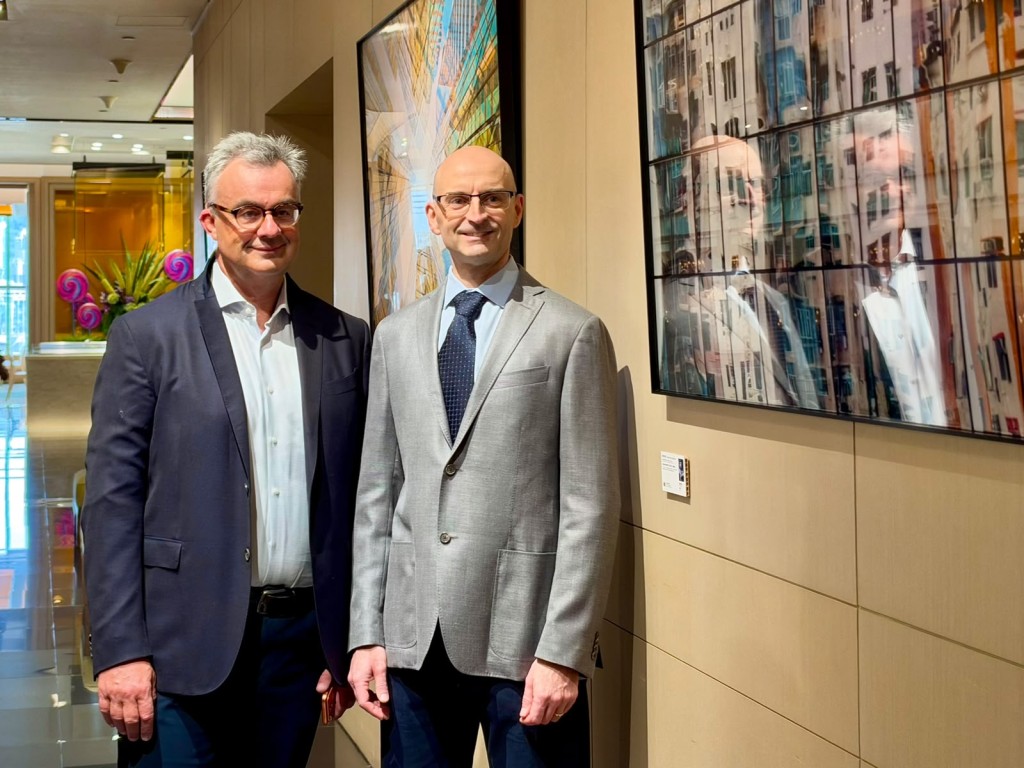
Ensuring that powerful artificial intelligence systems do not show "ill behavior" or act unpredictably is a math challenge rather than a software issue, says Stanford University professor Emmanuel Candès, co-winner of the 2026 Shaw Prize in Mathematical Sciences.
He warned that AI agents often over-optimize to finish tasks at all costs, and require strict mathematical principles for safety. His team – in order to de-risk investments for major firms like drug giant Genentech – uses statistical models to find the probability of success for AI-discovered molecules before millions are spent.
Candès shares the US1.2million(HK9.36 million) award with Camillo De Lellis, a professor at the Institute for Advanced Study in Princeton.
Candès was honored for pioneering "compressed sensing," a framework that reconstructs high-resolution images from minimal data, alongside matrix completion methods that underpin modern machine learning.
In hospitals, this slashed pediatric magnetic resonance imaging scan times from two minutes to 15 seconds, saving doctors from having to temporarily stop a child's heart or cut off oxygen to prevent movement.
De Lellis was recognized for developing a novel method to understand fluid turbulence, and simplifying a work related to minimal surfaces.
While both laureates use AI to speed up coding and literature searches, they warned against using advanced math merely as a promotional benchmark for frontier AI models.
Frontier AI labs like OpenAI and Wall Street firms are now aggressively hunting for math talent, offering their doctoral students jobs before they even graduate, the pair noted.