Mike Sori
On Monday, NASA launched the Europa Clipper robotic spacecraft to Jupiter. Clipper will reach the ice-covered Jovian moon Europa in 2030 and spend several years collecting and sending data on the moon's potential habitability back to Earth.
Clipper isn't the only mission targeting Jupiter and its moons.
Last April, the European Space Agency launched the Jupiter Icy Moons Explorer, which will spend at least three years on Jupiter's moons after it arrives in 2031.
There are many reasons my planetary science colleagues and I are looking forward to getting the data that Clipper and JUICE will hopefully be sending back.
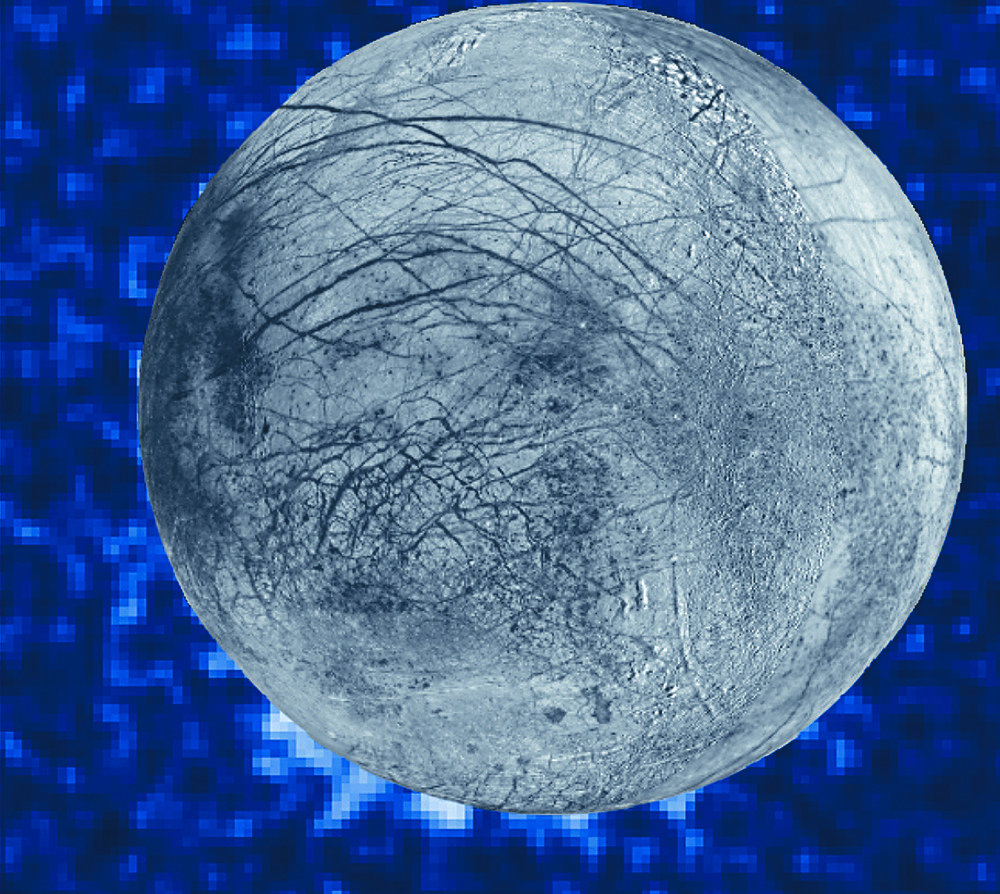
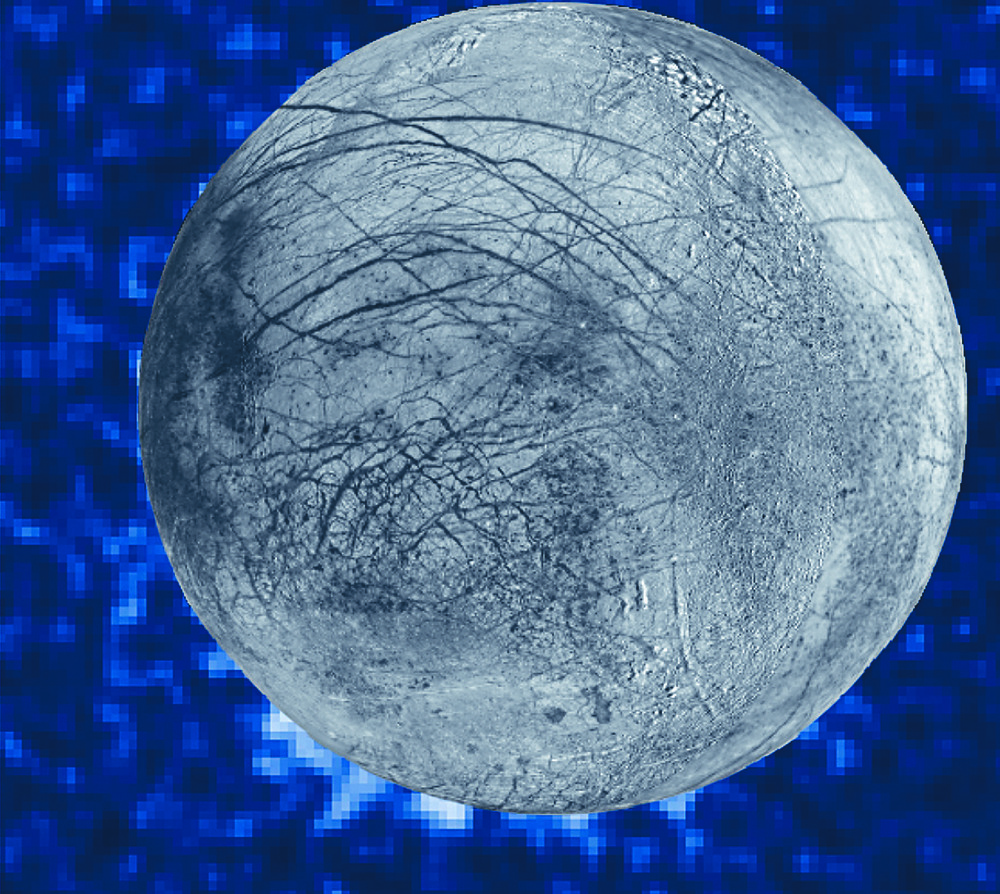
Perhaps the most exciting will have to do with water. Three of Jupiter's dozens of moons - Europa, Ganymede and Callisto - are home to large, underground oceans of liquid water that could support life.
Two NASA missions have been sent to orbit the Jupiter system and collected data on these moons - Galileo from 1995 to 2003 and Juno, which is still in orbit.
The three moons have icy landscapes. Europa's is a frozen wonderland with a young but complex history, possibly including icy analogs of plate tectonics and volcanoes. Ganymede, the largest moon in our solar system, is bigger than Mercury and has its own magnetic field generated from a liquid metal core. Callisto appears somewhat inert but serves as a valuable time capsule of an ancient past.
Then three are hundreds of degrees below zero on the surface. But the deeper you go, the hotter it gets. Go down far enough and ice melts into water. While the exact depths are still uncertain, scientists are confident oceans exist.
The best evidence of these oceans comes from Jupiter's magnetic field. Saltwater is electrically conductive. So as these moons travel through Jupiter's magnetic field, they generate a secondary, smaller magnetic field that signals the presence of an underground ocean. Using this technique, planetary scientists have been able to show the three moons contain oceans. And they are not small - Europa's ocean might have more than double the water of all of Earth's oceans combined.
The next question is whether they can support extraterrestrial life. Water is far from the only requirement for life. Life also needs energy and chemical compounds to flourish. Because these oceans are hidden beneath solid ice, sunlight and photosynthesis are out. But it's possible other sources could provide the needed ingredients.
On Europa, the ocean overlays a rocky interior that could provide energy and chemicals through underwater volcanoes that could make its ocean habitable. Ot is also possible that Europa's ocean is a sterile, inhospitable place - scientists need more data to answer these questions.
Europa Clipper and JUICE are set up to give scientists game-changing information about potential habitability. While both missions will gather data on multiple moons, JUICE will focus on Ganymede, and Clipper on Europa.
Both will carry scientific instruments built specifically to investigate the oceans. Radar will allow Europa Clipper and JUICE to probe into the moons'outer layers of solid ice. It could reveal small pockets of liquid water, or, in the case of Europa, which has a thinner outer ice layer than Ganymede and Callisto, the larger ocean.
Magnetometers will also be on both missions. These tools will give scientists the opportunity to study the secondary magnetic fields and hopefully clues to salinity and volumes of the oceans.
Scientists will also observe small variations in the moons' gravitational pulls by tracking subtle movements in both spacecrafts' orbits, which could help determine if Europa's seafloor has volcanoes.
Finally, both craft will carry a host of cameras and light sensors that will provide unprecedented images of the geology and composition of the moons' icy surfaces.
Maybe one day, a spacecraft will be able to drill through the miles of solid ice on Europa, Ganymede or Callisto and explore oceans directly. Until then, observations from spacecraft like Europa Clipper and JUICE are scientists' best bet for learning about these ocean worlds.
When Galileo discovered these moons in 1609, they were the first objects known to directly orbit another planet. Their discovery was the final nail in the coffin of the theory that Earth - and humanity - resides at the center of the universe.
Maybe these worlds have another humbling surprise in store.
THE CONVERSATION/ASSOCIATED PRESS
Michael Sori is an assistant professor
at Purdue University
The Europa Clipper, pictured and above, will fly within 25 kilometers of the surface of Jupiter's moon.