Read More






World Cup 2026 reflects impact of mega events | High-flier | Jeffrey Lam
21-07-2026 02:05 HKT
Singapore mulls tax cuts as top finance professionals return to Hong Kong
25-07-2026 21:22 HKT


The Iran War reminds us of the vital need to find alternative energy sources which are freely available and at stable prices.
Of these alternatives, hydrogen is probably the best as it not only is often a byproduct of renewable energy production, but also does not cause carbon emission in its use.
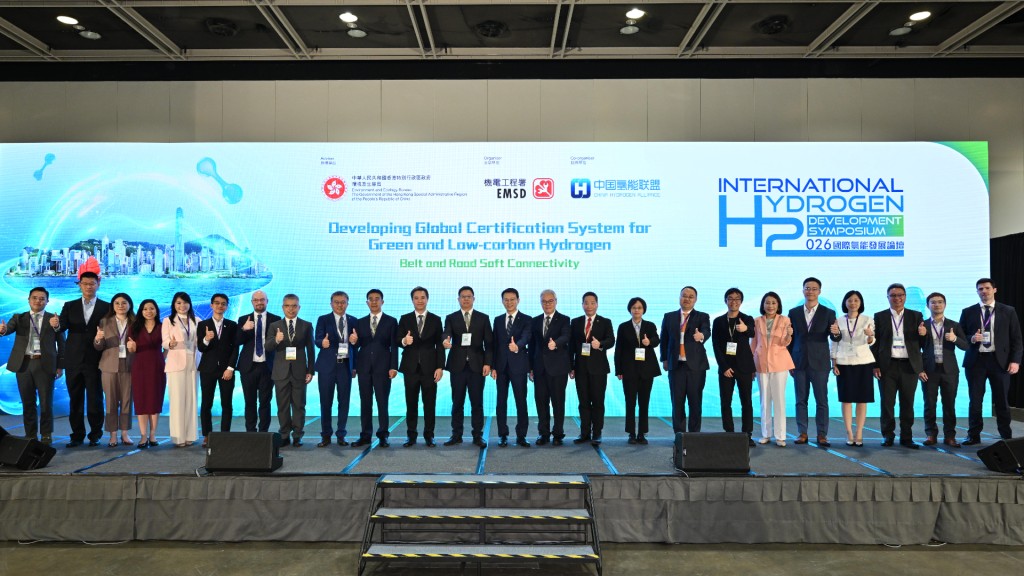
The International Hydrogen Development Symposium 2026, organized by the Electrical and Mechanical Services Department in May, was a timely event to discuss the latest technological development of this efficient energy carrier.
The symposium was attended by some 2,000 delegates from many parts of the world, including the Chinese mainland, the United Kingdom, Europe, North and South America, Central Asia, as well as North and South Asia. Participants attended to share information and knowledge, not only in technical aspects, but also in testing, certification, and finance.
The conference also hosted the signing of three memorandums of understanding, namely an MoU with South Korea's Ministry of Land, Infrastructure and Transport, one with the Korea Gas Safety Corporation, and another for cooperation among 10 parties from the Chinese mainland, Hong Kong and the Republic of Korea to develop a hydrogen energy ecosystem, including the production of hydrogen from landfills, deploying hydrogen-powered commercial vehicles and generators, and nurturing hydrogen energy start-ups. This signifies the wish to cooperate to develop an effective hydrogen economy among these regions.
It also demonstrated the special attention of our Central Government and Hong Kong SAR placed on hydrogen development. Apart from the usual technical presentations on hydrogen production, storage, transportation and applications, it also included other aspects of quality infrastructure, standards and certification, green financing, as well as capacity building and training.
All new projects require substantial financial arrangements. It is gratifying to see that apart from the Hong Kong Monetary Authority, many major banks in Hong Kong were also promoting their green financing schemes to support the development of hydrogen economy in this region.
The Green Hydrogen Standard Certification Scheme, promoted by EMSD and supported by the Hong Kong Monetary Authority through their Hong Kong Taxonomy for Sustainable Finance – which I have described in one of my former articles published in this column a few months ago – was a key presentation in the conference.
The significance is that it places Hong Kong in the key position for certification in the whole chain of hydrogen economy.
China has huge potential for a hydrogen economy as it has a large hydrogen production capacity from renewable energy sources, such as wind and solar power, apart from hydrogen production as a byproduct of many chemical processes. It is also developing a full chain of manufacturing plants for fuel cells, gas containers for high pressure gaseous and liquefied hydrogen for storage and transportation, and many facilities for testing.
But such facilities require international recognition for certification and standards – a field where Hong Kong has many years of experience, for example through the Hong Kong Quality Assurance Agency. We in Hong Kong can, in our desired role as the super-connector for the mainland’s production chain, help them gain international recognition and complete the full chain from production to application.
And if anyone is still in doubt regarding the application of hydrogen in Hong Kong, I must remind them that many of us are already using hydrogen as our cooking fuel for years. Towngas has been supplying manufactured gas to our commercial and domestic outlets for many decades with about 50 percent hydrogen content, and some of us has already enjoyed a ride in the Citybus hydrogen-powered double-decker bus serving a dedicated bus route on the Island.
We should feel fortunate to be at the forefront of hydrogen development.
Veteran engineer Edmund Leung Kwong-ho casts an expert eye over features of modern life