The interview was meant to be routine. It lasted two hours.
When Clement Yeung appeared on my screen from Hong Kong, I expected a courteous conversation about the organization he chairs. Instead, our discussion opened a window onto one of the most quietly significant bridges between Hong Kong and Indonesia, and underscored how much both sides still have to gain from a deeper understanding of one another.
Clement was born in Pasuruan, East Java, where his family ran a factory producing ting-ting ginger candy; a business that, remarkably, remains in operation today. In the late 1960s, he was among thousands of people from Indonesia who were resettled in NingdeDonghutang Overseas Chinese Farm in Fujian Province. Some 3,200 people in all were uprooted, but many never lost their connection to the land they had left behind.
By the late 1970s, Clement had made his way to Hong Kong. He arrived with no guarantees, armed only with a determination to keep an open mind and embrace a global outlook, as he recalled during our conversation.
Over the next three decades, he built an extensive international business network. Yet what ultimately defines Clement is not the network itself, but what he chose to do with it.
A Question That Founded an Organization
In 1999, Clement's father, Mr. Yeung Ping found himself reflecting on Indonesia's experience during the 1997–98 period. Though living in Hong Kong, he remained closely connected to former schoolmates in Malang and deeply cared about the well-being of the wider community. From that concern came a simple question: How could Hong Kong and Indonesia draw closer together? His answer was straightforward: by building bridges between people.
Together with six fellow members of Hong Kong's Indonesian-Chinese community, Mr. Yeung founded the Hong Kong Society for Indonesian Studies (HKSIS). Driven by a shared commitment to fostering understanding, the seven founders believed that the most enduring ties between nations are forged through human connections. Their vision was simple: lasting friendships between countries are built not only in boardrooms, but also through the bonds between people.
Twenty-five years later, HKSIS continues to publish a self-funded magazine that brings Indonesia closer to readers in Hong Kong and mainland China. Sustained by the dedication of its members, the publication embodies the organization's commitment to promoting mutual understanding while maintaining an independent and balanced perspective.
"A good bridge has to be free from vested interests," Clement told me. "What we seek to preserve is an unbiased perspective."
The Moment That Says It All
When Clement succeeded his father as chairman, he brought his own touch to the work, one that says much about his philosophy.
On one occasion, he persuaded some 80 elderly members of Hong Kong's Indonesian-Chinese community, many of whom had lived in the city for decades, to attend Indonesia Week, a cultural showcase. He also arranged a quiet and informal meeting with Indonesia's then Consul-General, Mr. Yul Edison. There was no stage and no ceremony.
As Mr. Yul moved through the room, he found that many of the attendees still spoke fluent Indonesian. Some became emotional. Others laughed as memories stretching back half a century resurfaced. For a moment, distances that had seemed insurmountable no longer mattered.
"Everybody was so happy," Clement recalled.
It was people-to-people diplomacy in its purest form; unscripted, unofficial, and deeply human.
Building the Next Generation
Three years ago, Clement established a Youth Division within HKSIS, bringing together university students of Indonesian-Chinese studying in Hong Kong. At every gathering, he begins with the same question: "How many Hong Kong friends have you made so far?"
Almost every time, the answer is the same: not yet.
He asks not to embarrass them, but because he sees these students—bilingual, bicultural, and educated in one of Asia's most connected cities—as uniquely positioned to deepen ties between Hong Kong and Indonesia.
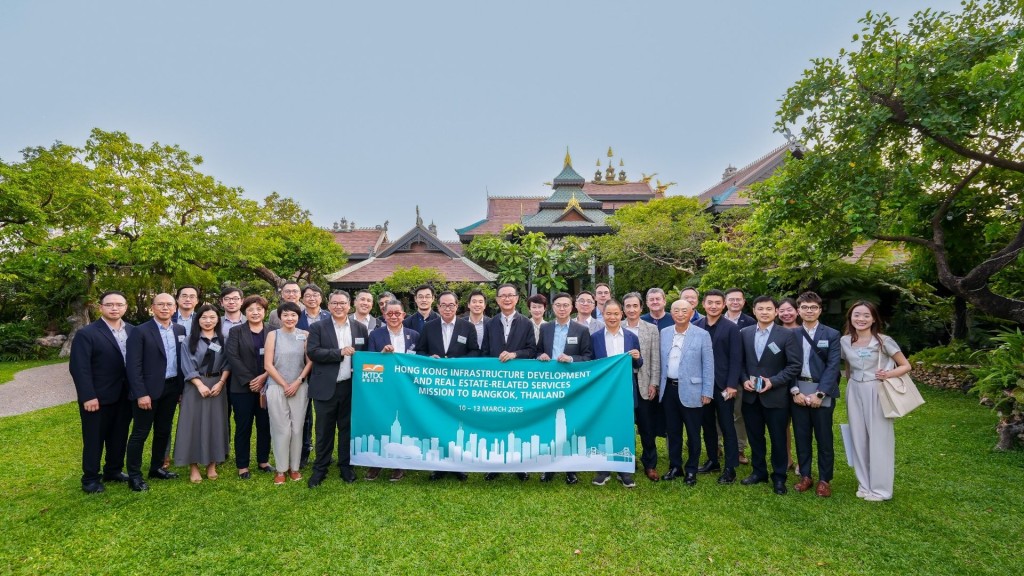
The same philosophy shapes his work in the business sphere. In addition to overseeing the Youth Division, Clement leads small business delegations to Indonesia twice a month. Never more than five participants, each trip focuses on a single sector, with every meeting carefully arranged in advance. Within five days, the right introductions are made, and he quietly steps aside.
"We just make sure the right people meet in the right way," he said.
The Opportunity Still Waiting
Hong Kong and Indonesia are hardly strangers. Indonesian domestic workers have long been part of everyday life in the city, while trade and investment flow steadily in both directions. Yet the relationship extends far beyond economics and migration. Indonesia's cuisine, performing arts, natural beauty, and even the annual jazz festival held at the foot of Mount Bromo offer countless avenues for deeper cultural exchange and mutual appreciation.
Clement's answer is simple: focus. Promote one thing well before moving on to the next. "If you try to promote everything at once, people end up remembering nothing," he said. It is a principle that has guided HKSIS for a quarter of a century and one that continues to resonate far beyond the organization itself.
Near the end of our conversation, Clement offered an observation that was both simple and revealing. Gesturing toward himself, he said, "You can see part of Indonesia and part of China. So how can we not work together?"
It was less a slogan than a reflection of identity. For Clement Yeung, the two worlds he embodies have always offered an opportunity to connect, fostering understanding and bringing people closer together.
For a quarter of a century, HKSIS has translated that belief into action, quietly building bridges and demonstrating the enduring power of people-to-people diplomacy.
Dr. Rahmat Aming Lasim, M.B.A., an Indonesian diplomat and analyst of Indonesian diaspora communities abroad