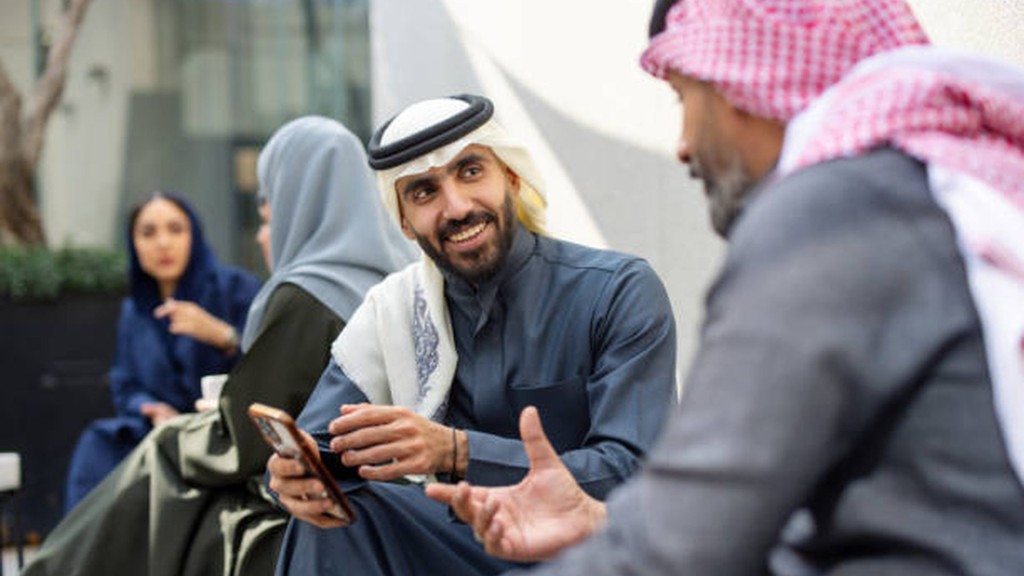
To truly touch the heart of the Arab world, one must learn its language – a bridge to profound cultural warmth. Speak even a few broken phrases, and you will be met with radiant smiles and boundless encouragement. But do you believe all Arabs speak with a single voice? If so, it is time to look again.
Since the dawn of time, the Arabian Peninsula has been a cradle of diverse tongues, a landscape rich with varying words, styles, and structures. Yet, amidst this sea of difference, a unified language emerged, used in writing poetry, contracts, and agreements.
As the Arab world expanded, the language traveled with it, breathing new air in different lands. These local populations spoke their own languages. Consequently, dialects were formed, influenced by these local languages, and Arabic dialects continued to evolve over the centuries until they reached their current forms. We once believed these dialects were merely daughters of “Classical Arabic,” but we now know they are more complex; they carry the deep, hidden echoes of the original languages of the soil.
The differences between modern dialects are not limited to styles and vocabulary, but also extend to the letters and their pronunciation. Arabic dialects differ in the pronunciation of several consonants, such as Qaf, Jim, Dhal, Thaa, and Dhaa. A prime example is my name. Although my name in Standard Arabic is Amjad, everyone calls me Amgad using the Cairo-style Jim.
Don’t be discouraged; you’re not alone! Did you know that if an Arab from Iraq, in the far eastern side of the Arab world, speaks to another Arab from Morocco, in the far west, each in their local dialect, there’s a chance they’ll only understand no more than 20 percent of what they say?
It’s best if they speak in Modern Standard Arabic, Fusha, or a popular colloquial dialect like Egyptian or Levantine Arabic.
Amjad Refai is the director of Arabic Programme at the University of Hong Kong