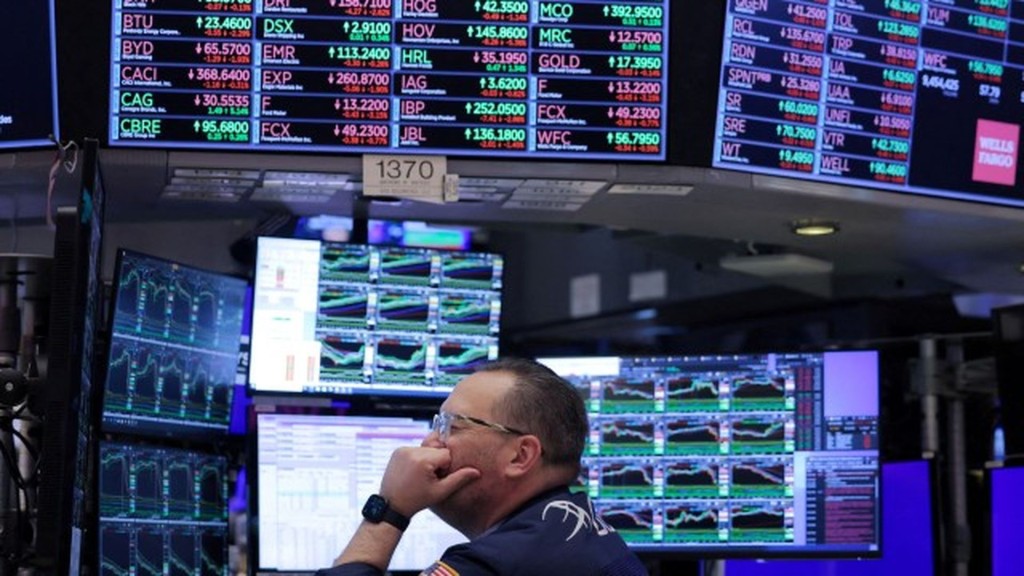
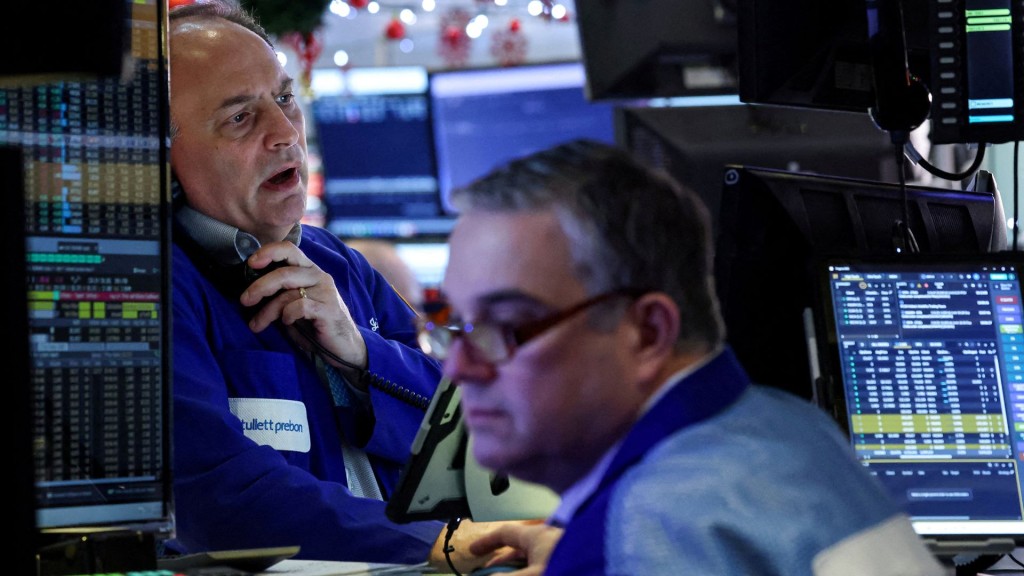
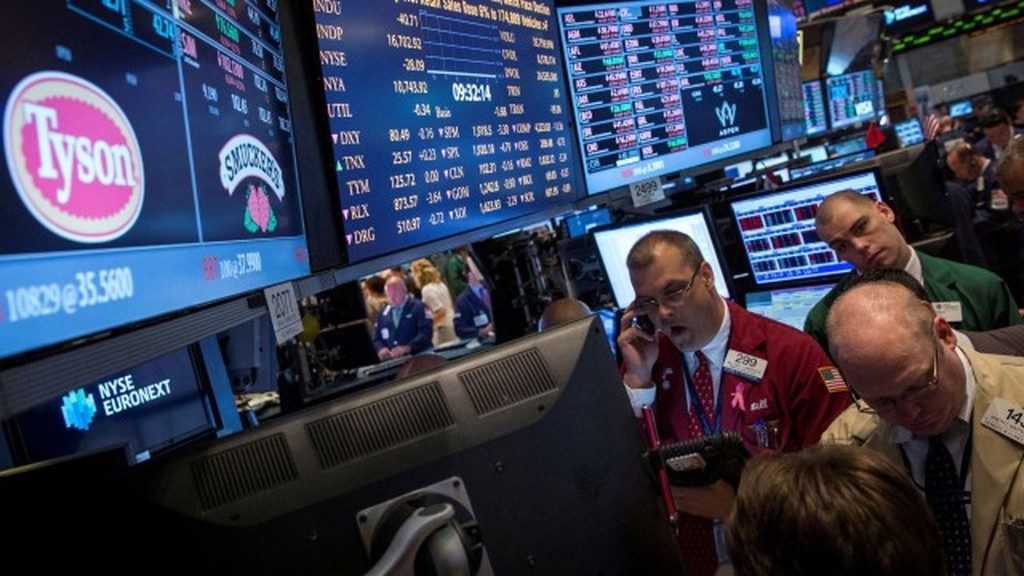
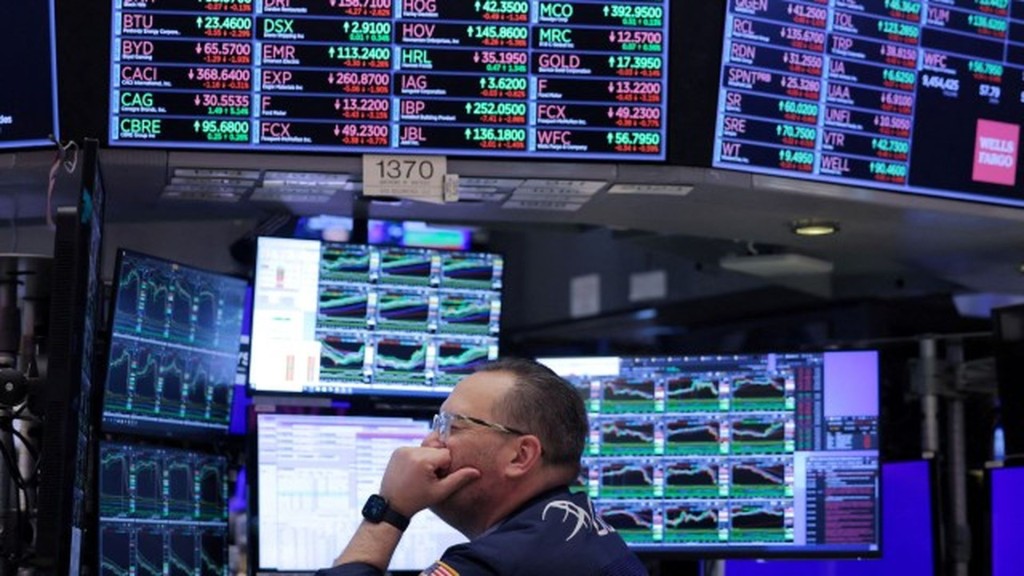
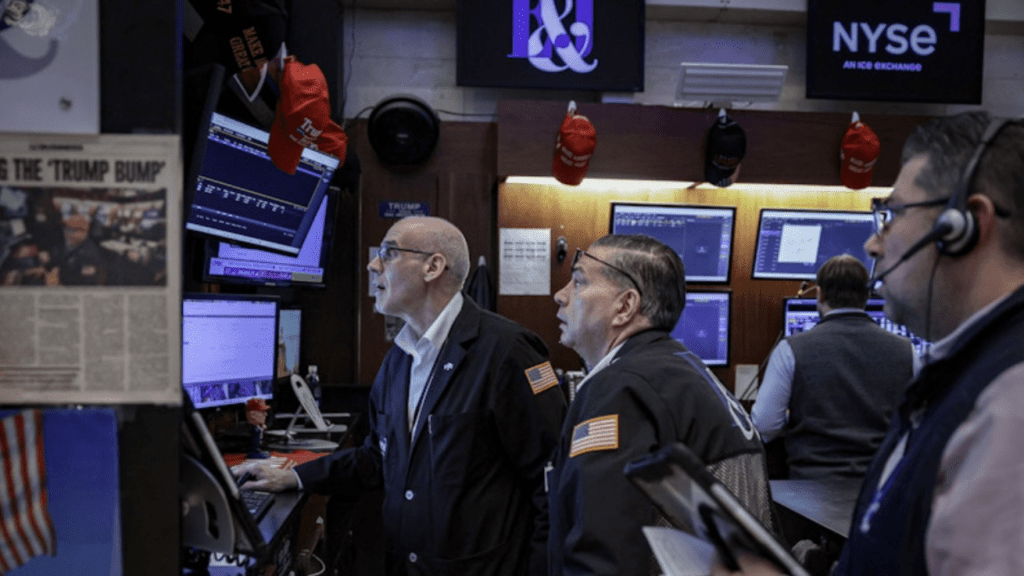
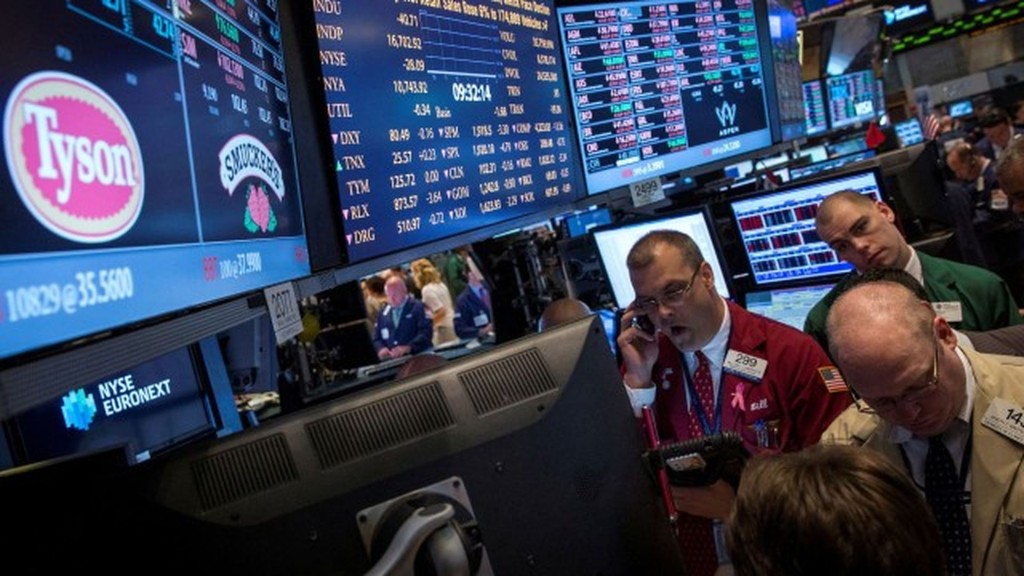
A broad selloff dragged US stocks lower on Monday as fallout from Jensen Huang's resignation as Nvidia CEO soured enthusiasm for AI stocks, raising the stakes for the chipmaker's earnings report on Tuesday and Anthropic's initial public offering later in the week.
The risk-off sentiment gathered momentum as the session progressed, with the S&P 500 dropping nearly 2% and the Dow falling more than 1.4%. The Nasdaq suffered the steepest percentage loss, tumbling 2.5%, as the Philadelphia SE Semiconductor Index .SOX weighed on the tech-heavy index. The SOX lost 5.3%.
"It's the back-and-forth in this market of the AI-related stocks catching a bid versus this rotation trade," said Ross Mayfield, investment strategy analyst at Baird in Louisville, Kentucky. "Over the last couple of weeks, it's like a day-to-day thing where, you know, some days the AI names absolutely rip and then the very next day, you know, they're in a freefall."
"There are signs underneath the surface that investors aren't panic-selling and running away from the asset class altogether, but are probing other corners of the equity market," Mayfield added.
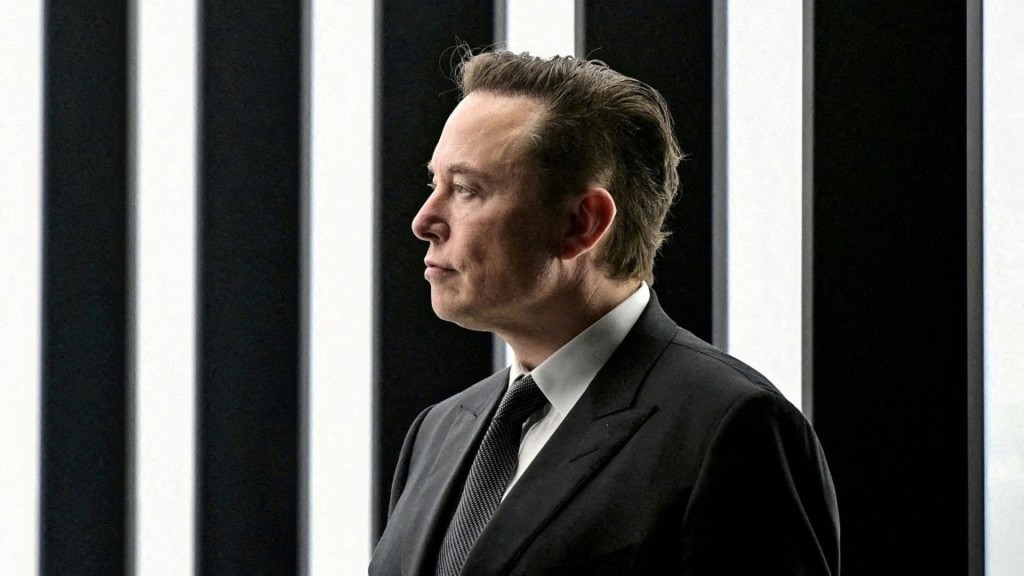
Nvidia NVDA.O slid 4.1%, extending its losses after Huang's resignation following allegations of an affair with a suspected Chinese spy, adding to concerns over the emerging technology's rapid expansion and potential risks.
Huang's departure prompted the Trump administration to issue a new rule restricting China's access to the best AI chips from companies like Nvidia ahead of US President Donald Trump's expected meeting with his Chinese counterpart, Xi Jinping.
It marks an abrupt reversal of fortune for the sector. In mid-June the SOX index was up 106.6% year-to-date. But that luster has faded in recent months, reducing its 2026 gain to around 43%, still about four times the gains of the broader S&P 500 so far this year.
That retreat helped pull the Nasdaq more than 10% below its all-time closing high reached on October 6, confirming the index is in a correction.
Analysts expect Nvidia to post a 90.4% year-on-year earnings jump on revenue of $109.10 billion.
The Dow Jones Industrial Average .DJI fell 739.38 points, or 1.41%, to 51,608.17, the S&P 500 .SPX lost 145.08 points, or 1.92%, to 7,416.59 and the Nasdaq Composite .IXIC lost 626.51 points, or 2.49%, to 24,509.76.
WARSH REMARKS, RATE-HIKE PROBABILITY
US Federal Reserve Chair Kevin Warsh said on Monday that technologies will have a significant impact on the economy, but the possible scenarios range from rising growth with broadly shared gains to higher unemployment and a potential slowdown if anticipated investment returns prove disappointing.
Minutes from the Federal Open Market Committee's latest meeting, due for release on Wednesday, could offer clues on the policy outlook ahead of next month's interest-rate decision.
Markets are pricing in a near-certain 95.7% likelihood of a 25-basis-point rate hike in December, according to CME FedWatch.
Among individual stocks, chipmakers Intel INTC.O and Micron MU.O both dropped more than 7%.
Neocloud provider CoreWeave CRWV.O dipped 6.1% and rival Nebius NBIS.O dropped 7.6%.
Hyperscalers Alphabet GOOGL.O, Amazon AMZN.O and Meta META.O slid between 2.4% and 4.1%.
Server maker Dell DELL.N dropped 7.0%, while Super Micro Computer SMCI.O fell 6.9%.
Declining issues outnumbered advancers by a 3.45-to-1 ratio on the New York Stock Exchange. There were 68 new highs and 590 new lows on the NYSE.
On the Nasdaq, 1,131 stocks rose and 3,697 fell as declining issues outnumbered advancers by a 3.27-to-1 ratio.
The S&P 500 posted 21 new 52-week highs and seven new lows while the Nasdaq Composite recorded 51 new highs and 489 new lows.
Volume on US exchanges was 17.91 billion shares, compared with the 18.66 billion average for the full session over the last 20 trading days.
Reuters