Read More








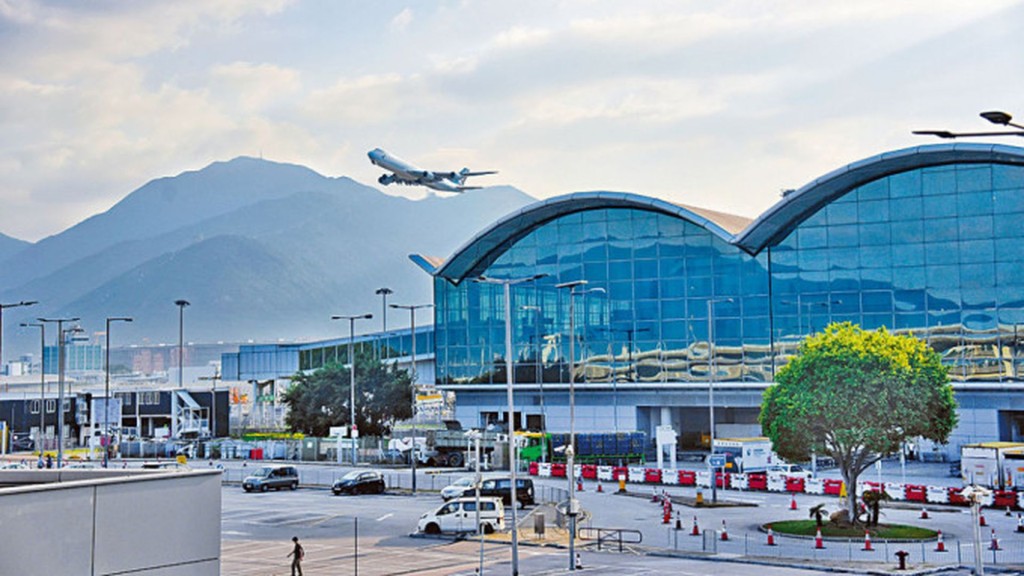
For the 15th time since 2010, Hong Kong International Airport has been named the world's busiest cargo hub by Airports Council International, processing over 5 million tonnes of freight annually. Handling roughly 45 percent of the total value of Hong Kong's external trade despite representing less than two percent of total freight by weight, HKIA serves as the indispensable physical engine of the city's economy. Yet, as global trade patterns splinter into regionalized supply chains and cross-border e-commerce faces escalating tariff barriers, maintaining this premier status requires more than resting on historical momentum. Preserving Hong Kong's logistics supremacy demands a strategic evolution that pairs physical infrastructure with smart intermodal integration and market diversification.
Hong Kong's enduring reign at the apex of global air logistics stems from structural and geographical advantages that competitors find difficult to replicate. Positioned within a five-hour flight radius of half the world's population, HKIA functions as the primary international gateway for the Guangdong-Hong Kong-Macao Greater Bay Area – the world's most concentrated manufacturing basin. Its status as a duty-free free port, supported by frictionless customs clearance and 24-hour operations, provides global freight forwarders with unmatched cargo velocity.
Beyond geography, HKIA has systematically upgraded its high-value handling capabilities. It is the first airport globally to attain all four International Air Transport Association CEIV certifications: pharmaceuticals, perishables, live animals, and lithium batteries. Coupled with the commissioning of the Three-Runway System, which boosts annual handling capacity toward 10 million tonnes by 2035, and major investments by logistics titans such as UPS, DHL, and Alibaba's Cainiao Smart Gateway, HKIA has anchored itself across both traditional express freight and high-growth cross-border e-commerce.
Despite these achievements, HKIA operates within an increasingly volatile global landscape. Intensifying geopolitical rivalries, Western supply-chain "friendshoring," and regulatory tightening around international e-commerce – including proposed restrictions on de minimis customs exemptions in major Western markets – threaten traditional airfreight flows. Simultaneously, regional competition is accelerating. Neighboring mainland airports such as Guangzhou Baiyun and Shenzhen Bao'an are expanding international routes, while regional hubs Singapore Changi and Seoul Incheon aggressively court Asian transshipment volumes.
To defend its competitive moat, Hong Kong must execute a three-pronged response. First, it must deepen intermodal GBA integration by scaling innovative initiatives like the HKIA Dongguan Airport Center.
By enabling upstream customs security checks and palletization in mainland factory hubs before bonded sea transport directly to HKIA airside, Hong Kong effectively extends its airport perimeter into the industrial heartland, drastically reducing logistics costs and transit times. Second, HKIA must accelerate digitalization, deploying artificial intelligence and unified cargo data platforms to optimize automated warehousing and end-to-end supply chains.
Finally, Hong Kong must aggressively diversify trade routes toward Southeast Asia, the Middle East, and Latin America. By combining specialized high-value handling with expanded Global South connectivity, Hong Kong can ensure its aviation hub remains the irreplaceable bridge of global trade.