Read More







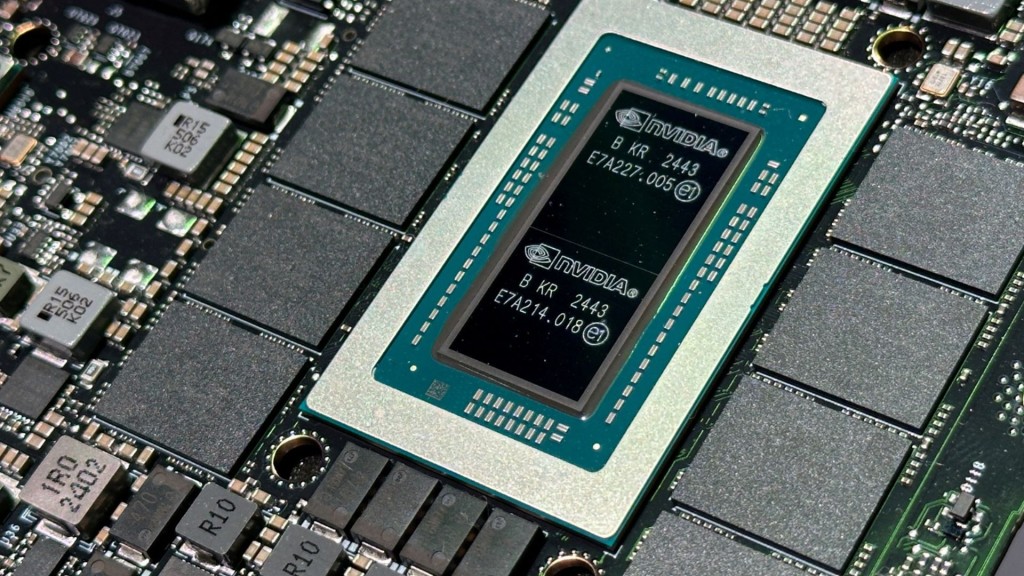
While trade tensions fluctuate, the US-China tech war remains frozen. The absence of Nvidia’s Blackwell chips from summit agendas reveals a deep, strategic competition that defines the new global order.
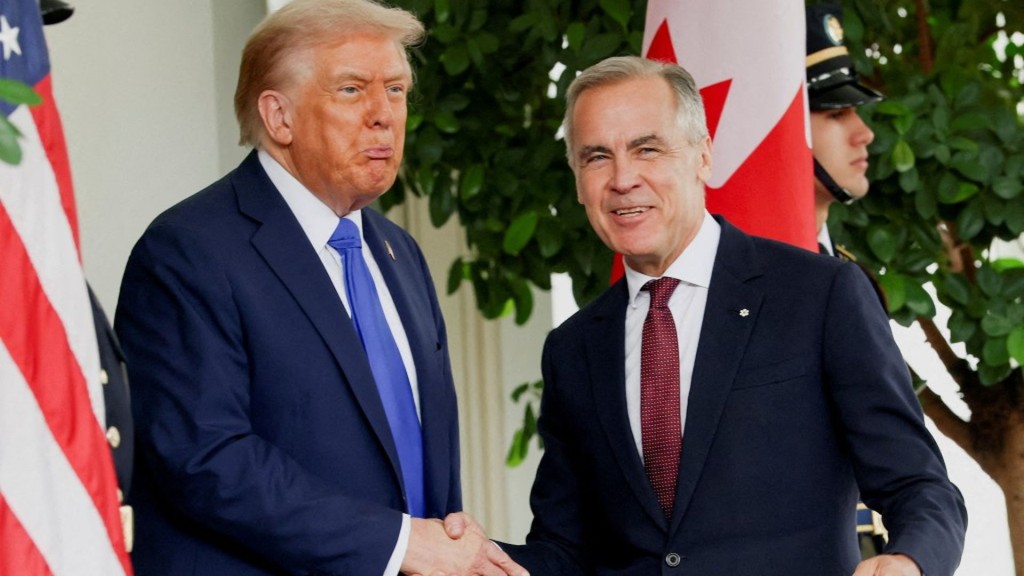
For a fleeting moment, the world watched as the two largest economies appeared to dial down the temperature. Yesterday high-level talks between Chinese and American leaders offered a glimmer of hope – a potential thaw in a long and bruising trade war. But to focus solely on tariffs and trade deficits is to miss the forest for the trees.
The core of this conflict was never really about soybeans or steel. Instead, it has been a foundational struggle for technological supremacy in the 21st century. And on that front – the critical tech cold war – there has been no thaw.
The profound silence on issues like the sale of Nvidia’s Blackwell chips is not an oversight – it is a testament to a hardened, bipartisan American strategy.
The narrative of the US-China trade war has often been simplified for public consumption. It’s a story of imbalances, unfair practices and negotiating leverage. While these elements are real, they obscure the central truth: the competition is over who will invent, control and set the rules for the technologies of tomorrow. Artificial intelligence, quantum computing and advanced semiconductors are the new battlegrounds. These are the “oil” of the future digital economy and the bedrock of next-generation military capability. The initial tariffs were merely the opening salvo in a much larger, more strategic campaign to ensure American primacy in these fields and slow China’s ambitious “Made in China 2025” plan.
The most telling indicator of this enduring tech cold war is what wasn’t discussed. The fact that the export status of Nvidia’s powerful new Blackwell GPU – a chip so advanced it powers the most complex AI models – was not a topic of negotiation is deafening. The United States’ stringent export controls, designed to deny China access to the highest echelons of computing power, remain firmly in place. This is not a negotiable point like the price of agricultural goods; it is a national security imperative.
This silence confirms a critical reality. While there may be room for compromise on trade, there is a deep and enduring consensus in Washington that a technological gap must be maintained. Allowing China to acquire and domestically produce the most advanced semiconductors would be akin to fueling the very engine China needs to overtake the United States in the AI race.
The conclusion is clear: we are witnessing a “lukewarm peace” where tactical de-escalation on trade occurs atop a frozen, strategic front of technological competition. The US has effectively decoupled the two issues. It can offer concessions on tariffs and trade to manage economic stability and political optics, all while tightening the screws on technology transfer.
For businesses and global markets, this means navigating a new, fragmented technological landscape. Supply chains will continue to bifurcate, with a “China sphere” and a “US-aligned sphere” developing parallel tech ecosystems. The race for semiconductor self-sufficiency will intensify in both Beijing and Washington.
The tech cold war is not cooling down; it is settling into a permanent state. The failure to discuss Nvidia’s chips isn’t a diplomatic failure – it is the clearest possible sign that in the great game for technological supremacy, America’s resolve remains, for now, unthawed.